The moments surrounding a construction emergency—before, during and after—are critical for contractors, owners, craft professionals and the public.
Actions taken by anyone connected to a project can shape the outcome and affect the wellbeing of everyone involved. That includes the people who build, manage and own the jobsite, as well as those who work in or pass through the surrounding area.
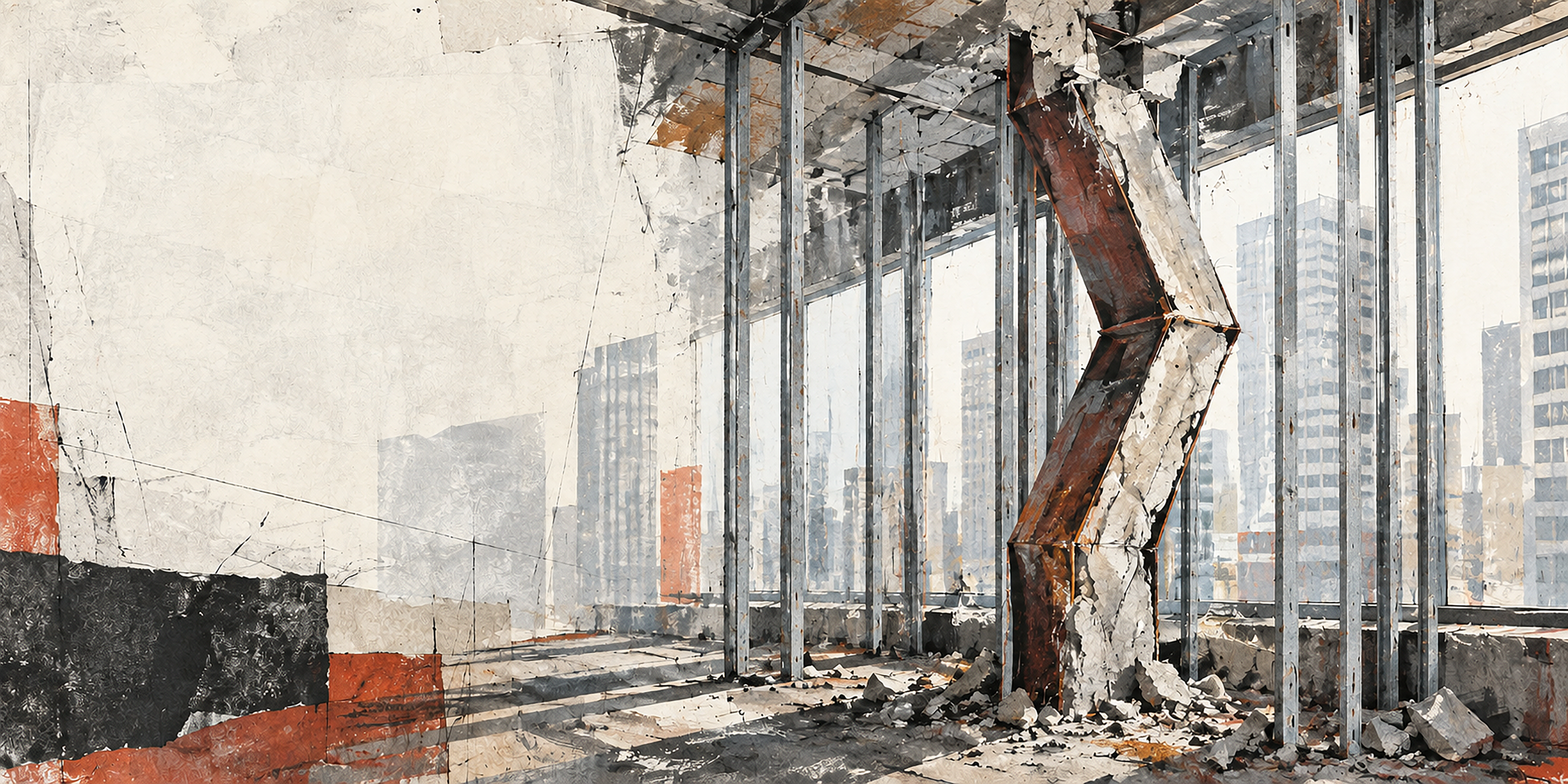
Catastrophes offer hard lessons. Near catastrophes can, too. On July 7, 2026, New York City issued a stop-work order for the adaptive-reuse project at the former Pfizer headquarters, 235 E. 42nd St., after structural steel columns buckled on the 21st floor.
The order followed an August 2025 work stoppage prompted by reports of falling debris.
The incident was one of several recent structural concerns at New York construction sites. A full stop-work order was issued for a project at 222 Broadway on July 24, followed by a partial order at 750 Third Ave. on July 28. Their prominence may reflect heightened scrutiny, faster reporting and stronger safety expectations. They also raise a more urgent question: What can the industry learn from a near miss before the next one becomes a catastrophe?
In March 2024, plans were approved to convert the 33-story office building into a 37-story residential property with 1,500 units. Werner and MetroLoft are leading what has been described as the city’s largest office-to-residential conversion, with Gensler serving as architect. On a project of that scale and complexity, missed or misunderstood information can have serious consequences. Yet the July 7 incident did not become a disaster—and the response offers lessons in law, technology and workforce risk management.
Construction Executive spoke with experts in each field about what may have happened, how the incident was handled and how project teams can prevent or prepare for similar events.
None of the experts interviewed for this article is involved with the project. Their comments are based on publicly available information and their professional experience.
Plan for the Risk
Scott Walters is a partner in Smith Currie Oles’ Atlanta office whose practice focuses on construction law and government contracting. He has practiced with the firm for more than 20 years and has been an attorney for nearly 30. Walters also holds an engineering degree from Georgia Tech and worked as an engineer and project manager for nearly a decade before attending law school in 1993.
His background in both construction project management and law gives him a dual perspective on project emergencies: He knows what to examine physically and contractually. Based on public reports, the Pfizer incident did not necessarily surprise him.
This was not the first structural incident of its kind. Did it surprise you?
I’m not licensed to practice law in New York, but based on what I read, it didn’t necessarily shock me. This is a complex type of construction project because the team is adding floors to an existing building. The structural engineering and design issues—and the legal risks associated with them—should be known, or at least foreseeable, to everyone entering a project like this.
If the risk was foreseeable, how could missing or compromised support columns go unchecked?
Based on my experience with other projects, there’s a good chance it involved a communication breakdown. One party on the project delivery team may have believed another was responsible for communicating all information about the existing structure, while that party assumed the responsibility belonged elsewhere.
How is responsibility divided among the owner, general contractor, architect and subcontractors?
It depends on the project delivery system. Did the owner retain that risk, or did the owner try to transfer it through the contract to the contractor or a design professional? In a project like this, responsibility most likely rests with an architect or architect-engineer team, with the architect responsible for design components and the engineer responsible for structural components.
Ultimately, the architect-engineer team may be responsible directly to the owner or contractor or indirectly through a design-build arrangement. In the latter case, the contractor may assume the risk and subcontract it to the design professional.
The contract should establish who assumes each risk. Typically, design responsibility rests with the design professional, either directly to the owner or through the contractor.
How can project teams improve communication on similarly complex work?
Every construction project involves risk, but the types of risk vary. This situation is unusual because the team is adding floors to an existing structure. The parties must communicate early and often to identify those risks—before contracts are signed and work begins. They need to understand the existing structure and the owner’s plans for it, then work collaboratively. That may mean bringing experienced contractors into discussions with the owner and design professional early in the process.
Issues inevitably arise during construction. All principal participants in the delivery system need a shared understanding of how they will resolve those issues promptly.
They also must understand the relationship among the owner, developer, design professional, contractor and authorities having jurisdiction. When clients enter a city or state where they haven’t worked before, I advise them to learn the applicable laws, ordinances and codes. Starting before the first shovel hits the ground, establishing expectations for every party and communicating consistently throughout the project can help teams take a proactive approach and understand who is responsible if an issue arises.
Who is typically responsible for reporting an incident?
Construction contracts usually include a notice or reporting mechanism. The contractor often assumes the risk or has a contractual duty to notify authorities, the owner or the design professional when a concern arises. The individual responsible may be the general superintendent, a project manager or someone else identified in the contract.
A good construction contract should clearly state who communicates what—and to whom.
If someone on a project observes what appears to be an imminent health or safety threat, common sense should take over. The contract typically provides a mechanism for notice, including in an emergency, but the concern must be communicated quickly. If work needs to stop, the contractor generally should have the authority to act.
How can a stop-work order affect the surrounding area?
At its broadest, an order may cover the entire project. Whether its effects extend beyond the site depends on the hazard. In this case, concerns that the building could collapse may have affected the surrounding area because New York City is exceptionally dense in both buildings and population.
What must happen before work can resume after an emergency stop-work order?
The process depends on the underlying issue. I’ve seen stop-work orders issued for many reasons, including funding problems. The responsible project party must demonstrate to the authority having jurisdiction that the project no longer poses a health or safety risk to people on the site or the public around it.
It’s fair to assume that contractors on the Pfizer site will not resume work until they are satisfied, using the applicable criteria, that the condition that triggered the order no longer presents a concern.
Are hidden conditions on adaptive-reuse projects usually discovered only after work begins?
Issues can emerge at any time. The goal is to identify them early enough to respond promptly. The longer a condition takes to manifest, the greater the risk to everyone involved, including future occupants. Most sophisticated commercial construction contracts include mechanisms that address how such conditions should be handled.
Some conditions are latent and do not present themselves immediately. That may not be anyone’s fault. But once a condition becomes apparent, the team must address it. Based on public reports, this issue appears to have been handled quickly once it was observed.
Build a Better Record
Trevor Vick is founder and CEO of Unified Modular Infrastructure Platform Inc., or UMIP. The company developed the persistent infrastructure identity, or PIID, a system-agnostic identifier designed to connect an asset’s construction records—from original drawings and change orders to renovations, stop-work orders, safety liabilities and insurance claims—in one source of information.
“When we started building UMIP, we looked at the industry as a whole,” Vick says. “I’ve been a general contractor for 20 years, and I’ve seen a lot of inefficiency. When an existing structure needs work, the documentation often is nowhere to be found. That creates a massive liability gap and adds the cost of recreating records throughout the building’s life cycle.”
Most systems—whether used by technology providers, governments, insurers or other organizations—identify the same asset differently, Vick says. “One may use an address, another a parcel number and another a geospatial coordinate. There has never been a unified way to create an identity that persists.” That inconsistency mirrors the communication gaps Walters described.
Viewed through the UMIP lens, the Pfizer incident illustrates the challenge of reconstructing a building’s history. A recent UMIP survey of 2,500 architecture, engineering and construction professionals suggests documentation gaps are widespread: Only 13% of respondents described their asset documentation as fully or mostly complete, while 79.7% reported significant gaps or largely scattered records. “That’s a big, big number,” Vick says.
Ownership transitions were the largest reported point of failure in recordkeeping. Eighty-seven percent of respondents said they had worked on a project where records were lost during an ownership or management transition; 65.7% said it had happened multiple times.
UMIP has issued more than 189 million PIIDs across the United States to connect information throughout an asset’s life cycle. Vick believes a persistent identifier could help project teams determine where, when and how communication or documentation gaps occurred—and preserve the record for future work.
Why does construction data become siloed, and what information can be lost?
Data becomes siloed because each participant in a building’s life cycle is solving a different business problem. A permitting department isn’t building its system for an insurer. A contractor isn’t building its system for the next owner, and an insurer isn’t building a system for an engineer 20 years from now. Each system creates valuable information, but historically there has been no common, persistent reference connecting that information to the same physical structure.
What broader problem does the Pfizer incident expose?
When something goes wrong with an existing building, everyone starts reconstructing its history.
They ask: What was designed, built, modified, permitted, inspected and repaired? Then they must determine whether the physical building matches the available documentation. Often, it does not. The Pfizer property has decades of history, and the adaptive-reuse project places new structural demands on it. Public records raise questions about whether the columns that buckled were insufficiently designed or insufficiently reinforced. Relevant information may exist in old municipal permits, files, PDFs or a previous owner’s inbox, but it should be readily discoverable.
Think of a vehicle identification number. No matter where a vehicle is repaired, technicians can use the VIN to review its history and determine which parts were used in earlier work. Commercial buildings do not have an equivalent, continuous record of repairs and alterations. The built environment, the world’s largest asset class, has lacked that feedback loop. That is what we designed PIID to provide.
How could a continuous asset record help in construction litigation?
This is one of the most practical uses for life cycle history and data lineage. In a legal dispute, the questions extend beyond what the current record says: What existed at the time? Who changed it, and when? What source supported the change? What did each party know, and when did they know it? Attorneys often try to discover information that exists but cannot be found. A continuous history can preserve the sequence of changes and the sources behind them, helping the parties reconstruct what happened, when it happened and which information supported each decision.
How can better information help contractors learn from incidents and build more safely?
Safer buildings begin with better information about existing conditions, past changes and known risks. If engineers, contractors, inspectors and owners can review a reliable history tied to the correct structure, they can make decisions with more context instead of relying on assumptions. Before construction, teams can identify previous structural changes, repairs, damage or system replacements and account for those conditions when designing new work.
During construction, teams can document new work against the same asset identity while preserving its source, date and version history.
Inspectors can compare the historical record with current conditions to establish a reliable reference point.
Damage from storms, fires, water or structural events can become part of the building’s continuing history instead of disappearing. Every renovation, inspection and repair should leave the next person who works on the building with more knowledge, not less.
Better information alone cannot eliminate every defect or prevent every structural failure. But the industry can make critical knowledge less likely to disappear between contractors, owners, insurers, software systems and generations of a building.
That continuity can support better decisions and, ultimately, safer buildings.
Document the Workforce
Sarah Thomas is managing partner of Jones Jones LLC, a New York- and New Jersey-based firm that has represented employers, carriers and third-party administrators in workers’ compensation proceedings for more than a century. “As someone who is in a high-rise almost every weekday, the Pfizer situation grabbed my attention—and the attention of anyone picking up a New York City newspaper,” Thomas says. During her career, she has handled workers’ compensation claims ranging from routine to complex. She explains how clear records connect the award of a contract, a potential claim and a successful return to the jobsite.
On a jobsite of this scale, what should contractors and owners anticipate in potential workers’ compensation claims?
The scale is the first consideration, followed by the number of people from different trades and with different levels of expertise who enter the jobsite each day. From a workers’ compensation perspective, the first priority should be managing that flow.
Teams need to know which subcontractors are onsite, who works for each
subcontractor and what duties those workers will perform that day.
That clarity matters because some jobsite injuries are immediately known, while other workers’ compensation issues may not surface for months or even a year. On a large project, the parties must be able to identify exactly who was present and what role each person had.
Does an emergency change the legal process for a workers’ compensation claim?
There is no strict distinction between emergency and nonemergency claims. The difference is visibility. If an incident is widely known or appears on the front page, it may generate more claims. Someone may reflect on the event, recognize its effect and decide to file a claim.
The response must address more than the workers’ compensation issue itself. It also requires communication with other employers and employees.
How is the responsible employer identified in a workers’ compensation case?
Workers’ compensation generally does not focus on fault. The immediate questions are: Who is the injured claimant, and who is the claimant’s employer?
Identifying the key parties can be complicated. A subcontractor’s employee may be temporarily assigned to another employer for a specific task and later return to the original subcontractor. Litigation sometimes is required to sort that out. Workers’ compensation generally looks to the named employer; broader questions of fault fall under general liability and may involve the building owner or general contractor overseeing the project.
What role do first responders and project records play after a structural emergency?
New York City first responders are exceptionally prepared, and their communication appeared strong in this incident. If a worker is injured because of a structural condition and an ambulance responds, that response can create additional documentation for a workers’ compensation claim.
How should workers and employers prepare for potential litigation after an emergency stop-work order?
Workers should return to the basics: Create a timeline, maintain proper medical documentation and communicate clearly with the employer.
Contractors and owners also should identify the supervisors and workers who were onsite, obtain statements and document the day’s events. Many construction sites maintain daily reports listing the weather, work underway and supervisors present. Knowing who was in charge and how to contact that person is important.
How can past workers’ compensation cases improve future preparation?
Look for patterns. Reviewing claims from the past one, two or five years can reveal where the company should focus its future safety efforts.
How can an emergency affect the pace of work and the eventual return to the jobsite?
Work may slow while the team assesses conditions and confirms that the site is safe.
Any major event stops people in their tracks. The team must consider the worst-case scenario, protect against it and ensure workers can enter and leave the site safely.
//
The incident at the former Pfizer headquarters was not a catastrophe, but it could have been. Similar conditions will continue to emerge, particularly in a city as dense and historic as New York, where aging buildings are being adapted for new uses. These projects offer enormous opportunity, but they also require teams to understand what lies beneath the surface.
As adaptive reuse expands nationwide, builders will encounter more hidden conditions in buildings reshaped by changing market demands. Clear contracts, accessible building records, detailed workforce documentation and coordinated emergency response cannot eliminate every risk. They can, however, help project teams spot warning signs sooner, respond more effectively and carry hard-earned lessons into the next job.
SEE ALSO: SMART BUILDINGS ARE STILL ANALOG IN THE FACE OF MAJOR EMERGENCIES