When disagreements are serious enough that lawyers are brought in, the next step is often a lawsuit. Before heading to court, consider litigating the dispute in binding arbitration. Arbitration is private litigation, with the arbitrator having the powers of a judge and jury.

Are Certificates Listing a Construction Company as an Additional Insured Worth the Paper They’re Written on?
Owners and contractors shift risk by requiring contractors and subcontractors to name them as additional insureds (AI) on commercial general liability (CGL) policies. Savvy contractors know the best ways to effectively obtain and use AI coverage to shift risk, saving significant amounts in the event of litigation.
Clear Contract Documents: A Critical Component to Every Construction Project
An onerous construction contract can get a project started off wrong before work even begins. Contracts need to be clear and precise so potential disputes can be dealt with quickly. The clearer the contract, the easier it is to determine what should happen in the event of a dispute. Review every contract carefully in order to not be surprised if problems occur.
How Will the New 2017 AIA Contract Documents Affect Projects?
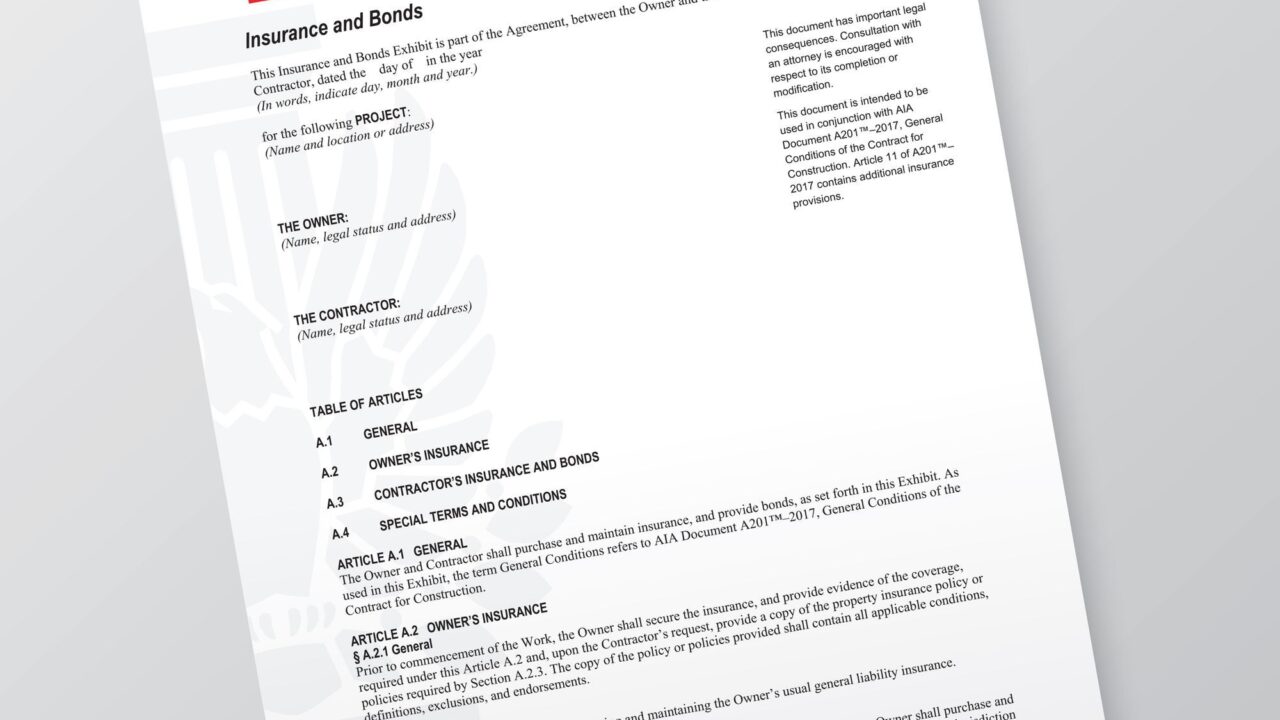
A significant 2017 revision to AIA’s A201 Family is the creation of an Insurance and Bonds Exhibit to accompany the owner-contractor agreements. There are also new provisions related to digital information and BIM. Key 2017 owner-contractor and owner-architect agreements require the use of AIA Document E203™–2013 to establish protocols for the development, use, transmission and exchange of digital data.
Construction Contracts Are Living Documents
A construction contract is a living document and needs to be reviewed, at a minimum, once per year. Using clear and start forward language along with clearly defining the scope or work and payment terms will help contractors avoid liability and remain profitable.
Contracting for Preventative Risk Management
By including proactive safety and risk mitigation stipulations and incorporating the expectation that the contractor will exceed minimum federal safety laws, contractors can minimize the risk of stop work orders, post-accident inspections, delays, negative press, property damage and other liabilities.
Executive Insights from Leaders in Construction Law
Four experts offer advice on what contractors need to know about construction disputes.
Use Technology to Prevent Labor Trafficking in Your Supply Chain
In the past, labor trafficking prevention efforts focused on audits, monitoring and labor value standards. These efforts have been met with little or no impact in disrupting labor trafficking. One of the most promising areas where solutions may be crafted is in supply chain transparency.