It is common knowledge that the construction industry has lagged behind in adopting technology as a part of the industry. Overall, maintenance departments in almost every field met IT with the closed mindset that plugging a laptop into their machinery wasn’t something they were going to take lightly. Yet, as computerized maintenance management systems (CMMS), mobile device management and remote technical assistance have proven their indispensable role in equipment maintenance, it seems there are some mechanics trading screwdrivers for handheld scanners without much of an argument.
CMMS Ensures Staff And Equipment Stay In Sync
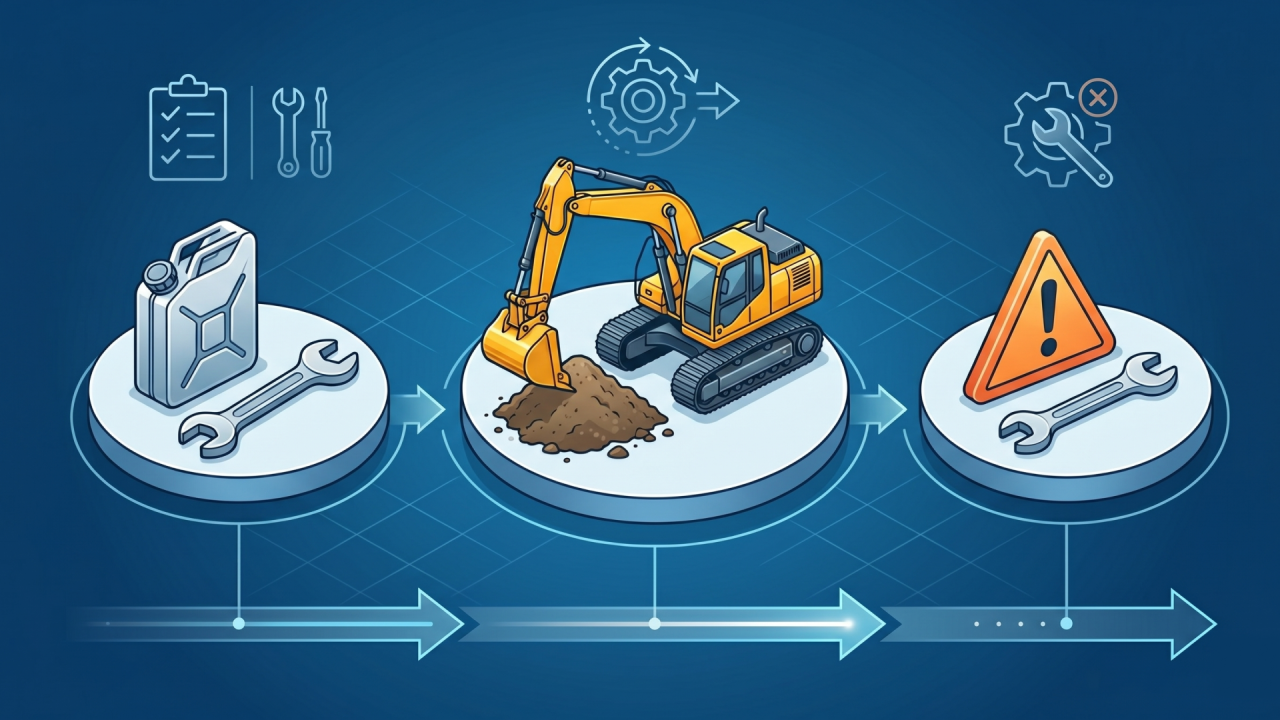
The ability to identify equipment problems in real-time is an invaluable tool when it comes to maintaining assets. If an operator “just steps away for a second” and an $8,000 pump is burnt up from dry running for an indeterminate period of time, that’s money that could have been much better spent somewhere else in the business. That is unnecessary, wasteful spending that no member of a staff is going to be happy to explain.
Real-time health statistics on equipment can be read on a technician’s handheld unit. The technician receives an alarm and goes to the site of the pump in question. The technician kills the power to the pump, and there is no additional expense. That’s a much better end to the story, and when CMMS is handling your asset management for a company, that is how the story will go.
While running those same, real-time health statistics, the CMMS also determined that 14 project managers and two active work orders were necessary, assigned them to a mechanic and sent the work orders for completion. They have all been accepted and are currently underway on the production floor. Still no loss of assets, and no unnecessary expense. When IT meets asset and equipment management in the field, these are the industry-wide results.
Operators and maintenance staff aren’t the only members of the team kicking their feet up thanks to the CMMS. The accounting staff was able to forecast equipment repairs and parts per asset, the parts department is stocking shelves because the reorder points for stock parts are automated and productivity is as high as the IT department’s spirits. The benefits of CMMS are countless, and it seems the software creators are constantly bettering the product because of the user feedback received from real-life applications. IT is no longer an ideal to guess about in maintenance and heavy equipment repair—it is taking place on the production and shop floor every day.
Mobile Device Management
Two of the most useful examples of mobile device management (MDM) in the heavy equipment industry are fleet keeping devices and software combinations. Some technology makes it as easy as checking your email to find your equipment. Not only will software track engine hours, it will also track employees arrival/departure times, equipment usage in the field, and employers can be texted the moment the backhoe pulls off of the jobsite.
Not only are construction companies keeping their assets on the jobsite they need them to be at, but with the help of inspection apps, business owners don’t need to drag their front-end loader to the shop to perform that OSHA mandatory annual inspection. A technician simply logs in, performs the inspection onsite, hits send and everyone is back to work without the downtime, travel and headache.
Handheld scanners are being seen in the field just as often as wrenches these days, and rightfully so. No longer are technicians required to call four different vendors looking for an oil pump, then hang around the shop waiting for pricing and availability. Productivity is being driven forward by the use of scanners to interface with CMMS parts modules to check out parts, reorder stock parts and place special order parts orders without the technician stepping away from the equipment.
Remote Technical Assistance
Even Class A technicians get stumped sometimes. It’s a fact of tearing down a machine that when the rebuild is completed, there might be three extra screws, resulting in yet another tear down. With remote technical assistance able to talk technicians through any repair or upgrade, business owners save countless production hours, overtime hours and outside technician travel expenses.
It’s just not necessary at this point in the industry to bring an outside contractor to the site to have a successful equipment rebuild. Given travel, accommodations, per diem and labor expenses, the savings to business and equipment owners is enough to cajole even the most anti-technology mechanic.