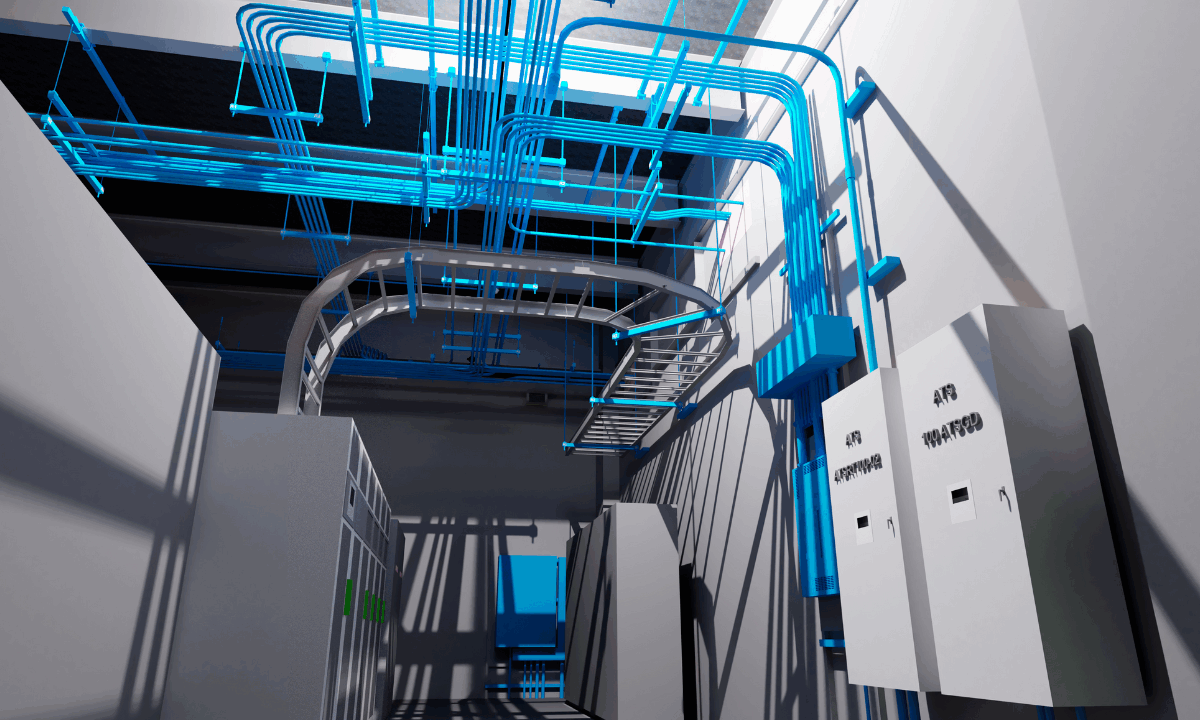
Artificial intelligence in construction is here to stay, and while, ostensibly, the industry is slow to adapt to new technology, it has actually been somewhat of a pioneer in AI, dating back to the early 2000s when building information modeling gained widespread traction. Today’s environment means that construction project stakeholders need to become familiar with AI because it will play an increasingly meaningful role in construction contracting going forward. In fact, according to data from Mordor Intelligence, AI in the construction market is expected to grow by almost 25% by 2029.
Traditional AI vs. Generative AI
According to the United States Chamber of Commerce, traditional AI is defined as “a subset of artificial intelligence that focuses on performing preset tasks using predetermined algorithms and rules. These AI applications are designed to excel in a single activity or a restricted set of tasks, such as playing chess, diagnosing diseases or translating languages.” Most of us are using traditional AI on an everyday basis when we utilize the Siri function on our iPhones or the Alexa or Google virtual assistants. Indeed, even the filters on your email or phone preventing spam emails or calls from reaching you are forms of conventional AI.
In construction, contractors, suppliers and designers already use traditional AI in troubleshooting technical issues, training, reviewing credit applications or in evaluating a building’s intended use in order to make recommendations for a design or type of material or equipment.
Generative AI differs from traditional in that it emulates human learning and decision-making in order to develop new content. Unlike traditional AI which analyzes existing data, generative AI reuses what it knows to solve new problems. In the construction industry, generative AI is useful in preparing contracts, cost estimates, developing RFPs and scheduling, among other things.
Contract Negotiation and Drafting
Many aspects of a construction contract negotiation can be enhanced by the use of an appropriate AI tool. For example, specialized construction industry AI tools such as Document Crunch and Spellbook can analyze historical negotiation outcomes and provide input as to where the project participant can most benefit from a modification of a contract term. AI can then suggest alternate wording to address the specific issue of concern.
Generative AI tools can likewise be trained on a construction lawyer’s database of contracts and used to efficiently draft new contracts. AI can quickly and efficiently locate and suggest oft-used clauses from previous contracts or other sources. This method can be helpful in promoting consistency across a field of project documents by using standardized wording and by automating repetitive drafting tasks. Using AI in this way serves to reduce human error and reduce hours spent on time-consuming proofreading and cross-checking.
Construction contract drafting is also enhanced when an AI tool is used to identify ambiguous language, conflicts or unfair risk allocation. These methods can assist in avoiding disputes down the road.
Moreover, AI tools can be very effective in drafting individual contract clauses because a user can input prompts for the type of clause they are looking for; the AI tool will then quickly offer intelligent suggestions for contract language that is responsive to and inclusive of the information with which it was provided. For example, a user can request that AI develop a customized payment terms clause that considers that the project is anticipating funding at a particular time or upon a specific event. Using AI to create a first draft to address unique project terms (that is then edited and revised by a human lawyer) is a best practice proven to save costly attorney time.
The better developed the input, the better the result achieved in the output. That is, more detailed and specific parameters provided to the AI tool will result in higher quality output. Instead of asking AI to create a form subcontract, a user should include parameters in the request detailing that they need a form of steel erection subcontract for an a office building project of 50,000 square feet that is being constructed from ground up on an existing slab in a cold weather climate with a six month duration. Utilizing this method will result in an end product that is much more useful.
AI can then be used further to highlight inconsistencies with other contract documents. Because construction projects typically require multiple documents to create the whole of the “contract documents,” AI can provide substantial value in coordinating the contract document set. Caution should be used in relying on AI output, however, because generative AI cannot be trusted to consider unique project features or relationships.
Other contract drafting and negotiating efficiencies come from AI tools that allow real-time drafting collaboration, redlining, digital document execution and identification, and management of edits to conform content.
Contract Administration
AI is also an incredibly useful tool in construction contract administration, and its potential uses are widespread. It can assist in project planning and scheduling using data from past performance, as well as weather analysis and data about the availability of materials to create an efficient and attainable schedule. Coordination of trades using a schedule analysis can be performed by an AI tool. AI can assist in change-order and submittal tracking. It can review potential project risks and plan mitigation strategies in advance. It can analyze project specifications and use them to create realistic cost estimates for use in budgeting and project planning. It can evaluate images to assess work quality and identify defects or deviations. AI tools can also decipher and summarize key contract terms and answer contract-related questions. Finally, AI can be used to draft and deploy contractually required notices and directives. All of this enhances communication and collaboration among project participants, the recipe for a successful project.
Inherent Dangers of Using Generative AI
Dangers arise when the data provided to the AI tool is incomplete, inconsistent or low-quality, not uncommon in construction projects. Indeed, the typical construction contract relies on data from multiple sources including design documents, site reports, contractor and subcontractor bids and owner requirements; errors and inaccuracies occur regularly. To avoid this risk, robust quality control of the information provided to the AI tool is imperative. Careful review and human judgment remain necessary because AI is not a substitute for human expertise and experience.
Although the output produced by generative AI can be very convincing and accurate, sometimes the information is just wrong. AI should not be used as anything other than as a preliminary resource for information that must be vetted. Its output must be verified using known and established sources. As an example, using generative AI to respond to an RFI is dangerous. AI can invent incorrect details or specifications that facially appear accurate but are technically incorrect. In order to prevent errors like this, human oversight is absolutely essential. In fact, in 2024, the American Society of Civil Engineers issued a policy statement cautioning that AI cannot replace the professional judgment of the human engineer.
While the use of AI in construction contracting may be hampered by obstacles such as lack of cost, lack of data integration, hallucinations and resistance from industry participants, its usefulness has the potential to far outweigh the barriers. Using AI in construction contracting will be driven forward by the anticipated efficiencies, availability of technology and presence of technology-savvy newcomers to the field. The ultimate result—improvement in project performance. As such AI tools are a welcome advancement in construction contracting.
SEE ALSO: