A business continuity plan can ensure that an organization’s critical business functions will continue to operate despite serious incidents or disasters. Businesses with a formalized and tested business continuity plan have higher success rates of avoiding and recovering from disruptions than those that don’t.
Disaster Preparedness: What Contractors Need to Know to Prepare an Emergency Response Plan
Several emergency situations, such as severe weather, fire or a hurricane, can severely disrupt business operations. Without an emergency action plan in place to handle unforeseen disasters, contractors run the risk of exposing their company to liability and damaging the business’s reputation.
Streamline Contractor Claim Investigations With Expedited Dispute Resolution Bonds
Expedited dispute resolution bonds are a type of surety bond that provides protection to the obligee if the contractor defaults. An EDR bond combines the coverage options of a traditional performance bond with a streamlined claim investigation and adjudication process that helps address disputes quickly and keeps the project on track.
Overcoming America’s Infrastructure Problems with Public Private Partnerships
While P3s fill the financial void for funding much needed infrastructure projects, they can cause problems for those unfamiliar with their structure, reasoning and complex contractual terms. Contractors need to perform due diligence, define roles, implement safety nets and minimize the impact of potential risks with professional liability insurance products.
Insurance Issues That Can Contribute to Contractor Failure
Today’s business decisions can lead to future insurance pains at the worst possible time. It is important for contractors to maintain their hiring standards, regardless of the economy’s state, or they could be paying the consequences in the future with higher insurance premiums and deductibles.
What Is Builders’ Risk and Who and What Does It Protect on a Construction Project?
Builders’ risk insurance (BRI) is a type of property insurance that provides coverage during the construction phase of the project. When negotiating a construction contract, determine who pays for and procures BRI, who will be insured, what coverages will be provided and who is responsible for deductibles.
How Will the New 2017 AIA Contract Documents Affect Projects?
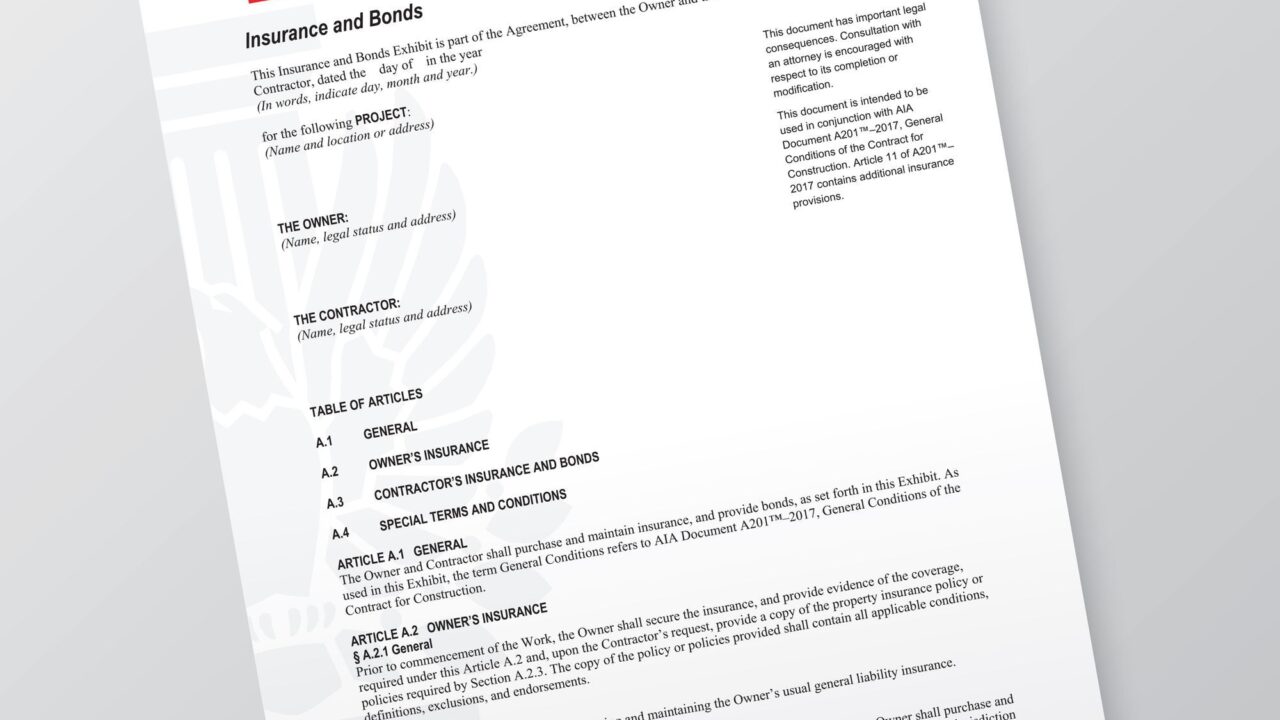
A significant 2017 revision to AIA’s A201 Family is the creation of an Insurance and Bonds Exhibit to accompany the owner-contractor agreements. There are also new provisions related to digital information and BIM. Key 2017 owner-contractor and owner-architect agreements require the use of AIA Document E203™–2013 to establish protocols for the development, use, transmission and exchange of digital data.
Cyber Security: Contractors Be Prepared
The best time to plan a response to cyberattacks is now, before an incident occurs. Start by identifying mission critical data and adopting risk management practices and; be prepared to assess its scope and nature. After recovering from a cyberattack, continue to monitor for any anomalous activity and make sure the company has regained control of its network.