Picture a workplace hazard – what comes to mind? Sawing or grinding equipment? Harsh chemicals? Heavy machinery? How about dust?
Dust does not usually top the list of perceived hazards, mostly because dust is hardly seen. Respirable crystalline silica dust, for example, is practically invisible with a size at least 100 times smaller than most sand, yet it continues to receive international attention as a hidden killer, particularly in the construction industry.
Dust is a normal part of the construction working environment and is so commonplace that it is easily ignored. Under the Occupational Safety and Health Act of 1970, employers are required to protect employees in construction from the hazards associated with exposure to construction dust and other respiratory risks. Yet, according to OSHA, regulations requiring employers to provide workers with respiratory protection to ensure their safety from dust and other inhalable materials were among the most violated standards in 2017.
Seemingly innocuous or not, jobsite dust can pose serious risks to workers and bystanders alike. It is important to understand why it is a problem, how to keep employees safe and avoid noncompliance fines in the process.
Why Care About Dust?
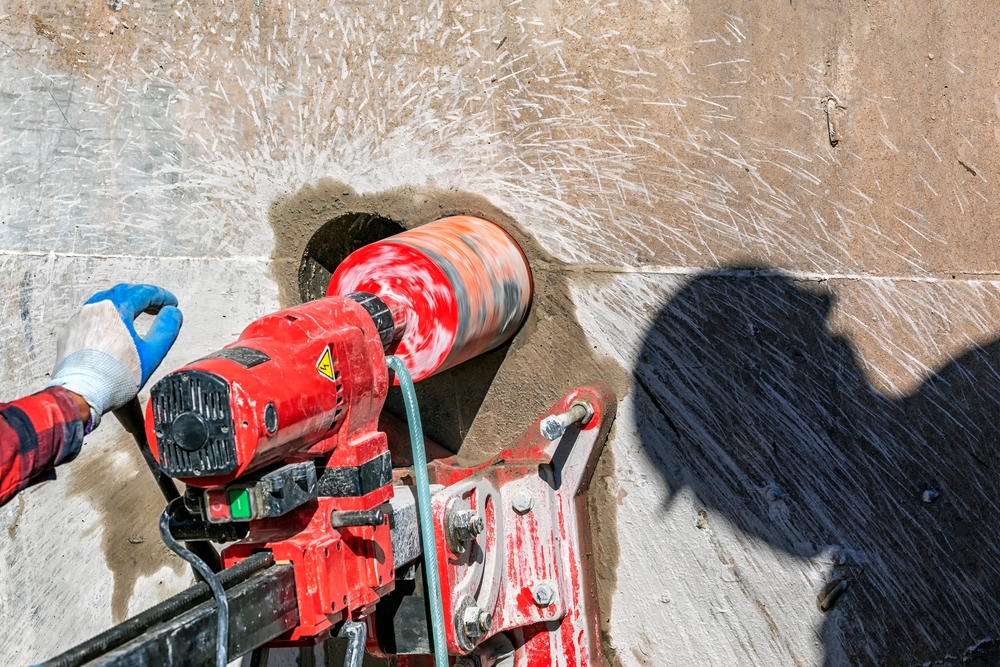
The most widely discussed form of dust in the construction industry is crystalline silica dust, which can be released into the air by cutting, sawing, grinding, crushing or drilling concrete, mortar, glass, ceramic, brick, sandstone and artificial stone, among other materials. While these materials are common and do not pose a significant health risk on their own, once silica is pulverized and released into the air as dust, it becomes dangerous.
According to OSHA, “Workers who inhale these very small crystalline silica particles are at increased risk of developing serious silica-related diseases, including:
- silicosis, an incurable lung disease that can lead to disability and death;
- lung cancer;
- chronic obstructive pulmonary disease (COPD); and
- kidney disease.”
Symptoms of these diseases are not necessarily obvious and can take decades to manifest, making them especially insidious. The damage done to workers’ health by dust may be imperceptible at first, but could eventually be fatal, making this threat important to monitor and consistently control.
What to Do About it
A final ruling by OSHA regarding control of silica dust exposure in the construction industry went into effect in September of 2017. It requires:
- an exposure limit of 50 micrograms of silica per cubic meter of air averaged over an eight-hour workday for construction workers;
- a written exposure control plan with someone competent assigned to implement it;
- medical examinations every three years that include chest X-rays and lung function tests for workers using respirators at least 30 days per year;
- training for workers on operations resulting in silica exposure and related mitigation practices; and
- records of worker exposure to silica dust and required medical exams.
There are three methods that an employer can use to comply with the regulations:
- Table method: A table has been created that lists the different tasks and equipment control methods OSHA has determined will reduce the exposure to the acceptable level, factoring in different times and environments.
- Performance or objective data: With this method, employers are permitted to use objective data to provide evidence that the control methods in place reduce the exposure limit to below the PEL.
- Scheduled air monitoring program: In this instance, exposure can be assessed through a dedicated air monitoring program, and the employer generates their own data to prove adherence to the standard limits. Employers are required to implement such a program when workers are exposed over the 25 μg/m3 over an eight-hour control period.
What’s Involved with Air Monitoring?
Personal dust sampling pumps are small, unobtrusive devices that come with several benefits. First, they provide the most accurate readings of dust levels that workers are actually exposed to throughout the day, accounting for changing conditions. Additionally, they showcase a commitment to individual worker safety while also protecting the company.
Personal dust sampling pumps function by drawing controlled volumes of air through filters located near the nose and mouth to simulate a worker’s breathing of particulates. Information on dust and temperature conditions is recorded by the pumps and can be remotely viewed by those tasked with air quality monitoring via Bluetooth connection and a smartphone app, depending on the model. The advantages of this are twofold: monitoring can be accomplished without interrupting the productivity of the worker, and recorded data can be sent via email or other methodology to comply with OSHA recordkeeping requirements.
However air sampling is conducted, have a plan to take action on findings to ensure employees are protected from hazardous conditions moving forward. This could mean more extensive deployment of personal protective equipment and ventilation improvements or changes to construction processes.
Take Air Sampling Seriously
Dust may be omnipresent on the jobsite, but it is far from harmless. Proper air sampling is about more than complying with regulations; it is also about protecting the long-term wellbeing of workers, customers and bystanders in the process. When implementing an air sampling program, air sampling equipment providers can help determine the right technology and procedures.