GPS time tracking is becoming an industry staple for more efficiently running a construction company—helping busy contractors monitor crew members and client projects. From cost analysis reports to tracking the location of individual employees, contractors will be better equipped to face every variable on a job.
Cut Down on Waste
A GPS time tracking app’s goal is to negate inefficiencies related to scheduling and productivity. By signing off on timesheets immediately, business owners and managers can keep a close eye on the productivity of their teams.
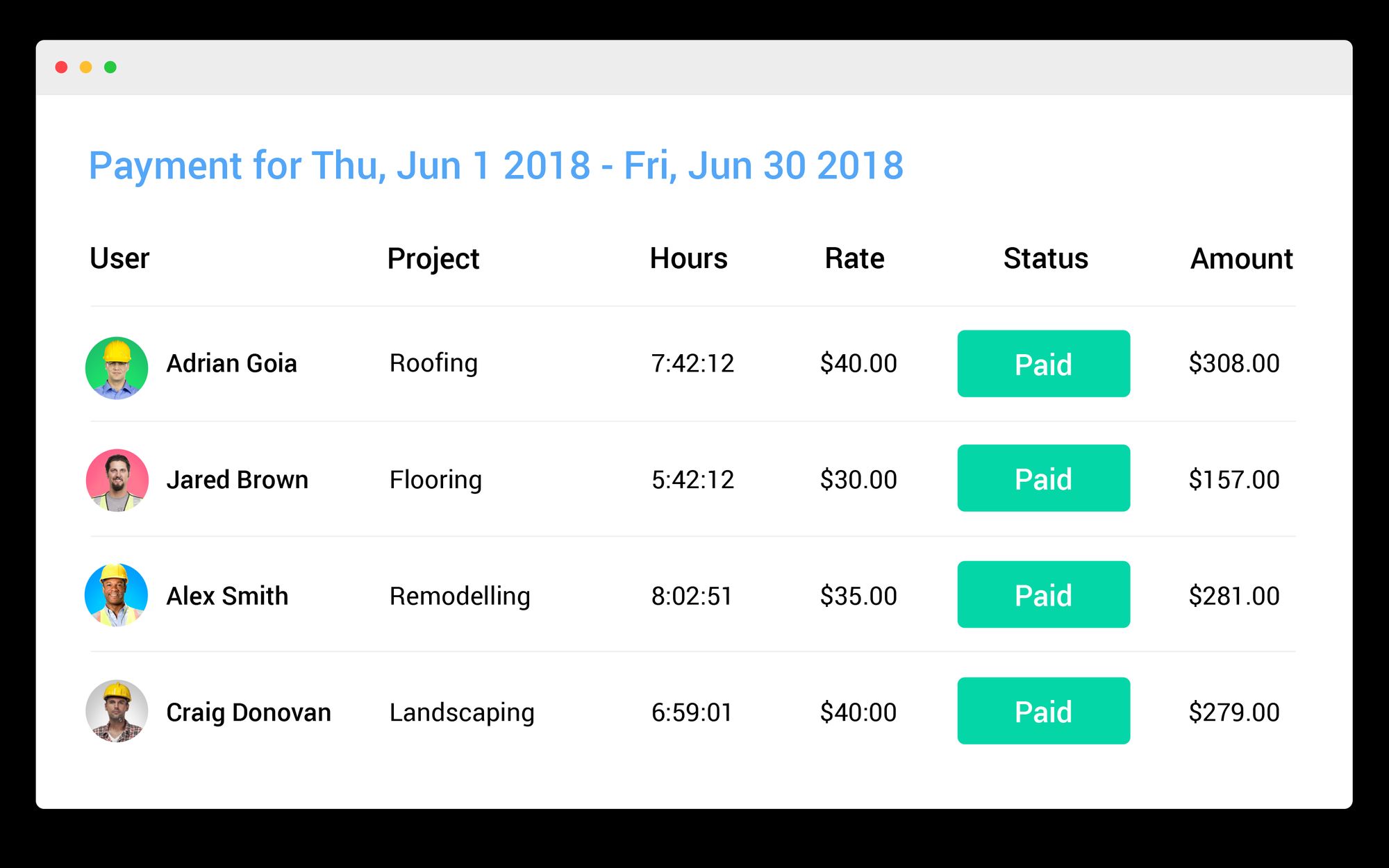
Once time cards are reviewed and approved, they can be exported for payroll or for client invoices. Being able to process payroll and approve requests instantly will help cut down on wasted time and inaccuracies.
Even better, GPS time tracking reduces the chance of unforeseen overtime for any one crew member. According to Intergraph’s “Factors Affecting Construction Labor Productivity,” scheduling heavy overtime for extended periods can not only double or triple the cost of the work of a standard 40-hour workweek, but it also produces less completed work due to productivity loss. In short, owners could easily pay for more than 100 hours of work and get less than 40 hours of productive work. Time tracking software’s ability to provide daily reports could greatly combat the pitfalls of overtime.
Easy to Use
Some technologies are double-edged swords. Certain advancements may run the risk of changing the roles of current crew members, or require additional training to operate new equipment or level up certain skills.
Streamlined time tracking has the benefit of bringing a company into the future without the overall replacement of skilled labor. Instead of balancing budgets and project cost reports over various spreadsheets, a time tracking app keeps it all in one organized place. A contractor can monitor the progress of various tasks while also keeping the budget in check.
The implementation of a time tracking app has a small learning curve. It won’t take retraining or certification; all it requires is a mobile device. From an employee standpoint, it’s easy to clock in and out, make schedule requests and report on progress.
A contractor can easily run payroll, schedule shifts and invoice customers.
This software is a great way to help manage subcontractors from one platform. Each job is different, so there are a number of time tracking apps available.
Adjusting on the Fly
Intergraph lists 33 factors that affect jobsite productivity. For example, increases in errors and omissions negatively impact labor productivity because changes are performed on a crash basis, out of sequence.
Another example is dilution of supervision. This occurs when supervision is diverted from productive, planned and scheduled work to analyze and plan contract changes, expedite delayed materials, manage added crews or deal with other changes not in the original work scope and schedule. Dilution is also caused by an increase in manpower, work areas or project size without an increase in supervision.
It’s impossible to resolve everything completely. However, the advantage of a time tracking app is that it will prepare the company to rise to unforeseen challenges with more automation at its disposal. Getting instant notifications from crews and subcontractors defeats the need to go from spreadsheet to spreadsheet, looking for errors or potential roadblocks.
The lines of communication among the customer and crew can help manage expectations during unexpected setbacks, and potentially limit the time and money lost during one. If a shift is missed or started late for any reason, managers are immediately alerted, and in turn can make adjustments to keep the day on schedule.
Time tracking apps can help ease the burden of both menial and important tasks, resulting in more time to balance current and future projects, as well as keep the company ahead of the construction industry and wherever it might lead.