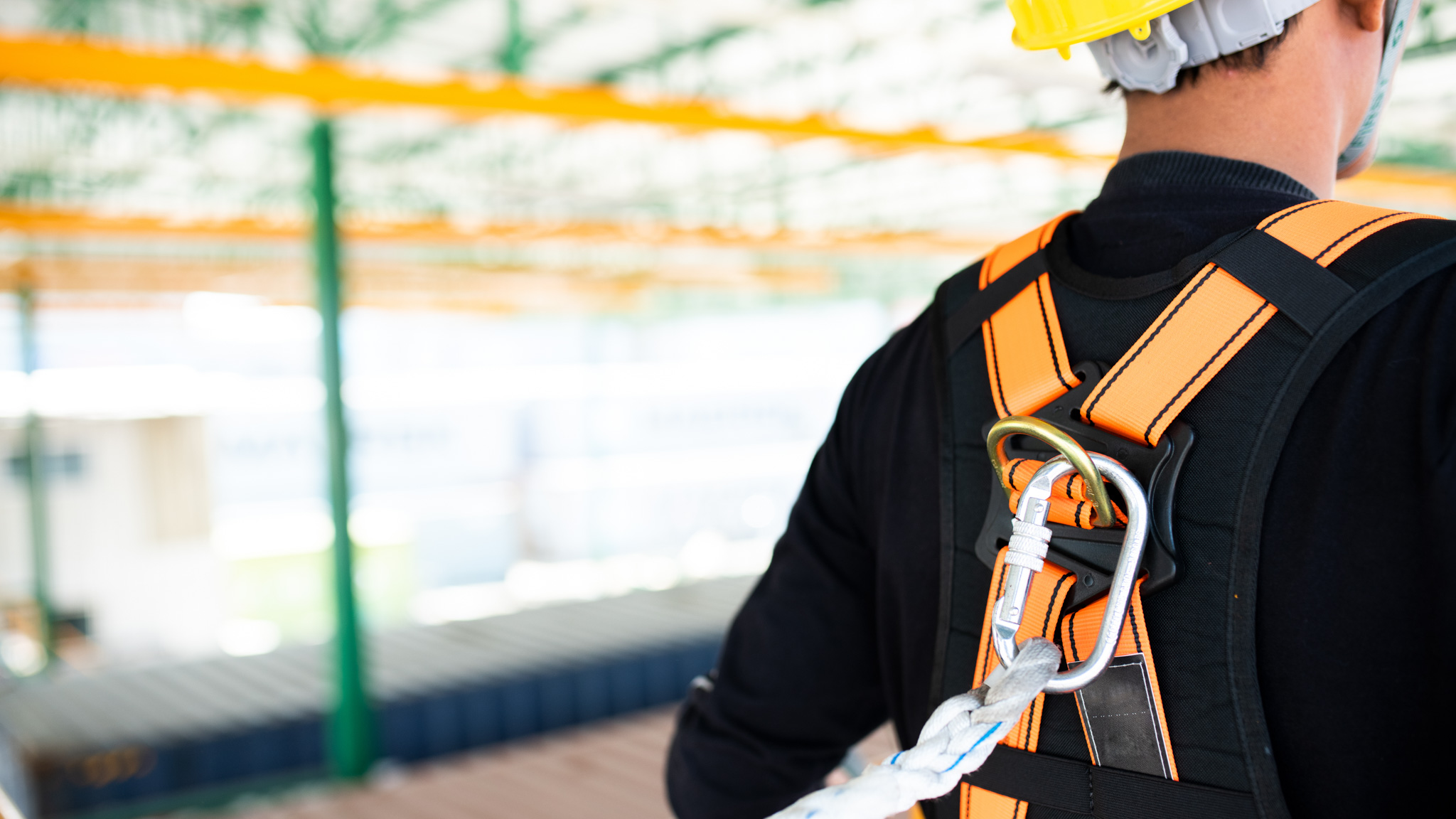
Fall protection programs are one of the pillars of most safety programs, especially for construction companies. Falls are the most common cause of injury to occur on the jobsite and account for nearly a third of all deaths in construction, according to the Occupational Safety & Health Administration. Not surprisingly, fall protection requirements have been the most-cited OSHA violation for the past 15 years.
Complying with federal, state, local or industry-specific safety regulations is important, and ensuring your jobsite meets all minimum requirements can help prevent tragedies. However, basic compliance does not guarantee worker safety. Companies must constantly be at the cutting-edge of technology and industry consensus in order to provide their workers with the best chance of avoiding injury or fatality from falls.
Some recent updates to the OSHA Fall Protection code and ANSI Z359 Fall Protection standards have taken effect and will impact many construction companies. Hopefully, these updates will help employers provide more robust fall protection for their workers and encourage safer work practices in the field. This article will briefly overview basic fall protection requirements and then discuss these recent updates, their potential impact on employers and how construction companies can remain proactive to prevent falls and ultimately save lives.
Basic OSHA Fall Protection Requirements
According to federal OSHA 1926, construction companies are required to provide some form of fall protection to any worker exposed to a fall hazard of six feet or greater. OSHA deems guardrail, safety netting and personal fall protection systems as equally acceptable forms of fall protection, so it is up to the employer to decide the most effective, applicable or appropriate fall protection method for the specific fall hazard.
Fall Protection User Training Requirements
Each company must also designate a competent person who holds a current certification from an ANSI-accredited training program. The competent person will be responsible for authorizing and training employees, routinely inspecting the site for new fall hazards to mitigate and maintaining the entire fall protection program. As long as employees receive official certification from a third-party trainer like Diversified Fall Protection or another fall protection manufacturer, the employer can designate as many employees as they would prefer. Since it requires a competent person to make any changes or additions to the fall protection equipment being provided to employees, companies with multiple jobsites are recommended to have multiple competent persons within their organization.
Additionally, employees are not permitted to use fall protection equipment until their employer conducts authorized user training and the competent person officially authorizes the worker to utilize the provided fall protection equipment. Even if an individual was authorized by a former employer to use fall protection equipment, their new employer must still provide basic fall protection training to authorize the worker for at-height work.
Fixed Ladder Update
As of 2018, OSHA requires all permanent, fixed ladders 24 feet or greater to include ladder safety systems. There are many compliant options available on the market, but the most common systems provide a cable or rail channel that has a shuttle connected to the chest D-ring of the climber’s body harness. This shuttle can help arrest falls right when they happen, so users who slip from their ladder don’t fall all the way to the ground below.
For ladders installed before 2018, OSHA currently has a deadline set for November 2036 for all affected ladders to be retrofitted with a ladder safety system. In fact, this retrofit is required for any eligible ladder at the moment of repair, maintenance or replacement.
However, in recent months, OSHA has floated the idea of lifting the 2036 deadline for businesses, so ladders would only have to be retrofit at the end of their service life. Some businesses are grateful for the extra time to become compliant, but many people in the safety community fear this will only further delay the installation of life-saving equipment on ladders. There is no safe height to fall from a ladder—the majority of ladder deaths occur under 10 feet. The longer we wait to make fixed ladders safer, the more workers will be injured (or worse) in the meantime.
ANSI Z359.14-2021 Update for Self-Retracting Lifelines
One of the most recent updates affecting fall protection users concerns self-retracting lifelines (SRLs). In August 2023, ANSI Z359.14-2021 took effect which made fall protection manufacturers reclassify SRL devices. Historically, they were differentiated into Class A and Class B. Class A devices were rated for a stopping distance of approximately 24 inches and kept fall forces under 1,350 lbs, while Class B devices were rated for a stopping distance of approximately 52 inches and kept fall forces under 900 lbs. But when it came to foot-level anchors or working around sharp edges, determining which devices were compliant was more difficult.
The recent update now reclassifies SRLs as either Class 1 or Class 2. Stopping distance and fall force rates are still relevant, but are no longer being used to differentiate the two types of devices. Class 1 SRLs are designed to connect to an anchorage at or above the user’s dorsal D-ring. Class 2 SRLs are designed to connect to those anchorage points, as well as anchors installed up to five feet below the user’s dorsal D-ring (AKA foot-level anchors). This differentiation was necessary because leading-edge falls were causing equipment failures, resulting in worker injury or fatality in many cases. Class 2 SRLs are rated to withstand the additional fall forces a worker experiences during a fall while connected to a foot-level anchor, thanks to the additional shock pack integrated into the system.
Some people find it helpful to remember that Class 1 SRLs have one option for tie-off (anything at or above the dorsal D-ring), and Class 2 SRLs have two options for tie-off (at or above the dorsal D-ring, and also anything at or above foot-level). Many construction sites have opted for caution and begun assigning Class 2 SRLs to field workers so they will be protected regardless of where their provided anchor is located.
Fall protection requirements have led OSHA’s Top 10 Most Cited Violations list for the past 15 years. Furthermore, ladder, scaffold and fall protection training requirements take up three other spots on the Top 10 list. When businesses and construction companies nationwide struggle to meet basic OSHA safety requirements, worker safety is compromised. In the current state, falls are one of the most common workplace injuries, and numbers have only increased in recent years.
Often, construction workers face limited options for installing anchors on jobsites, and that can significantly affect the range of options available to provide certain fall protection systems to workers. Collaboration among general contractors, fall protection providers and their end users can help advance efforts to create safer construction sites and integrate this equipment from the beginning of the build. The sooner fall protection is provided to workers, the better chance we have at preventing falls. The more falls are prevented, the more tragedies are avoided.
SEE ALSO: HOW TO GUARD YOUR CONSTRUCTION WORKFORCE AGAINST FALLS