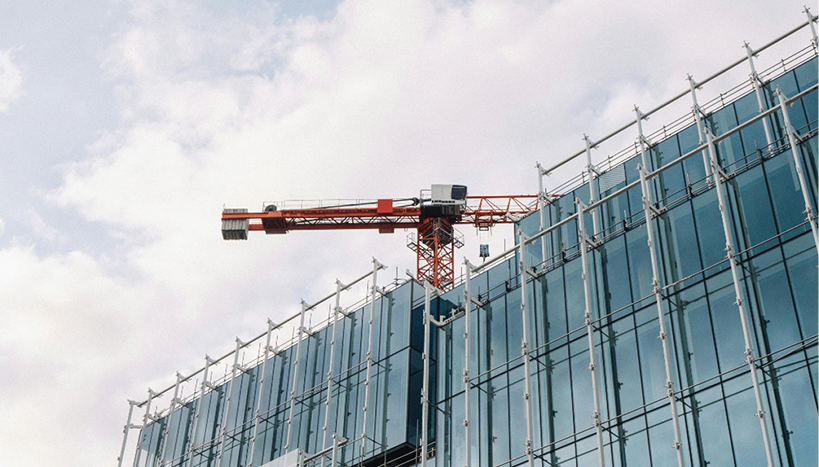
Nonresidential construction cost escalation trended toward normal levels in 2025, easing industry anxiety over U.S. emergency tariffs that had driven building costs significantly higher.
According to data published in the Beck Group’s latest construction cost report, nonresidential construction costs increased about 5% last year, which falls within the range of normal cost escalation. In 2026, construction cost inputs are expected to trend close to last year’s level, pending no major hiccups, such as a prolonged Middle East conflict.
Expectations of another year of stable construction costs, along with potentially lower interest rates and reduced inflationary pressures, helped buoy AEC firms’ hopes of improved business conditions later this year.
The report lists input costs for markets in Atlanta, Austin, Dallas/Fort Worth, Denver, South and West Florida, and Raleigh. It presents construction costs for healthcare, higher education, hospitality, office, multifamily, faith-based, parking and site work.
Tariff Impacts Overblown
Many AEC firms feared significantly higher prices for imported construction materials when the Trump administration unleashed an unprecedented flurry of global tariffs under the International Emergency Economic Powers Act and other statutes in the first quarter of 2025. The IEEPA tariffs had their greatest impact on metal products, such as aluminum, steel and copper.
But a Supreme Court decision in February ruled that the tariffs were deemed illegal. That led the administration to impose a 15% tariff increase under a different statute to replace the invalidated tariffs.
Surging demand for data centers and mission-critical infrastructure projects contributed to higher prices for metal products. But prices for other construction materials were largely capped by slower activity in nonresidential projects.
Significant construction cost escalation failed to materialize for various reasons. That included the administration successfully negotiating lower tariffs with some countries and no new 2025 tariffs following the initial round that year.
Other contributing factors included AEC firms implementing cost-containment strategies, such as negotiating supplier deals or purchasing materials from countries with lower tariffs. Some AEC firms’ workflow models, such as Beck’s highly collaborative design-build model, also proved valuable in stabilizing project costs.
Demand for Skilled Trades Heats Up in Cooling Labor Market
Additionally, input costs remained affected by the ongoing shortage of construction workers. That trend is exacerbated by a proliferation of data center and other large-scale construction projects, which are siphoning skilled workers from other projects by offering higher pay and other attractive incentives.
However, overall demand for construction labor has cooled amid fewer commercial projects, particularly in the office and multifamily segments. Higher borrowing costs have made it difficult for owners and developers to pencil in these projects profitably. But steady demand exists for healthcare and educational projects, which are typically funded with public investments.
Costs are also impacted by building codes and regulations, building designs and other factors. Those costs generally gradually rise over time and are in addition to material and labor costs.
Firms still face headwinds that could push construction costs above anticipated levels this year. More costly tariffs and other event risks could potentially lead to supply disruptions, material scarcity and higher energy costs.
Regional Cost Disparities
In the breakdown of building costs in Beck’s markets, there are significant differences across regions and industry sectors. Size, location, project type and complexity, labor wages and material prices are among the mix of factors influencing construction costs.
South Florida had the highest input costs in Beck’s operating regions. West Florida, Denver and Atlanta were also at the high end of costs, while Raleigh, Austin and Dallas/Forth Worth were on the lower end.
The report shows significant cost differences across several building categories in Beck’s markets.
Below are examples of building costs in Beck’s markets. The building sectors listed below reflect the lowest (generally Dallas/Foth Worth) and highest (generally South Florida) construction costs in the firm’s markets.
- Healthcare–In Beck’s seven markets, the cost of building an acute care hospital ranges from a low of between $705 to $832 per square foot to a high between $795 and $938 per square foot. Costs for a core-and-shell medical office building (without tenant improvements) range from $225 to $265 per square foot to $292 to $345 per square foot. Many industry veterans may recall that the cost to build complex healthcare facilities, such as hospitals, ranged from $500 to $600 per square foot. Those costs are now approaching $1,000 per square foot, reflecting technical requirements and long-term escalation.
- Hospitality–Construction costs for a five-star hotel range from a low of $594,392 to $701,338 per key to a high of $990,654 to $1.168 million per key. The cost of a four-star hotel ranges from $235,945 to $278,397 per key to $499,093 to $588,892 per key.
- Higher Education–Building costs for general classroom and office buildings range from a low of $403 to $476 per square foot to a high of $621 to $733 per square foot. The projects’ renovation costs range from $355 to $418 per square foot to $433 to $511 per square foot.
- Multifamily–Input costs for a rental high-rise project range from a low of $330,956 to $390,503 per square foot to a high of $623,130 to $735,246 per square foot.
- Office–Input costs for a seven-plus-story, core-and-shell office building (without interior finishes and parking facilities) range from a low of $237 to $279 per square foot to a high of between $326 and $385 per square foot. The cost of constructing office buildings is approaching $300 per square foot nationwide, up from the historically lower end of $200 per square foot. The office market has undergone structural changes since the pandemic, with many older or underutilized buildings being used or planned for residential or mixed-use projects. There is a general lack of interest in speculative, ground-up office buildings due to higher borrowing costs and concerns over their profitability in the current environment.
- Faith-Based–Worship space construction costs range from a low of $424 to $500 per square foot to a high of $659 to $778 per square foot. Renovation costs for this building type range from $189 to $223 per square foot to $231 to $272 per square foot.
- Parking–Construction costs for a precast parking structure range from $18,672 to $41,420. For an above-grade podium parking structure, the cost to build this facility ranges from $43,179 to $84,824.
- Sitework–For work on urban sites less than five acres, costs range from $1.45 million to $2.32 million. For non-urban sites between 5-15 acres, the cost ranges from $911,808 to $1.45 million; for non-urban sites larger than 15 acres, the cost ranges from $561,674 to $896,639.
Barring any unforeseen bearish events in 2026, construction cost inputs are expected to mirror cost escalation in 2025. This year also marks a period of guarded optimism among AEC firms, following a turbulent year. Beck will publish an update on nonresidential construction costs in the markets listed above later this year, providing a snapshot of how building costs are transforming a dynamic built environment.
SEE ALSO: