Research labs run experiments that can’t be paused. Hospitals treat patients around the clock. Yet these same facilities constantly need upgrades—new infrastructure, modernized systems, renovated spaces—to meet the demands of twenty-first century science and medicine. The challenge for construction teams isn’t just building. It’s building without ever turning the lights off.
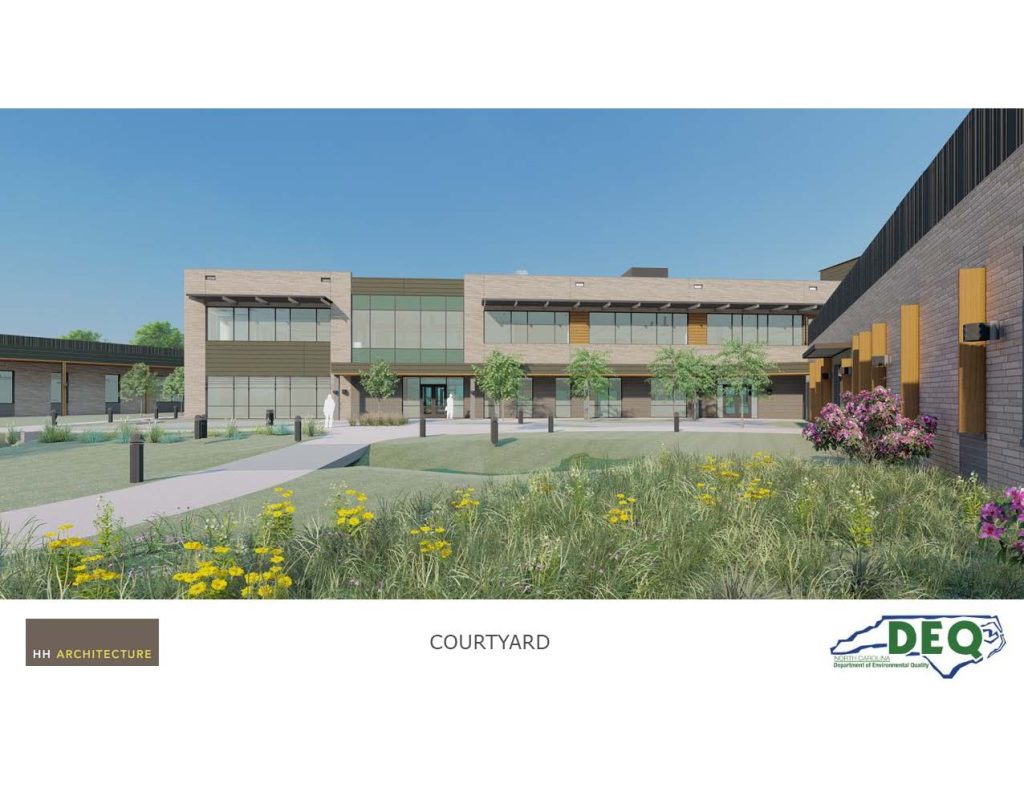
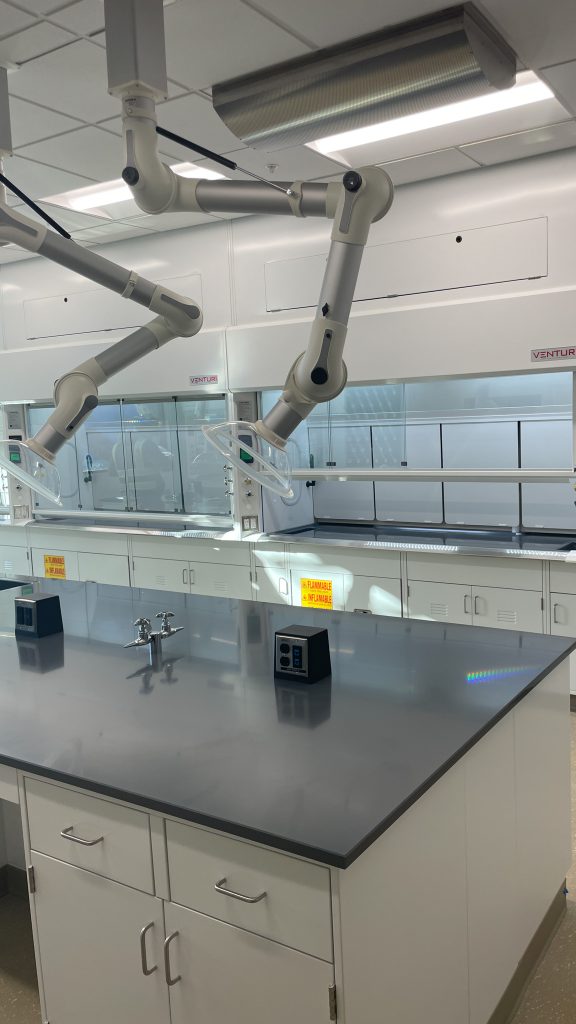
This unique dynamic creates an environment where construction activities are happening adjacent to sensitive testing and treatment, a complex setting where disruptions can have serious consequences. Skanska continues to successfully navigate these challenges across multiple sectors, including from occupied lab space at the North Carolina Department of Environmental Quality’s (NCDEQ) Reedy Creek Laboratory in Raleigh to hospital corridors alongside staff and patients in various hospital locations across the country.
While laboratories and hospitals are inherently different, the approach behind renovating these facilities without disrupting regular operations is quite similar. The secret sauce: strong communication with the customer, alongside careful planning and strategic scheduling that keep disturbances to an absolute minimum.
Construction in Phases
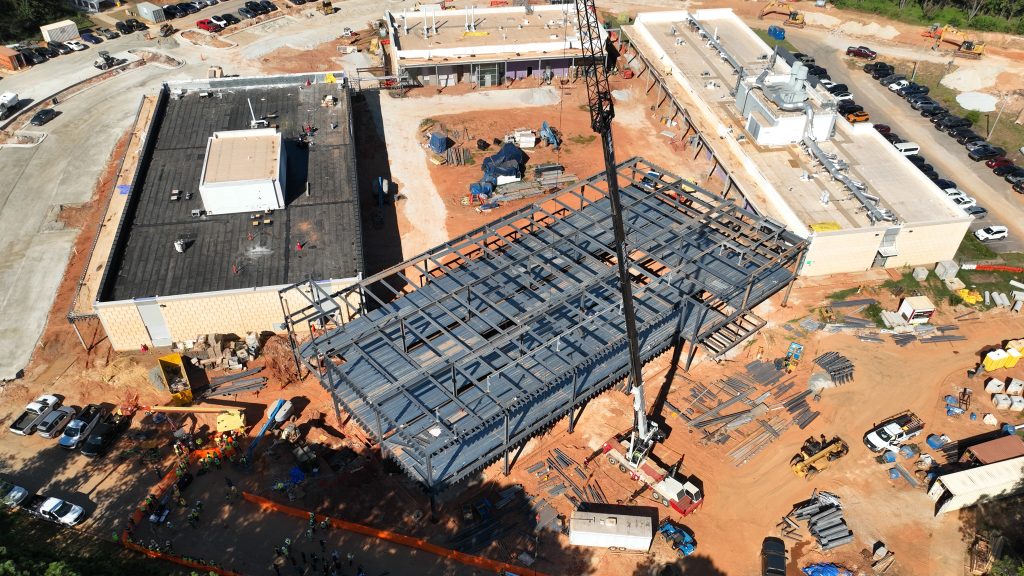
Splitting construction into phases is critical: It allows upgrades to be carried out in predetermined spaces, while maintaining the majority of the customer’s standard operations. This strategy is implemented with a detailed schedule that establishes the framework for the duration of critical activities in each specific phase, guaranteeing the customer is informed about every step in the process. Each phase is sequenced deliberately and intentionally, such that work generating the most noise, dust or disruption is clustered together and scheduled when it will have the least impact on surrounding operations, so that no single moment in the project catches the customer off guard.
Navigating Disruptions
While assembling a thoughtfully crafted plan to renovate an active facility is difficult in itself, the real challenge begins when crews step into the occupied space to start construction activities. Isolating the activities with barriers is crucial to maintaining operations and reducing the impact of noise and vibrations.
Skanska has extensive experience working within active hospitals nationwide. Protecting patients, staff and ongoing operations is always a priority. Construction activity is carefully isolated from treatment rooms, laboratories and corridors through temporary partition walls and negative air pressure environments that keep dust and debris within the construction zone. This is instrumental for patients to receive uninterrupted treatment and testing progresses as usual.
At NCDEQ, the firm utilized vibration monitors on sensitive equipment to ensure construction activities had no adverse effects. In addition, while noisier actions and complex electrical work were completed on weekends or outside of typical working hours.
Maintaining Critical Infrastructure and Technical Systems
Occupied facility renovations demand meticulous attention to air quality, power continuity and specialized infrastructure. Air quality is particularly crucial in healthcare facilities and laboratories, where airborne contaminants from construction could compromise patient health or experimental integrity. In instances such as this, advanced filtration systems and carefully sealed containment barriers can be used to ensure particulates and fumes stay confined to construction areas—a standard that goes beyond typical jobsite practice.
While air quality is a major concern, the presence of construction chemicals in a laboratory space pose a similar threat to ongoing research. Skanska held extensive discussions with the NCDEQ to identify and review the chemical makeup of proposed construction materials, verifying these chemicals would not impact ongoing testing. Knowing exactly what compounds were present in the lab determined which adhesives, coatings and construction materials could safely be used in proximity to active research.
Maintaining power during construction is perhaps the most important when working on an occupied facility. Healthcare and research facilities depend on uninterrupted electrical service for everything from life-support equipment in hospitals to climate-controlled sample storage in laboratories. While upgrading electrical systems at NCDEQ, Skanska used temporary panels, circuits and mechanical connections to sustain power for lab technicians as work progressed, ensuring that at no point during the electrical upgrade did researchers lose power to the equipment they depended on.
In addition to electrical upgrades, Skanska’s work at operating facilities throughout the country include the replacement of the entire mechanical, electrical and plumbing infrastructure; these sophisticated overhauls require careful tracing of the existing MEP systems to confirm there is no interference while preserving service throughout the facility’s active and occupied spaces.
Keeping Crews and Occupants Safe
The importance of safe construction practices is always paramount; however, safety is further heightened when working in active facilities. The construction site is no longer an isolated zone but a shared space where construction workers, facility staff, patients or researchers may all be present simultaneously. Managing that reality means more than posting signage—it requires construction teams and facility staff to operate as a single coordinated unit, with clear protocols for who goes where, when and why. Comprehensive safety measures include creating clearly marked construction zones, establishing controlled access points and exits, implementing strict material handling procedures and maintaining constant communication between construction teams and facility management.
Building For Tomorrow, Operating Today
Renovating active healthcare and laboratory facilities is entirely achievable with the right combination of strategic planning, technical expertise, and collaborative communication. Skanska has proven that success relies on a phased construction approach, rigorous safety protocols, earned trust and a commitment to minimizing disruption to the essential operations within these spaces.
The work performed at NCDEQ and various research and hospital locations throughout the country doesn’t just provide modernized facilities, it demonstrates that with enough planning, transparency and technical discipline, construction and critical customer operations can share the same space without either one giving ground. As the demand for modernized healthcare and research infrastructure continues to grow, projects like these will serve as a blueprint for how the construction industry can address that need without completely shutting down critical operations.
SEE ALSO: INSIDE CONSTRUCTION’S HIGHEST-PERFORMING PROJECTS