With the signing into law of the $1.2 trillion Bipartisan Infrastructure Framework, the construction industry faces a broad range of new opportunities.
Architecture, engineering and construction firms that specialize in road and bridge work, and the subcontractors who support them, may find themselves especially busy, since $110 billion has been set aside for roads, bridges and major infrastructure projects, $40 billion of it for bridge repair, replacement and rehabilitation.
But not everyone will share a piece of the pie.
Winners and Losers
The construction companies that will benefit most from this new wave of opportunities are likely to be those that take best advantage of new and emerging digital technologies that help bring construction projects in on time, on budget and on target.
Digitalization in construction is lower than in nearly any other industry and it costs—in the form of time and budget overruns that occur as a result of surprises, complications and unforeseen circumstances.
For some players, onsite hiccups are par for the course, just “the cost of doing business” in the construction sector. However, a new class of digital twin technologies is enabling savvy construction companies to avoid many of them, resulting in faster turnarounds; safer, more efficient jobsites; increased profits; happier clients; and increased success all around.
3-D Digitization Drives Change
While the conditions imposed by the COVID-19 pandemic helped to accelerate the integration of digital tools into the construction sector for some leading-edge companies, much more is on the way. Notable among these emerging new capabilities is 3-D digital twin technology.
Most people have heard of digital twins, which are a digital representation of something in the physical world. But not all digital twins are in 3-D, nor are they all accurate reflections of what that physical space looks like right now. Those two factors, a) being in 3-D, and b) depicting a real-time representation of the physical reality of a jobsite, capturing all recent changes or progress are game-changers for professionals in the AEC sector.
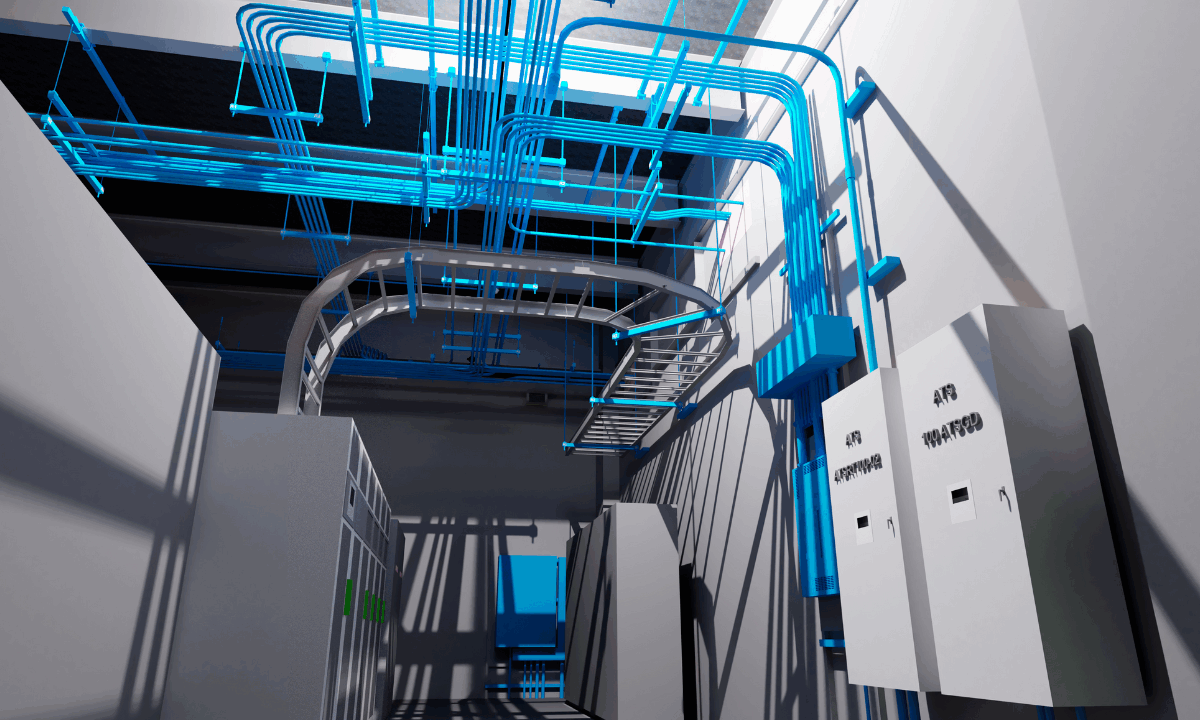
The advantages offered by 3-D are compelling. With 3-D digital twin technology, offsite experts have in-depth access to onsite views into the as-built specifics of a project. Viable for use in pre, during and post construction stages, 3-D digital twin platforms provide up-to-date 3-D visual representations of a physical site or asset while enabling as-designed building information modeling vs. as-built reality comparison analysis, secure collaboration and ongoing data analytics across the enterprise.
Therefore 3-D digital twin technology makes it easier to manage the multiple complexities inherent in projects. If your goal is to identify, and solve, problems before they occur, 3-D digital twin technology increases your odds significantly.
Advantages of 3-D Digital Twin Platforms
As a result, 3-D digital twin platforms are gaining mindshare as a powerful, cost-effective tech investment for builders and owners alike. This technology displays a remarkable ability to provide users with benefits on both sides of the equation for a key set on considerations:
- Ease of deployment and functionality. Many digital twin platforms are either extremely sophisticated and complicated, or they’re really easy to set up, but don’t provide much functionality to the enterprise. Contractors and owners need something simple and powerful that any worker can set up and use.
- Digital models and physical reality. As-built 3-D representations are continually updated to reflect what’s going on with the actual construction site or facility, enabling builders to constantly track correct implementation of design intent as manifested by the BIM data.
- Security and open collaboration. Granular authentication and access permissions are a vital part of any successful digital twin platform so people can see and control what they’re supposed to—and unauthorized access is prevented.
- Flexibility and customization. Not all contractors have the same skill sets or level of technical expertise. A solution needs to be usable by people with little technical training, and still be robust enough to be useful to people with extensive experience—whether the project is a new, high-tech building, a road, bridge or simple renovation project.
To Win, Build Smart
To increase productivity in construction, builders and owners everywhere need to be able to visualize resources, workflows, digital services, environmental impact, as well as risks and rewards in everything they build and manage. Emerging technologies will be key to that transformation and hold the potential to improve outcomes in the construction industry in many ways, making the industry more efficient and more environmentally sustainable.
The goal of rebuilding U.S. infrastructure is nothing less than a mandate to build smart—and the keys to building smart lie in a new wave of digital tools including 3-D digital twin technology.
Because, as any experienced builder will tell you, having the right tool for the job is critical for success.