When people think of artificial intelligence, the first things they picture is ChatGPT. The next thing they might picture is HAL from 2001: A Space Odyssey. In a few years, the third picture might look something like the brainchild of Alexander Michalatos, CEO and cofounder of Buildcheck, a pioneering construction design-review platform that was created to read construction’s visual documents across architectural, structural, civil, mechanical, electrical and plumbing disciplines.
In 2025, Buildcheck officially launched after raising $5.9 million in seed funding—with help from Uncork Capital, Peterson Ventures, XFund, and founders and senior executives at OpenAI, Opendoor, CBRE, Zillow and more.
Michalatos sat down with Construction Executive to discuss the rigorous creative and prototyping process for this product, how he expects the technology to evolve over the next decade, as well as many details in between.
What type of technology is Buildcheck?
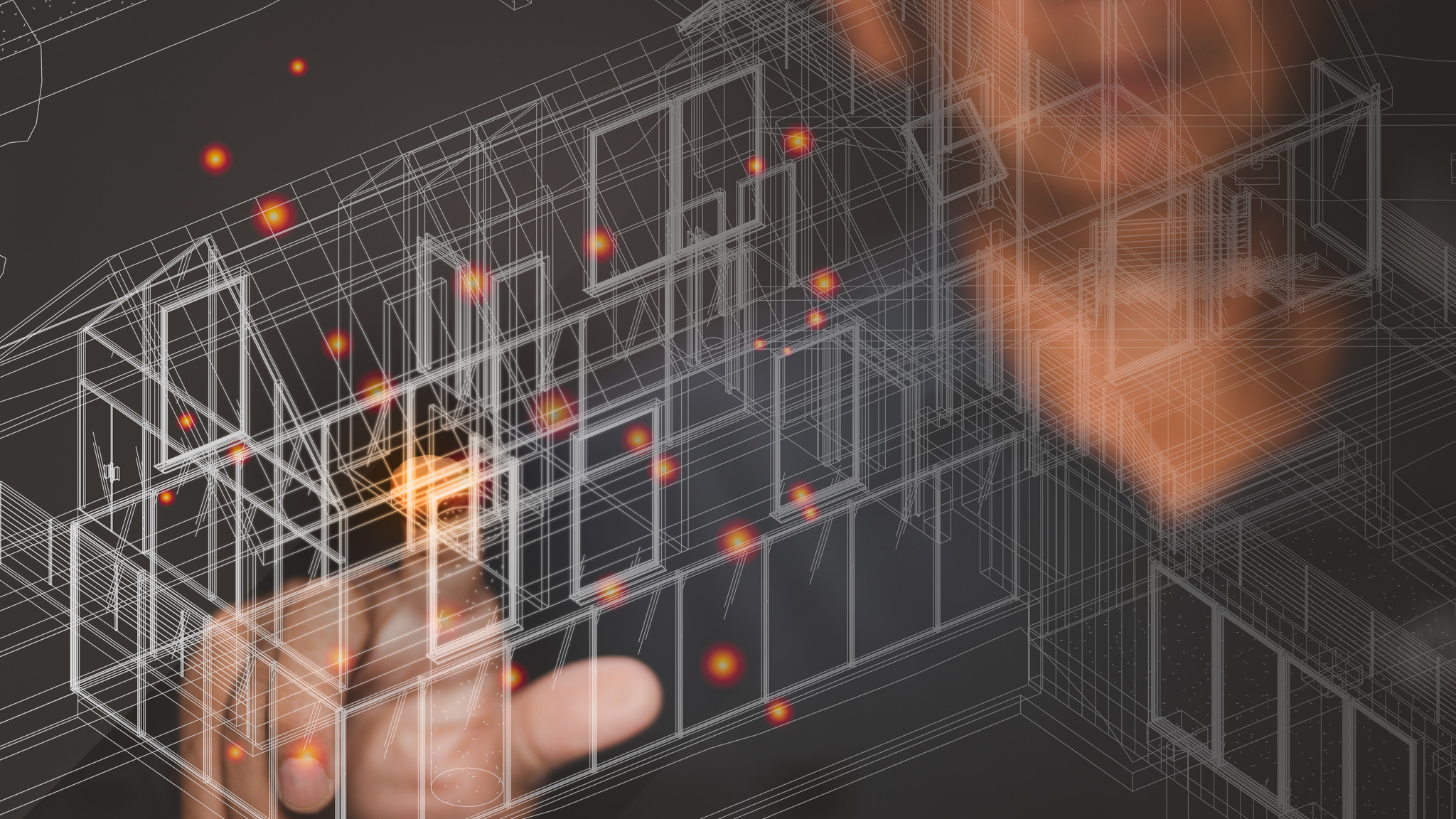
Buildcheck is an AI-powered design review platform. We’ve trained computer vision models to read construction drawings—the language of construction—so we can catch coordination errors, missing scope and cross-discipline conflicts before they turn into RFIs, change orders or city comments. We work with real estate developers, general contractors and design firms, and our customers typically see a 10x to 40x return on what they spend with us.
What was the impetus for creating Buildcheck?
The impetus is personal. I grew up in a construction family in Vancouver—my father built single-family homes for decades—and I spent my own career on the owner, general contractor and design sides: Stantec, Honeywell, EllisDon on hospital design-builds and QuadReal on mixed-use development. Across every one of those roles, I kept seeing the same pattern: small inconsistencies scattered across hundreds of sheets that nobody caught until steel was going up or concrete was being poured. Globally, that’s a $200-billion problem. When I stepped back, it was obvious: Construction doesn’t run on contracts or emails, it runs on drawings. Until AI could actually read the lines on a sheet, it was going to stay peripheral to real construction risk. That’s what Buildcheck is built to solve.
Who is Buildcheck’s main type of client within construction?
Primarily general contractors and real estate developers, with a growing number of architecture and engineering firms using us as an internal QA/QC layer. Our customers include EllisDon, AvalonBay, Novo Construction, Dempsey Construction and many more.
The common thread is that they’re all managing design risk—not just building. That’s a bigger group than it used to be. Public infrastructure is increasingly delivered through design-build and alliance contracts, which push design responsibility onto contractors. Mid-market developers are engaging general contractors earlier through preconstruction services or GMP structures. Architects are carrying more professional liability exposure on bigger, more complex drawing sets. All of them share the same underlying need: find the coordination gaps before they get priced into a change order.
We tend to fit best with firms that have already decided design coordination is a bottleneck. They usually know exactly where it hurts; our job is to show them that AI can now do something about it.
Do you work with clients outside of construction?
No, and that’s intentional. Computer vision on construction drawings is a uniquely hard problem—drawings aren’t standardized, symbol sets vary by firm and discipline, and layering conventions shift project to project. Training a model that genuinely understands an MEP sheet versus a structural sheet or civil sheet takes years of labeled data and domain expertise. That depth is the moat, and it only comes from staying focused.
That said, the underlying technology could apply to other drawing-heavy industries—shipbuilding, aerospace manufacturing and certain industrial engineering verticals. For now, the opportunity in construction alone is enormous. The global design-error problem is $200 billion annually and nobody has solved it. We’d rather be the best in the world at one thing than average at several.
Do you still run into problems with designers/companies hesitant to use AI for preconstruction? How do you create buy-in/convince them to get onboard in the first place?
Yes, and I think that skepticism is healthy. There’s a lot of AI-washing in construction tech right now and buyers are right to demand proof.
For our clients, a demo is the starting point, but the real conversation begins when we run their drawings through Buildcheck. In most cases, we come back with dozens to hundreds of flagged issues that their experienced team hadn’t caught. If that first project lands, a companywide rollout tends to follow naturally. We also invite any prospective customers to talk to current customers and hear directly from them, not us.
The other piece is framing. We aren’t replacing labor; we’re enabling your people to do more. Your senior reviewers still make the judgment calls. We just compress the hours of repetitive pattern-matching work—the missing power, the mismatched fire ratings, the clashing service connections—so your people can spend their time on the decisions that actually require expertise. When buyers understand that, the skepticism usually shifts from “will this work?” to “how fast can we roll it out?”
Does this type of tech only apply to the preconstruction process?
Preconstruction is where we start because that’s where the ROI is most obvious. Catching a coordination issue on a sheet costs almost nothing to fix; catching it in the field can cost six figures and weeks of schedule. Front-end planning research from the Construction Industry Institute has consistently shown returns of roughly 10:1 on investment in document quality before construction.
But computer vision on drawings unlocks workflows across the entire project lifecycle, such as shop drawing cross-checks against the IFC set, change-order quantification, automated takeoffs and, eventually, as-built verification. The same underlying models that detect errors today can drive proactive design improvement tomorrow—through real-time coordination feedback as drawings and design optimization evolve.
The long-term vision is that drawings stop being static PDFs and start being structured, machine-readable artifacts. Once that happens, everything downstream—estimating, procurement, coordination, closeout—gets meaningfully faster.
What was the development/prototyping process like for getting this product out the door?
Our process was and continues to be rigorous and disciplined. We’ve spent over three years building proprietary models trained specifically for construction drawings, but also building the user experience around it. Neither of these can be vibecoded because the domain expertise and customer feedback loops take time to establish.
Two things shaped the process. First, we chose quality at every step—from labeling the data and fine-tuning the models to having construction experts verify every AI output before it reaches the customer. Second, our earliest customers did more to shape the user experience than any internal plan ever could have. General contractors and developers willing to give us feedback are how we figured out what reviewers actually want to see first, how to surface severity and how the interface should mirror the way their teams already work.
How has this type of technology evolved since Buildcheck’s inception? Where do you see it going by the next decade?
When we started, most construction AI was optical character recognition, chatbots layered over contract text or basic clash detection inside a BIM model. Useful, but peripheral to the core risk. The shift over the last two years has been toward specialized vision models that can actually interpret 2D drawings—the medium construction still overwhelmingly runs on.
Looking out ten years, I’d expect three things. First, error detection becomes table stakes—every major project will run through automated review the same way it runs through code check today. Second, the tooling moves from reactive to proactive: Rather than flagging problems after a set is issued, AI will provide real-time coordination feedback inside the design-authoring tools as drawings evolve. Third, we’ll start to see genuine design optimization—AI that suggests smaller duct runs, more efficient structural layouts and value engineering moves grounded in both code and constructability.
Is there fear that this type of AI will ‘take people’s jobs’?
It comes up and it deserves an answer. AI isn’t going to replace most construction jobs—it won’t sequence concrete pours, negotiate a subcontract or lead a toolbox talk. Leadership and judgment in construction remain deeply human. And besides, there is a huge backlog of work for the entire industry. We want to do more and technology enables that; we can’t afford to lose people.
What AI removes is the repetitive, pattern-based review work that consumes hours: hunting missing dimensions across 400 sheets, cross-referencing fire ratings, chasing broken callouts. Given the industry’s labor gap and flat productivity, the real risk isn’t AI taking jobs. It’s the industry being unable to deliver enough projects, affordably, because we can’t scale human expertise fast enough. AI is a leverage tool for the people already here.
How has this tech saved money, time, safety, productivity?
Money and time are the easiest to quantify. Design errors and coordination gaps drive an estimated $200 billion in global overages annually. On individual projects, we regularly see six-figure savings and multi-week schedule protection—on one 230-unit multifamily project, over $500,000 in cost avoidance and 27 days of schedule saved. Under conservative assumptions, customers see 10-40x ROI.
Safety is the most underappreciated. The highest-severity inconsistencies we catch are life-safety issues—mismatched fire ratings between disciplines, undersized electrical feeds to fire pumps and missing sprinkler branches. Finding those in the documents, before installation, is meaningfully better than catching them at commissioning.
Do you believe this type of technology is gaining momentum within the industry? Is it helping give AI a friendlier reputation within construction?
Yes, clearly. Recent industry surveys show up to 64% of construction organizations experimenting with AI. Two years ago, the first meeting was about, “Does this work on drawings at all?”
Today it’s about which vendor, what pilot structure, what rollout. That’s a meaningful shift.Construction is actually one of the better industries for AI to land in, because it’s pragmatic. Professionals don’t care about hype—they care about dollars saved, days saved and risk reduced. When they see AI flag a real issue on a real drawing set, skepticism fades quickly. The caveat: Overpromising vendors can set the category back. The industry has a long memory for broken tech promises.
Anything else?
Don’t conflate AI with LLMs. A lot of construction buyers assume ChatGPT-style tools are what AI looks like. Those models are excellent at text—contracts, specs, RFIs—but construction’s highest-value problems are visual: drawings, models, site conditions. The vendors solving those problems are doing specialized computer vision work that looks very different from a chatbot wrapper. When you’re evaluating AI tools, the first question to ask is what the models were actually trained on.
SEE ALSO: SIX AI SOLUTIONS DRIVING PRODUCTIVITY AND PROFITABILITY IN CONSTRUCTION OFFICES