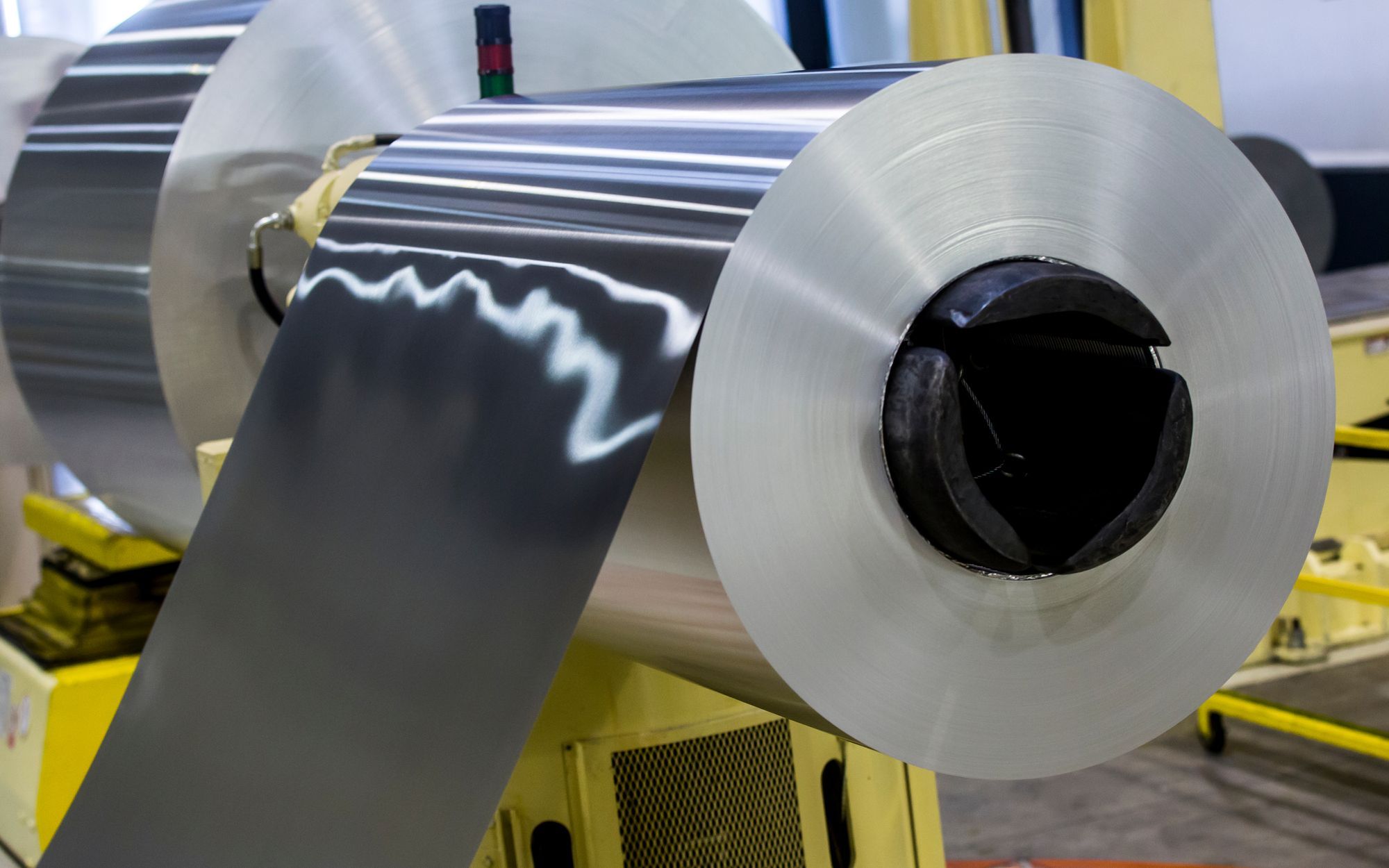
More so than any other metal available for the construction market, coil-anodized aluminum provides the weight, durability, and aesthetics that can benefit construction companies and building owners. Its extreme durability, light weight, high strength-to-weight ratio and easy installation make it a highly functional material, while its natural, three-dimensional metal look and coloration options ensure premium aesthetics. Anodized aluminum can provide the likeness of a number of different metals for architectural applications, but with easier installation, lower costs and better weathering resistance.
Strength, durability and style
Continuous coil anodizing delivers excellent quality regarding the strength and durability of final products, contributing to the overall durability of a building exterior. Continuous coil anodizing forms a clear, protective oxide layer that is hard, similar to sapphire—which is second in hardness (diamonds are the hardest)—that protects the metal from corrosion and abrasion over the long term. It is also self-healing if damaged, as the aluminum will naturally create a protective oxide layer wherever it is exposed to the elements.
The three-dimensional crystalline structure of the aluminum oxide layer also reflects and refracts light in ways that help the surface come alive. Unlike paints or coatings, this oxide layer is grown from the raw aluminum and bonded at the molecular level so it cannot chip, flake or peel like paints and coatings often do.
Unlike other coloration processes, including batch anodizing, the continuous coil-anodizing process can achieve excellent color consistency, even across multiple coils or production runs. This unmatched level of consistency is possible because the continuous coil anodizing process exposes every square inch of the coil to each part of the process for the same amount of time.
With additives to the coil-anodizing process, anodized aluminum can be made to look like almost any other metal, including brass, copper, bronze, zinc, gold, silver, stainless steel, titanium and carbon steel. Anodized aluminum, however, does not tarnish like brass, patina like copper or fade like bronze, so these metal looks are stable over time and with UV exposure.
Ease of installation and competitive costs
Natural metals are a commodity, and therefore prices can have a degree of volatility. However, anodized aluminum is as much as two-thirds lighter than other metals and has a high strength-to-weight ratio, which can often cost 60 percent to 70 percent less per square foot than many other natural metals. This also contributes to cost savings for structural aspects of the project, as the structure does not need to support significant added weight as in the case of copper or steel.
The handling and installation of coil-anodized aluminum are simple, as the material is lightweight and workable. This solves many challenges faced in construction due to rigid or heavy materials. Many anodized aluminum panels can be installed on buildings with standard hand tools, not requiring the expense of a crane as is the case with other materials.
Coil-anodized aluminum can also be perforated in a variety of patterns to a range of percentage openness before anodizing. Perforated aluminum, when used on building or garage exteriors, can provide noise control, improved HVAC efficiency, screening of sunlight and environmental particulates, and management of a structure’s wind or heat loads—all with low weight requirements.
Conclusion
Coil-anodized aluminum can be used for a wide range of architectural and construction applications, including building facades, curtain walls, roofs, column wraps and lighting. Building facades can be installed as honeycomb panels, aluminum composite panels, solid metal panels and roll-formed panels. In all of these applications, it provides a wide range of benefits to construction companies installing the aluminum products and to the building owners who are concerned with cost, durability, and aesthetics.
With functional benefits of a high strength-to-weight ratio and superior durability, and the aesthetic benefits of a natural metal look in a variety of colors, anodized aluminum is uniquely suited to bring tremendous benefits to building owners and construction companies.