In the last six to seven years, building information modeling has gained serious traction in construction, and although it is probably no longer as “sexy” anymore with all these emerging new technologies, its advantages continue to grow. In this sense, it is crucial to emphasize the concrete and significant ways BIM will continue transforming construction projects in 2024. You will see that I do not mention AI as standalone bullets below, because really AI is starting to disrupt all of them.
The attempt here is to describe the trends that have and will have tangible impact today and not the glamorous smoke-and-mirror promises.
Trends of BIM That Will Be Particularly Relevant in 2024
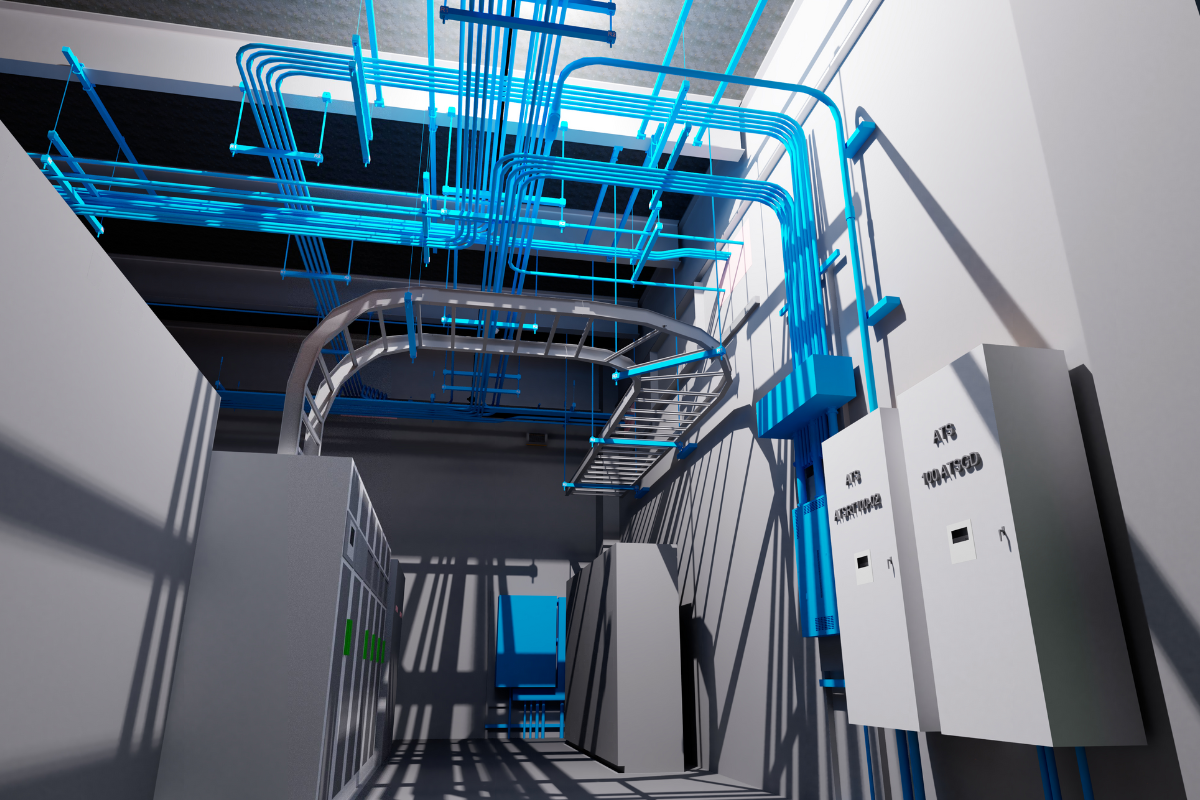
- Efficient pre-construction coordination in trades to prevent re-work and change orders Of course, the good old coordination among trades during the pre-construction phase may not be the most glamorous, but it is still the clear, low-hanging fruit with significant ROI. Through the collaboration between different trades enabled by the BIM coordination process, construction teams can avoid the need for re-work or change orders, which leads to substantial cost savings. This proactive approach ensures that all aspects of the project are thoroughly examined and optimized before construction begins, resulting in a smoother, more efficient install process and the delivery of higher-quality buildings.
- The process of off-site assembling can be made easier through the facilitation of prefabrication The utilization of BIM is critical in enabling prefabrication, particularly in light of escalating labor expenses. Although it may demand a greater degree of expertise in the modeling crew because you need true LOD 400 models, BIM provides the groundwork for constructing off-site. At ENG, we strongly believe that prefabrication is the clear number one when it comes to the ROI of BIM uses.
- RTS: Improving accuracy and reducing labor expenses through layout efficiency The integration of robotic total stations with BIM can significantly improve layout efficiency. Incorporating RTS points into the model enables construction teams to reduce labor costs, save time and achieve superior precision. This streamlined process ensures that project timelines are met with minimum errors, thereby enhancing overall project quality.
- Robots: Layout, prefabrication, scanning Robots are “invading” the construction industry—and across multiple domains, including layout, prefabrication and scanning, among others. In layout, these robots equipped with advanced sensors and precision tools are replacing traditional methods of marking and measuring, ensuring unparalleled accuracy and efficiency in setting up architectural, structural and MEP components. In prefabrication, robots are employed to manufacture building components off-site, the same as in other industries, offering a controlled environment for production and reducing onsite construction time. Additionally, scanning robots, including “dogs” with mounted LiDAR technology and drones, enable 24/7 as-constructed or as-built reality capturing, accessing hazardous environments as needed without compromising worker’s safety.
- Laser Scanning: High precision and design efficiency when capturing existing conditions While still having significant room for adoption, laser scanning has reached a stage of maturity in terms of proven ROI. Whether it’s static, mobile or drones, this technology provides the tangible advantage of being able to capture existing conditions much more quickly and accurately. The integration of virtual modeling with laser-scanning hardware allows construction teams to replicate a space and its elements accurately before getting in. This precision allows for design, pre-coordination and prefabrication without the need for onsite double-checking.
- Significant cost savings for owners, through efficient handover and facilities management Project-lifecycle BIM has had slow adoption among owners, but in those cases where implemented, results have proven to be material. Implementing BIM, with a focus on well-structured information during the design and construction phases, can offer substantial benefits to facilities management and a smoother handover process. To maximize these benefits, a strong BIM management strategy should be put in place to ensure well-organized data. This approach provides operators with comprehensive asset information from the beginning of operations, leading to significant cost savings.
- Generative Design: Embracing a new superpower On the design side, generative design is a game changer. It has had more progress in the architectural design early stages than in other disciplines. This was specifically seen this year at AU when Autodesk announced its AI. Architects need to embrace it as an extended “superpower” rather than a replacement. AI will not, at least for now, understand the client’s specific context. The designer will start becoming the curator of the options that generative design proposes. Those who do not understand it that way will be at a huge disadvantage.
- Sustainable Construction: Building a greener future Sustainability has been a buzzword in the construction industry for some time now, but in 2024, it’s taking center stage. This is partly leveraged by AI and generative design enhancing BIM’s ability to simulate and analyze a building’s performance, empowering architects and engineers to make eco-conscious design choices, reducing energy consumption and environmental impact. Through collaborative coordination, BIM minimizes errors, cuts down on waste and supports sustainable practices like prefabrication and modular construction.
I purposely did not mention virtual reality or augmented reality. VR is used more on the design side to communicate design intent with clients, for example, or perhaps for a GC to communicate logistics plans. AR, for example, helps a foreman visualize how installed MEPs will fit within an existing mechanical room. Both provide value, but in my opinion, when compared to the initial points we discussed, VR and AR have significantly less bottom-line impact. To me, as a general rule for construction innovations, technologies that allow humans to “visualize better” will not have nearly the relevance of those automating or replacing human tasks.