Picture an airport’s air traffic control center, its controllers guiding landings and takeoffs in a coordinated, orderly sequence.
Now imagine all those pilots collaboratingamong themselves to determine the best sequence of landings and takeoffs. It’s shocking to consider, isn’t it? Yet that’s what companies do when they practice lean construction.
Lean construction empowers the subcontractors on a construction project to collaborate among themselves on the best way to sequence work. In every instance, when the process works, it works better than conventional command-and-control management!
Lean practitioners are pushing predictability into the 80% range
Improve predictability
Consider predictability of tasks, a huge challenge no matter how you coordinate subcontractors. How often do your team members complete tasks on schedule? Maybe half the time? That’s a flip of the coin, and not a reliable way to run a business.
How would you feel about getting predictability into the 80 percent range? That’s what lean practitioners are doing.
For that reason and more, lean methods are gaining traction among design and construction companies. In 2012, the Lean Construction Institute hosted 300 people at its annual Congress. Three years later, in 2015, attendance was three times greater: 999 people were there!
If you’re considering embarking on your lean journey, or are already on the road, benchmark your progress against these stages:
Stage 0: What’s lean?
You’re the type who waits until new ideas have proven themselves beyond dispute.
Stage 1: Research
You’re gathering research, perhaps by attending events such as the LCI Congress above, a terrific source of information and networking.
Stage 2: Culture
A lean advocate in your company is boosting awareness and, critically, establishing a culture of lean.
Stage 3: Prototyping
Entire teams practice lean, learning and establishing best practices. It’s at this stage that technology helps, because it facilitates the capture and presentation of key metrics such as planned percent complete, or PPC, the tracking of which is essential to making lean work.
Stage 4: Becoming lean
In the words of a successful lean practitioner, you don’t practice lean: You are lean; the practice is in your bones.
Where to go from here
If you’re in stage 3 or 4, you’re ready for technology to help the process.
One international construction company tried managing their lean process using white boards, sticky notes and spreadsheets, but quickly grew tired of them because those tools are labor intensive and prone to mistakes – in other words, they’re not at all lean!
After trying manual methods, the contractor implement a new product from Newforma, LeanPlanner — visual planning software — to manage Pull planning, Make Ready and Weekly Work plans. As a result, they report three benefits:
- Meetings are shorter and more focused; they don’t cycle through every task.
- Meetings are smaller; it’s clear when a subcontractor can skip it.
- Adjacent trades improve their collaborations and handoffs.
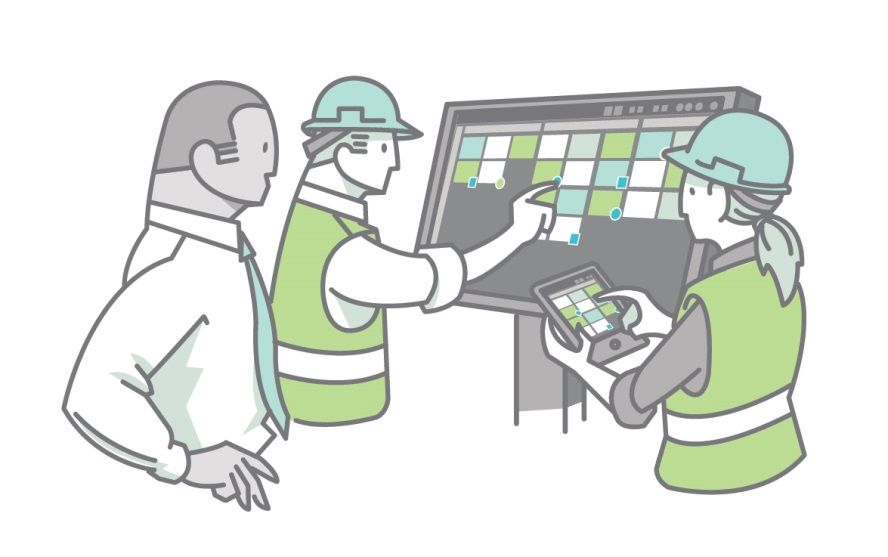
They secret is in the software’s ease of use. Teams move virtual sticky notes on a screen, and receive updates on their tablets as items move across the board.
Take flight
You can succeed in lean using sticky notes on a wall, but manual systems are rather like riding a bicycle when your destination is a jet plane-ride away. If you’re excited about realizing the promise of lean, look into technologies that will make all those takeoffs and landings safe, comfortable and on-time.
Watch the 90-second LeanPlanner video!