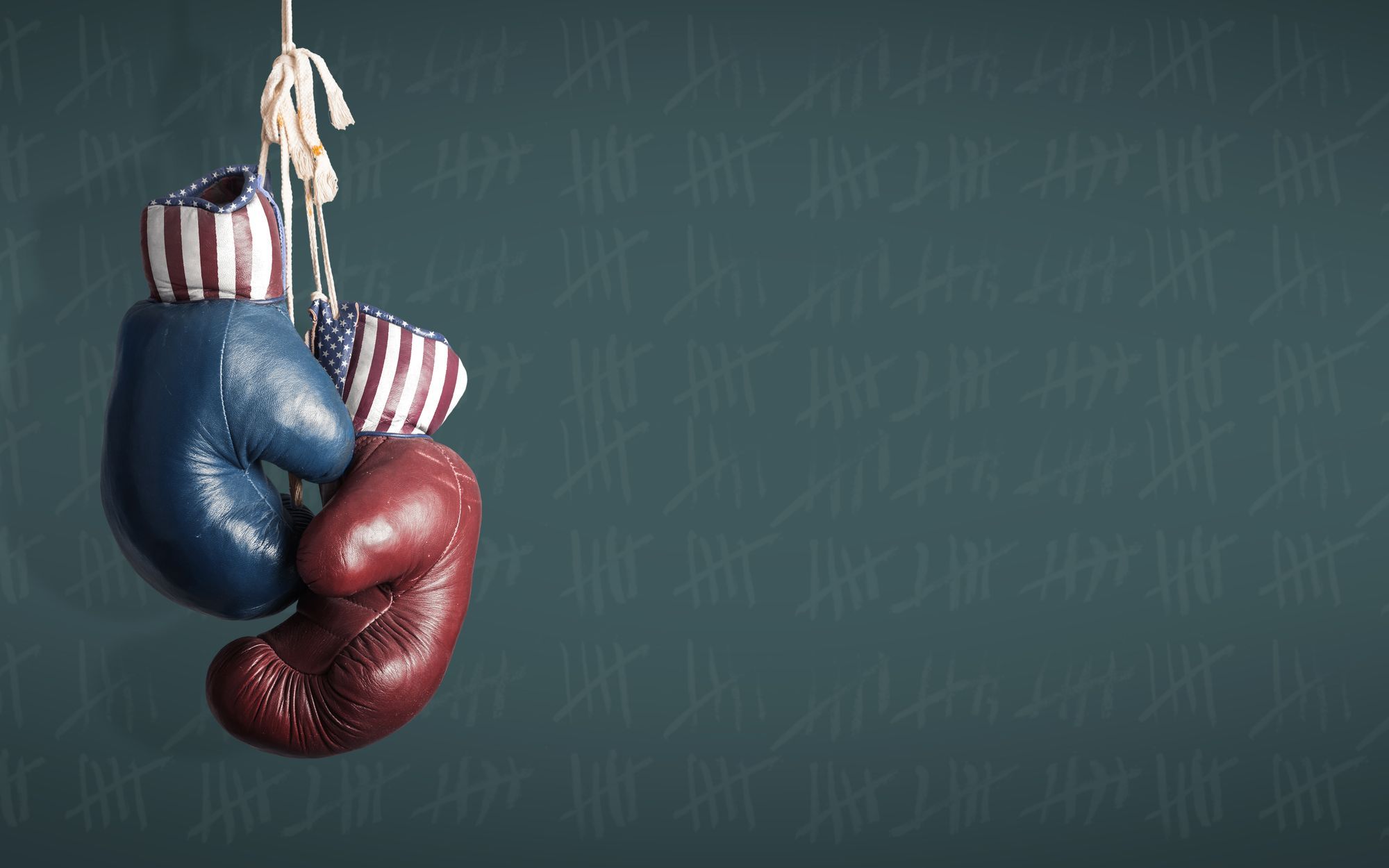
Newton’s First Law of Motion—which states that a body at rest will remain at rest unless an outside force acts on it, and a body in motion will remain in motion unless changed or otherwise altered by a more powerful outside force—is universally accepted.
When applied to the 2018 midterm elections, it remains uncertain which force will prevail: momentum away from the incumbent party or a more powerful force that causes that momentum to stop.
On one hand, there is the political fact that “off-year” elections held in even-numbered years between presidential elections have historically produced momentum changes in the U.S. House and Senate away from the party that controls the White House. Since 1934, the average change has been -27 seats in the House and -4 seats in the Senate, but the averages have intensified to -35 and -7 in the last three midterms.
If the results of past midterm elections are evidence of what can be expected in 2018, then change is expected.
But Newton’s law of motion accounted for a counter-balance against conventional, predicted momentum. He called it an outside force. In 2018, President Trump is undoubtedly an outside force.
Here’s a rundown of a few of the most important variables to keep in mind heading into November.
The Numbers
According to a Real Clear Politics survey conducted in May, President Trump’s job approval is in the red 8.9 percent (44 percent approve/52.9 percent disapprove). Does it matter what voters think about the president’s job approval in an election in which Trump is not on the ballot? It would depend on how closely GOP candidates mirror the president. While it is clear that only Trump can talk the talk (just ask U.S. Senate candidates Don Blankenship in West Virginia and Roy Moore in Alabama), GOP candidates who try to walk the walk might find themselves facing the wrong end of the president’s approval numbers.
But, the opposite could be true. Maybe the president’s base solidifies around GOP congressional and senatorial candidates, and the traditional power of the incumbency (fueled in large part by a huge GOP financial advantage and a lack of a consistent national message for Democrats) will create enough of an outside force to defend the GOP majority.
Recent polling trends have shown decreasing deficits for Republicans in the “generic ballot,” or the question of which party respondents would support in a congressional election. If this number stays in the lower end of the negative single digits, House Republicans will see it as a sign that their messaging, candidates, legislative victories (such as the historic Tax Cuts and Jobs Act) and regulatory agenda have paid off for enough general election midterm voters.
The Nominees
As of the end of May, Democrats hold 19 open House seats and Republicans hold 41 (including members who are retiring their current seats to run for another office). It is always easier for a challenger to win an open seat than to dislodge an entrenched incumbent.
In the wake of a historic number of congressional retirements, there is another significant trend to watch in 2018: female candidates. While calling 2018 the “Year of the Woman” has become cliché, the number of female candidates for U.S. Congress, as measured against past nominees, is historic at this point in the cycle. In fact, to date more than 40 percent of the Democrat party’s nominees this year are women, compared with less than 10 percent for Republicans. Of course, diversity alone does not support the conclusion that these candidates will win.
Conor Lamb’s victory in a special House election in the now nonexistent 20th Congressional District of Pennsylvania, which had overwhelmingly voted for Trump, is evidence (albeit circumstantial or local) that such a change could be achievable by Democrats in other areas of the country. Using simple labels, Lamb being pro-life, protectionist (on trade issues) and pro-gun worked in Western Pennsylvania, and could possibly work in dozens of the 230 congressional districts carried by Trump in 2016.
However, it seems that in many congressional districts so far, instead of identifying, funding, cultivating and nominating Lamb-like candidates, Democratic primary voters have nominated progressive candidates who provide their Republican counterparts with more relative firepower. For instance, progressive candidate Kara Eastman, a Medicaid-for-all supporter, won the Democratic nomination over moderate former Democratic Rep. Brad Ashford for the chance to challenge Rep. Don Bacon in Nebraska’s purple 2nd congressional district. Immediately following Eastman’s nomination, several political forecasters upgraded the chances of Rep. Bacon’s reelection. And weeks later, he received the Carpenter’s Union endorsement.
The Map
For U.S. Senate candidates, the “map” makes it very difficult for Democrats to pick up the two seats they would need to gain a majority. Democrats will be defending senators in 10 states that President Trump won, while Dean Heller is the sole Republican running for reelection in a state won by Hillary Clinton. To retain their majority in the Senate, Republicans will have to protect their current seats, or flip a few of the increasingly vulnerable Senate Democrats defending their records in Trump country.
The Bottom Line
While it is clear that U.S. politics have been “in motion,” the question is whether President Trump is the “outside, universally accepted force” that can stop, reverse or even accelerate the motion. The history of midterm elections up until recently say one thing, but 2016 election results say something else.
Despite the confidence of Nancy Pelosi that Democrats are going to win in November, Republicans certainly have a fighting chance to maintain their majorities based on the variables listed above, and of course the relative “force” of the president.