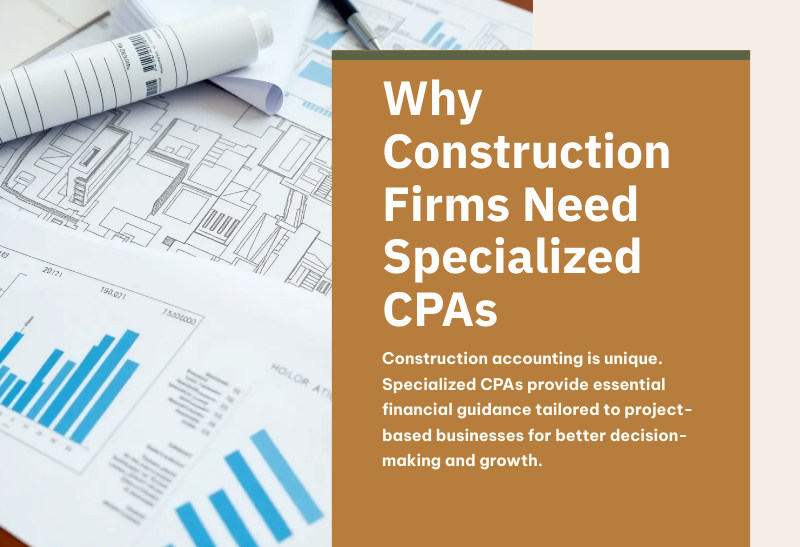
Construction firms need specialized CPAs because construction accounting is built around projects, estimates, retainage, change orders, bonding capacity and long-term contracts — and general financial guidance rarely connects accounting to how the work actually performs.
A construction firm can look profitable on paper while struggling to fund payroll, cover retainage gaps or support its backlog. The difference often comes down to whether financial reporting reflects the way construction actually works. Specialized CPAs help contractors see which jobs are earning margin, which jobs are fading, which costs are being missed and whether the company is financially ready for the next level of work.
This matters most when a contractor is growing. More revenue does not automatically mean more financial strength. Larger projects can create bigger payroll demands, longer billing cycles, higher bonding requirements and more complex compliance obligations. A specialized CPA helps construction leaders understand whether growth is sustainable before the company accepts more risk than its balance sheet can support.
Construction Accounting Does Not Work Like Ordinary Business Accounting
Construction accounting is different because revenue, cost and profit are tied to individual jobs that may last months or years. A contractor is not simply selling a product, collecting payment and recording income. The company is managing contract values, estimated costs to complete, approved and pending change orders, billings, underbillings, overbillings and retainage.
A specialized CPA understands how these pieces interact. For example, underbilling may signal that a contractor has earned revenue but has not billed enough to support cash flow. Overbilling may improve short-term cash but can create future pressure if the company spends money that belongs to unfinished work.
General financial statements may show total revenue and expenses. Construction-focused financials show whether active jobs are actually performing. That distinction is critical for owners, sureties, lenders and executives making decisions about backlog, equipment purchases, hiring and bidding strategy.
Job Costing Is the Foundation of Profitable Contracting
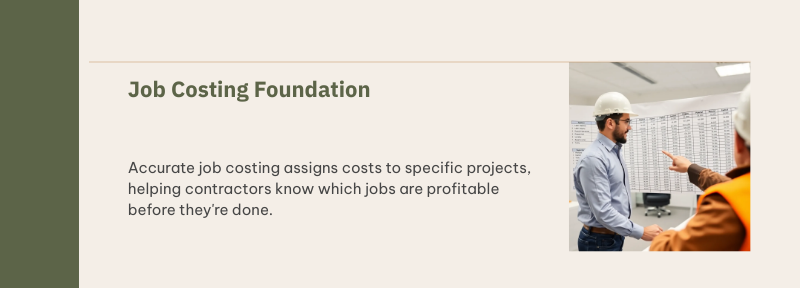
Job costing is the process of assigning labor, materials, equipment, subcontractor costs and overhead to specific projects. Without accurate job costing, a contractor may not know which jobs are profitable until the project is nearly complete.
Specialized CPAs help contractors build job-cost structures that reflect how work is performed. That may include cost codes, labor burden, equipment allocation, indirect costs, project management time and overhead recovery.
A strong job costing system helps contractors answer practical questions:
- Which types of work produce the best margin?
- Which crews, project managers or divisions are underperforming?
- Are equipment costs being recovered accurately?
- Are change orders covering the full cost of labor, materials and overhead?
- Are estimates improving based on completed job data?
The goal is not only accurate accounting. The goal is better bidding, better project controls and fewer surprises after work is already underway.
WIP Reports Turn Project Data Into Business Intelligence
A work-in-progress report, often called a WIP report, is one of the most important financial tools in construction. It tracks contract price, costs incurred, estimated cost to complete, billings to date, revenue earned, gross profit and overbillings or underbillings for active projects.
Specialized CPAs help contractors prepare WIP reports that are consistent, timely and useful. A weak WIP report can hide margin fade, cost overruns or billing problems. A strong WIP report helps leadership see which jobs need attention before losses become permanent.
WIP reports are also important for sureties and lenders. Bonding partners want to know whether backlog is profitable, whether estimates are reliable and whether the company has enough working capital to complete the work it has already taken on.
Bonding Capacity Depends on Credible Financial Statements
Many contractors need surety bonds to bid larger public or private projects. Bonding capacity depends on more than revenue. Sureties evaluate working capital, net worth, profitability, backlog, debt, cash flow, management capacity and the reliability of financial reporting.
A specialized CPA understands how financial statements are viewed by surety underwriters. This includes the presentation of WIP schedules, overbillings, underbillings, completed contracts, related-party transactions, debt obligations and footnote disclosures.
The wrong accounting presentation can make a stable contractor look risky. Incomplete WIP data, inconsistent revenue recognition or unexplained margin fade can reduce confidence even when the business has strong field performance.
Construction firms that want higher bonding limits often need CPA-prepared financial statements that match surety expectations. A specialized CPA can help the contractor prepare for that review before a bond request becomes urgent.
Revenue Recognition Requires Construction-Specific Judgment
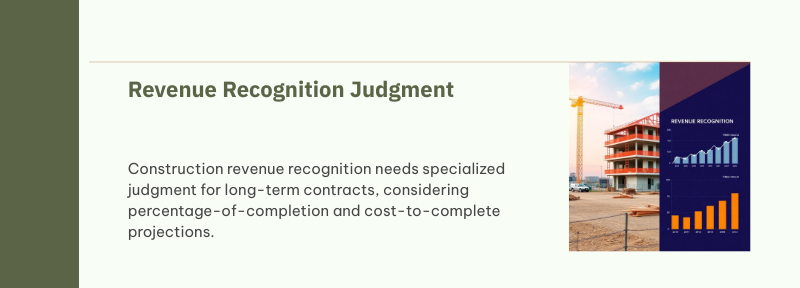
Construction firms often perform long-term contracts where revenue is recognized over time rather than only when cash is collected. Revenue recognition may involve percentage-of-completion accounting, completed-contract considerations, contract assets, contract liabilities and cost-to-cost calculations.
Specialized CPAs help contractors apply the right method and maintain the estimates needed to support it. This is especially important when project costs change, schedules shift or unapproved change orders affect expected profit.
Revenue recognition is not just a technical accounting issue. It affects taxes, bonding, bank reporting, owner distributions and management decisions. If profit is recognized too early, the company may overstate performance. If losses are not recognized quickly enough, leadership may continue bidding or spending based on financials that are too optimistic.
Contractors need a CPA who understands how estimating accuracy, change-order status and cost-to-complete projections affect the financial statements.
Tax Planning Should Match How Contractors Buy, Bill and Build
Construction tax planning is not limited to filing returns. Contractors make tax-sensitive decisions throughout the year, including equipment purchases, depreciation elections, entity structure, owner compensation, retirement plans, accounting methods and timing of income and deductions.
Specialized CPAs help contractors evaluate tax strategy in context. For example, accelerated depreciation on equipment may reduce taxable income, but it should be weighed against cash flow, financing terms, future taxable income, bonding considerations and the company's need to show financial strength.
Contractors also need guidance on tax issues tied to long-term contracts, retainage, materials, subcontractors, multi-state work and energy-efficiency incentives where applicable. The best tax answer is not always the answer that creates the lowest tax bill this year. The better question is how the decision affects liquidity, bonding, lending and long-term business value.
Payroll and Labor Compliance Can Create Financial Exposure
Construction payroll is more complex than ordinary payroll because contractors often deal with multiple job classifications, union rules, prevailing wage requirements, certified payroll, overtime, fringe benefits, per diem, workers' compensation codes and state-specific labor rules.
A specialized CPA can help contractors align payroll systems with job costing and compliance requirements. This is especially important on public projects where Davis-Bacon and related prevailing wage rules may require certified payroll records and accurate classification of workers.
Payroll errors can create more than administrative problems. Misclassified labor, incorrect fringe calculations or incomplete certified payroll reports can lead to withheld payments, penalties, audit findings or disputes with project owners.
A construction CPA does not replace legal counsel or a payroll provider, but the CPA can help make sure payroll data supports both compliance and job-level financial reporting.
Cash Flow Can Fail Even When Projects Are Profitable
Construction firms can run out of cash on profitable work. That happens because contractors often pay labor, materials, equipment costs and subcontractors before receiving full payment. Retainage, slow approvals, disputed change orders and delayed draws can stretch cash even when the final margin looks healthy.
Specialized CPAs help contractors forecast cash flow by project and across the business. This includes expected billings, collections, retainage release, payroll cycles, debt payments, tax payments and equipment commitments.
Cash-flow planning is especially important during growth. A contractor that doubles backlog may need more working capital, not less. Larger jobs can require more upfront labor, higher insurance costs and longer payment cycles.
A construction CPA helps leadership understand whether the business can fund the work it is winning. That insight can prevent overextension and reduce the need for emergency borrowing.
Software Only Works If the Accounting Structure Is Right

Construction accounting software can improve reporting, but software does not fix a weak accounting process by itself. Contractors still need the right chart of accounts, cost codes, workflows, approval controls, WIP procedures and reporting discipline.
Specialized CPAs can help firms evaluate whether their systems are producing useful financial information. This may include reviewing how estimates flow into budgets, how costs are coded, how change orders are tracked, how payroll is allocated and how reports are used by project managers.
When a Construction Firm Should Hire a Specialized CPA
A contractor may need a specialized CPA when financial complexity begins to affect decision-making, bonding, compliance or cash flow. The need often becomes clear before a formal financial problem appears.
| Situation | Why a Specialized CPA Helps |
|---|---|
| Backlog is growing quickly | Evaluates working capital, cash flow and capacity |
| Bonding limits are holding the firm back | Prepares surety-ready financial statements and WIP reports |
| Job margins are inconsistent | Improves job costing and cost-to-complete tracking |
| Change orders are common | Helps track revenue, costs and billing impact |
| Public work is increasing | Supports certified payroll, retainage and compliance reporting |
| Equipment purchases are planned | Models depreciation, tax and cash flow impact |
| Multi-state work is expanding | Reviews tax, payroll and registration issues |
| Financial reports feel unreliable | Builds reporting discipline around jobs and WIP |
The right time to involve a specialized CPA is before growth exposes weak systems. Waiting until bonding is denied, cash is tight or tax planning is rushed limits the CPA's ability to improve outcomes.
How to Evaluate a Specialized Construction CPA
A specialized construction CPA should understand contractor financial statements, WIP schedules, job costing, revenue recognition, tax planning, payroll complexity, bonding requirements and construction software.
Contractors should ask direct questions before choosing a CPA:
- How do you review WIP schedules?
- What construction accounting software do your clients use?
- How do you help contractors improve bonding capacity?
- How do you evaluate underbillings and overbillings?
- What tax planning issues are common for contractors like us?
- How often should we review job-level financial performance?
- Do you work with sureties, banks and construction attorneys?
The answers should be practical. A CPA who works with contractors should speak the language of backlog, retainage, labor burden, margin fade, cost-to-complete estimates and overbillings without needing a basic explanation.
Stay current on construction business and financial strategy. Get insights from Construction Executive delivered to your inbox.
Subscribe FreeFAQs About Specialized CPAs for Construction Firms
What does a construction CPA do?
A construction CPA helps contractors with job costing, WIP reporting, tax planning, financial statements, bonding support, payroll compliance and cash-flow planning.
Why is construction accounting different?
Construction accounting is different because contractors manage long-term projects, changing estimates, retainage, change orders, job costs, overbillings, underbillings and project-specific profit.
Can a specialized CPA help with bonding?
Yes. A specialized CPA can prepare surety-ready financial statements, improve WIP reporting and help contractors understand the financial ratios and backlog trends that sureties review.
Do small contractors need specialized CPAs?
Small contractors may need specialized CPAs when they pursue bonded work, public projects, multi-state jobs, larger equipment purchases or projects with complex billing and payroll requirements.
How often should contractors review WIP reports?
Contractors should generally review WIP reports monthly so leadership can identify margin fade, billing issues, cost overruns and cash-flow risks while projects are still active.
Is a bookkeeper the same as a construction CPA?
No. A bookkeeper records transactions, while a construction CPA provides higher-level accounting, tax, reporting and advisory guidance specific to contractor financial management.
Specialized CPAs Help Contractors Make Stronger Decisions

A specialized CPA gives construction firms more than tax compliance. The right advisor helps turn project data into financial insight, strengthens bonding credibility, improves cash-flow planning and supports better decisions about bidding, hiring, equipment and growth.
Construction leaders do not need more reports for the sake of reporting. They need financial information that shows what is happening in the business while there is still time to act. As projects become more complex and margins remain difficult to protect, specialized accounting support will become a stronger advantage for contractors that want to grow without losing financial control.