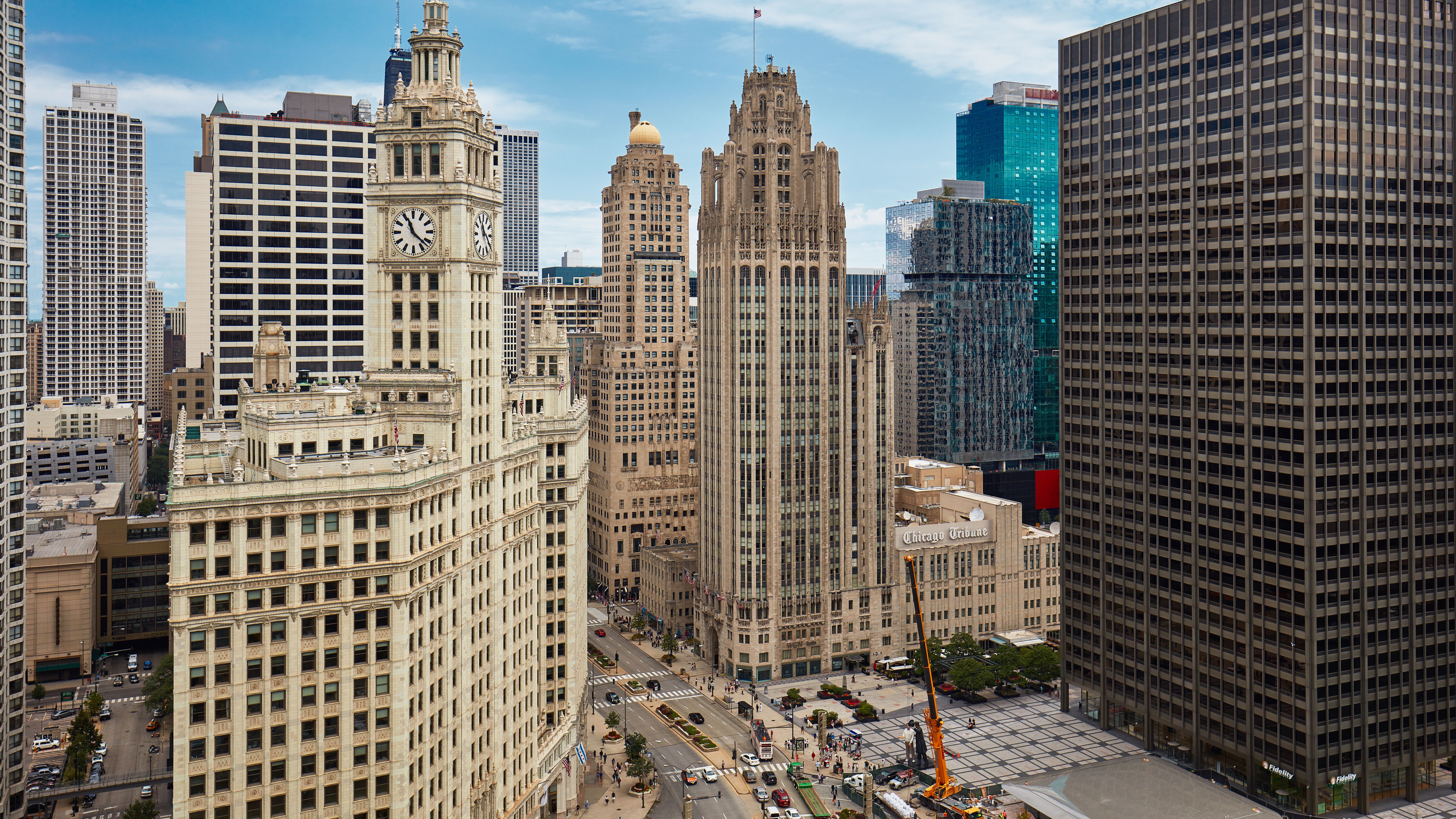
Intriguing, creative conversion projects are reinvigorating moribund buildings and streetscapes throughout the United States today, taking a wide range of structure types and sizes in diverse locales from obsolescence to economic and environmental sustainability. While not new, the approach is generating growing interest as a potential way to increase occupancy rates, recapitalize stranded assets and help boost the quality of life in communities facing daunting challenges.
The COVID-19 pandemic accelerated the shift to hybrid and remote work, leading to a 19.6% U.S. office-space vacancy rate in 2023—the highest in almost 45 years, according to Moody’s Analytics and NAIOP, the Commercial Real Estate Development Association. Having fewer workers in office buildings in turn has produced a ripple effect of negative economic repercussions for surrounding businesses as well as property values and municipal tax bases. NAIOP reports that the trend toward remote work itself caused real-estate asset values to fall by an estimated $413 billion by late 2022.
But those office buildings aren’t going anywhere. Nor are various other abandoned or decommissioned commercial, industrial and institutional properties across the country, from hospitals and schools to banks and shops. At a time when the United States is experiencing a critical housing shortage, might these empty buildings offer a solution?
“Overall, the adaptive-reuse construction sector is not only large but also viable,” says Doug Ressler, manager of business intelligence for Yardi Matrix, “with economic, environmental and community benefits.”
DRIVING FORCES
Large and viable, indeed. In just one type of conversion—redeveloping various commercial properties into apartments—RentCafe reported 122,000 such projects underway as of 2023, up from 77,000 in 2022. “Existing building valuations are starting to drop significantly, especially for Class B and C office properties, and those diminished values help close the gap and allow more deals to pencil out,” says Scott Lyons, national core market leader at DPR Construction, which is active in this sector. “We certainly anticipate seeing more adaptive-reuse project opportunities in the future.”
A significant driver of such conversion projects is their environmental friendliness. Transforming existing buildings instead of implementing new construction “minimizes the environmental impact associated with demolition and the production of new materials, making it an ecofriendly approach to design and construction,” Ressler says. As Lyons sees it, adaptive reuse is “an environmentally responsible approach compared to demolition and rebuild.”
It’s no coincidence that residential projects are a leading type of redevelopment. The aforementioned office-vacancy rates coincide with what NAIOP describes as a “severe shortage of housing supply in many of our nation’s communities,” with the organization estimating that it will take “at least 4.3 million more housing units by 2035 to meet the demand for rental housing” alone. Two negatives could add up to a positive, however: “Adaptive-reuse property conversions can increase the supply of affordable housing and help to restore economic viability to cities and suburbs,” according to NAIOP.
Vacancies can create “stranded assets,” says Glenn Brill, managing director of real-estate solutions for FTI Consulting, and “those assets need to be recapitalized. And, in order to do so, you need to repurpose them in many instances.” For contractors, such projects “are a great opportunity. It’s an established market practice that is likely going to grow in the future because, as assets get repriced, the economics of adaptive reuse start to make more sense.”
In 2023, adaptive-reuse projects containing 12,713 residential units were completed, according to Yardi Matrix, with hotels-to-apartments being the most common conversion. In fact, that type “surged in 2023,” Ressler says. Last year, 4,556 apartment units were created from hotels, up from about 3,200 in 2022—and representing the largest number among all completed conversions to residences in the United States, at 35.8%.
As a comparison, apartments converted from office buildings increased from roughly 3,400 units in 2022 to 3,587 in 2023, representing the second-largest share, at 28%. The next-largest share, 1,954 units (15%), were factory-to-residence projects; warehouses, schools and health-care buildings were among the various remaining types.
Indications suggest that the trend of residential conversions will not just continue but grow. “Optimistic projections indicate a significant surge in converted apartments,” Ressler says, with 151,000 various housing units projected to be created from different building types over the next five to seven years—including more than 55,000 units in 2024 alone. (Again, as a comparison, about 473,379 total residential units—referring to all construction types, not just adaptive reuse—were completed in 2023 in the United States.) The top market for this sector is Los Angeles, followed by Manhattan, Chicago, Philadelphia and Washington, D.C.
THE CHALLENGES OF CONVERSION
While conversions can address some of the challenges facing U.S. communities, they bring challenges of their own. On a project level, designing and building them while complying with local rules for residential spaces—related to elevators and access to light and air in New York City, for example—can make for an office-high-rise-to-residential conversion process akin to a “Rubik’s Cube” or “a set of intricate puzzles,” as a recent article in The New York Times puts it.
“Adaptive-reuse projects can be very difficult,” Brill says. “In many respects, a new building is just simpler. With adaptive reuse, you’re dealing with existing conditions, and very often there are unknown conditions that slow the project down and add to the cost.” Take the prospect of converting vacant office space, a sizable portion of which is “found in older buildings with limited amenities and functionality,” Ressler says, with their “age, size, configuration and location” often making them difficult to convert to modern uses.
Preserving and redeveloping a property can be the right choice “if there’s a lot of value in the existing building and it has historic value, which creates curb appeal, especially in a residential type of situation,” Brill says. But there are other considerations as well. “People want a modern, 21st-century environment. The past is the past.”
Although Alex Stuart, project manager at RNGD, sees adaptive reuse as a growing construction segment, “it’s important for firms to recognize that [such] projects can be uniquely challenging for construction teams.” He cautions: “The work involves old—often neglected—structures, so you never quite know what you may discover in the field until the work progresses.”
Despite the challenges, a building’s past often can become prologue. “While there are challenges involved in modifying a structure from its past uses,” Stuart says, “the right team can mold it into anything.”
MAKING IT HAPPEN
In many ways, adaptive reuse is riding a wave of large-scale changes that are remaking American cities. “In urban centers, planning concepts are changing,” Brill says. “People believe that mixed-use neighborhoods are more attractive” than traditional development that separated office and housing districts. “Mix them together and you get a lot of convenience, vibrancy in terms of streetscapes, and it will improve retail opportunities. And it’s just a more attractive environment.”
A key to that: rezoning and other incentives. Brill notes: “To some extent, adaptive reuse is a fine idea, but clearly, municipalities need to update their zoning plans to accommodate mixed use.”
In Lyons’ view, it’s important “to acknowledge that the future of cities is reliant upon having a work/live/play/connect environment. Generally, urban cores across the country are short on adjacent affordable housing within a 20-minute walk of the office. The reduction of building values helps make these projects pencil out, but it’s also going to take incentives from the local government to really make change happen faster.”
Such incentives have been happening. At the federal level, the Tax Relief for American Families and Workers Act of 2024, now winding its way through Congress, “could spur housing-unit production and development” with incentives for projects that convert office space to apartments and condominiums, according to a recent article from the law firm Frost Brown Todd, which also identifies similar incentives from the Housing and Urban Development and Transportation departments.
At the local level, “Local governments have realized the value in revitalization,” Lyons says, “providing benefits to encourage owners to give an existing property a new life.” Boston and San Francisco, for example, have tax-cut programs for office-to-apartment conversions. Los Angeles has a similar program to encourage redeveloping commercial spaces into housing projects, while in April, New York State enacted a tax-break package that will incentivize conversions of vacant office buildings into housing.
SUCCESS STORIES
Recent examples show what can be achieved when builders and contractors transform buildings into new uses.
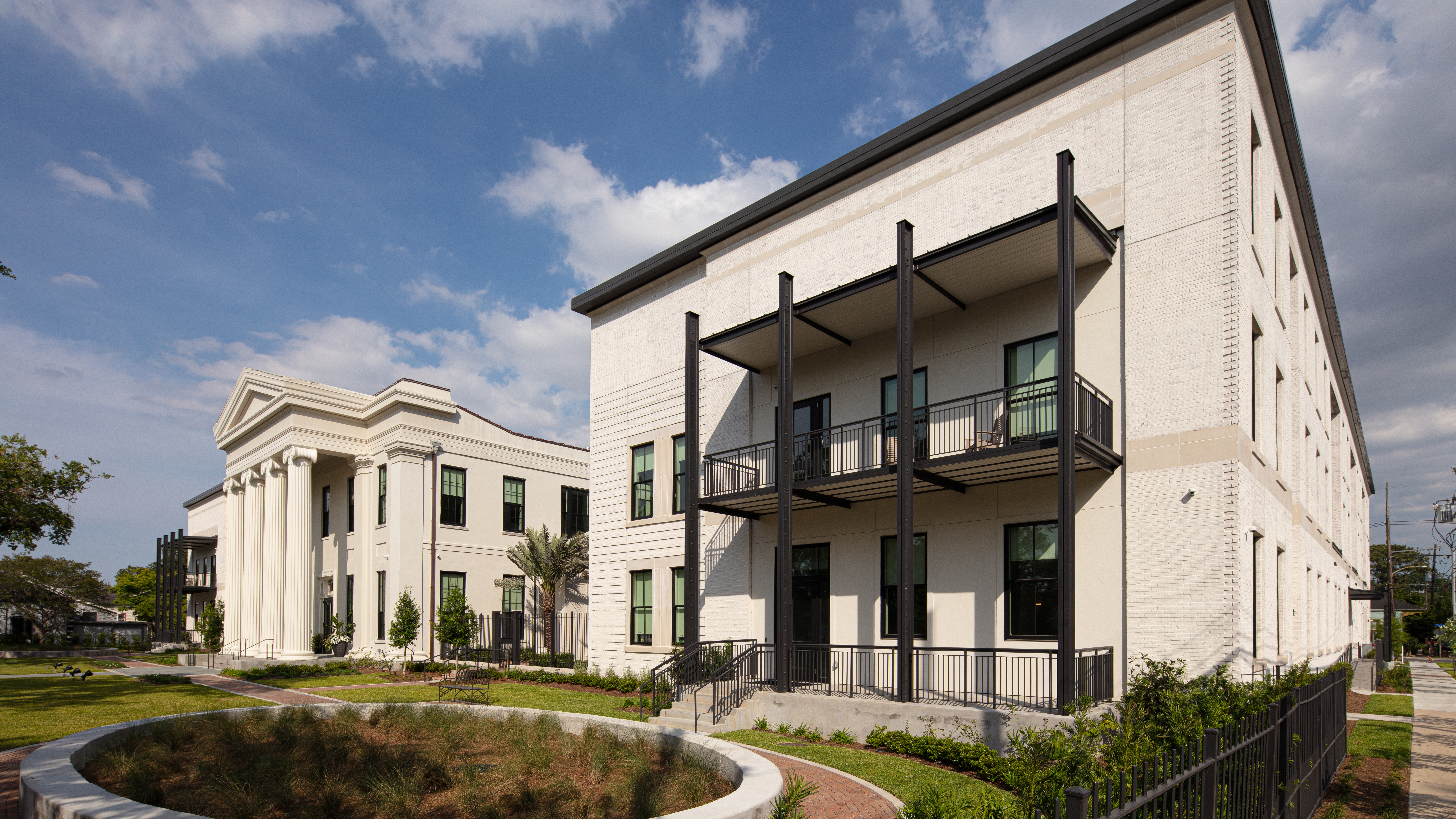
The Carrollton: A 2023 project by RNGD turned a 102,000-square-foot courthouse built in New Orleans in 1855 into a 93-unit senior-citizen housing complex called The Carrollton. Listed as a Louisiana historic landmark, the property had also been home to a series of schools, and had sat vacant for five years before the conversion project. In addition to extensive restoration, two flanking wings were added to accommodate dining and entertainment rooms and other spaces.
“The most challenging aspect was the unknown,” Stuart says. RNGD’s work included a series of structural repairs as well as the removal of asbestos and “extensive intricate finish work throughout the building.” The project was also about how the work was done. “Starting in preconstruction,” Stuart says, “our team worked closely with the owner and architect, to ensure that everyone understood project goals and expectations.”
The Carrollton is one of several conversion projects carried out by RNGD in recent years in New Orleans. In 2021, the company turned a former orphanage into the 71,500-square-foot Hotel Saint Vincent, while another project turned a 55,000-square-foot office building into the Maison de la Luz luxury hotel, which opened in 2018.
20 Mass: In Washington, D.C., DPR Construction in 2023 delivered what Lyons calls “a complex repositioning” that turned a dated, 300,000-square-foot, Class B office building on Massachusetts Avenue near the U.S. Capitol and Union Station into 20 Mass, a 427,000-square-foot mixed-use project—floors were added—consisting of a 274-room Royal Sonesta hotel, a penthouse, offices and retail space. Two atriums were carved out of existing lower floors, and changes to the building systems, envelope—glazing and roof—and plumbing boosted efficiency, with 20 Mass earning LEED Gold and WELL certifications. Additionally, DPR installed prefabricated, custom-built bathroom units, called SurePods, which “were manufactured simultaneously with the hotel’s construction phase,” according to DPR, reducing the schedule by 10%.
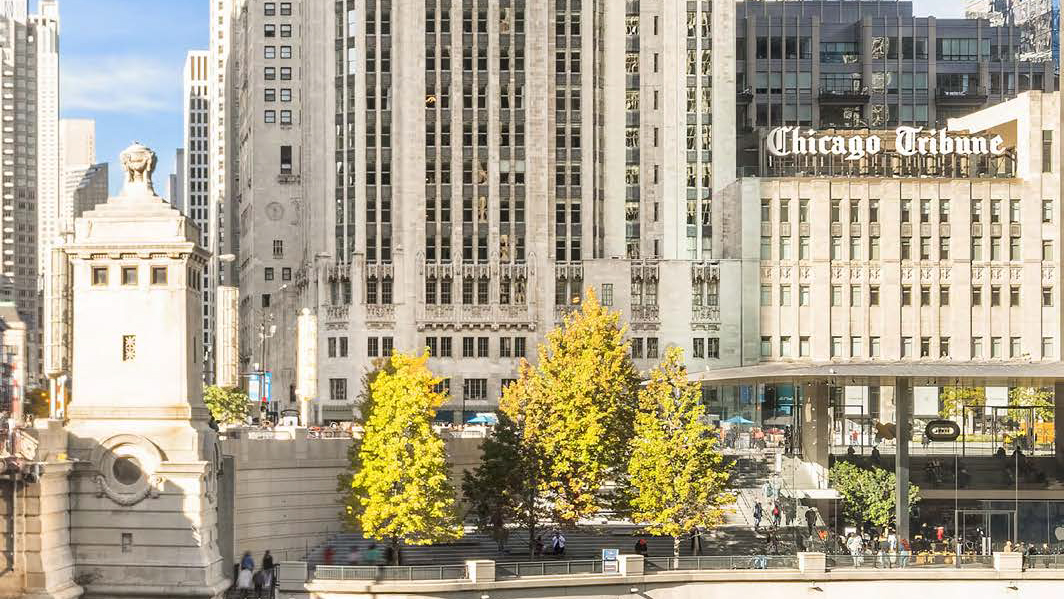
Tribune Tower: Renowned buildings are also being transformed. One example is Chicago’s Tribune Tower, which for many years served as the headquarters of The Chicago Tribune, until the newspaper relocated in 2018. The Walsh Group recently delivered a multipronged adaptive reuse and historic preservation project that added new space, turning the skyscraper into 162 luxury condominium units.
“Tribune was a difficult job to perform,” says Patrick Easterday, a Walsh project executive. Not only was the work exacting, it also was done to a high-profile, iconic skyscraper. Easterday notes: “Care had to be taken to leave the historic facade looking as good and in the same configuration as the original,” which dates from the 1920s. Walsh also completed upgrades to the building’s Wi-Fi, lighting and mechanical systems and added ADA accommodations—while likewise being mindful of Tribune Tower’s heritage.
It was a complex undertaking. Easterday describes “major” changes “to the structural system to accommodate large condo units and a central courtyard,” for example. In addition, the project “added five floors [to the north wing of] the building with an entirely different facade system…. The rest of the building was limestone mass walls. The new addition was window wall and metal panels that mimicked the shapes of the masonry columns below.”
With complexity come surprises and challenges. “With any adaptive reuse, you don’t know what is going to be found when walls are opened up,” Easterday says. “Maybe the structure is as advertised in original drawings, and maybe not.”
Also, “dealing with structural changes to meet current architectural needs is always a challenge. The Tribune had all of the old-school structure, such as two-inch-thick steel beams, reinforced concrete decks, clay-tile arched decks” and more, as well as “changes from an earlier remodeling that were not noted.”
As a result, “nothing lined up as shown on the drawings.” However, things eventually came together, literally and figuratively. “There is a sense of pride in repurposing a Chicago landmark building,” Easterday says, “that will be enjoyed by people for years to come.”
A SUSTAINABLE ALTERNATIVE
At least one driver of adaptive-reuse projects seems likely to continue for years to come as well. “In an era dominated by environmental concerns,” Ressler says, “adaptive reuse offers a sustainable alternative to new construction.” For that to continue, Brill adds, “Public policy needs to be a good steward of urban America. There needs to be investments in infrastructure, mass transit and more.
“It’s largely dependent on the attractiveness of the urban environment,” Brill says. “People want to live in urban environments. Generally, urban America is doing a pretty good job of making an urban lifestyle exciting for young people, for alternative households and for empty nesters. There is culture, dining, socializing and more. That’s what has driven the redevelopment of urban America for the past 30 years.”