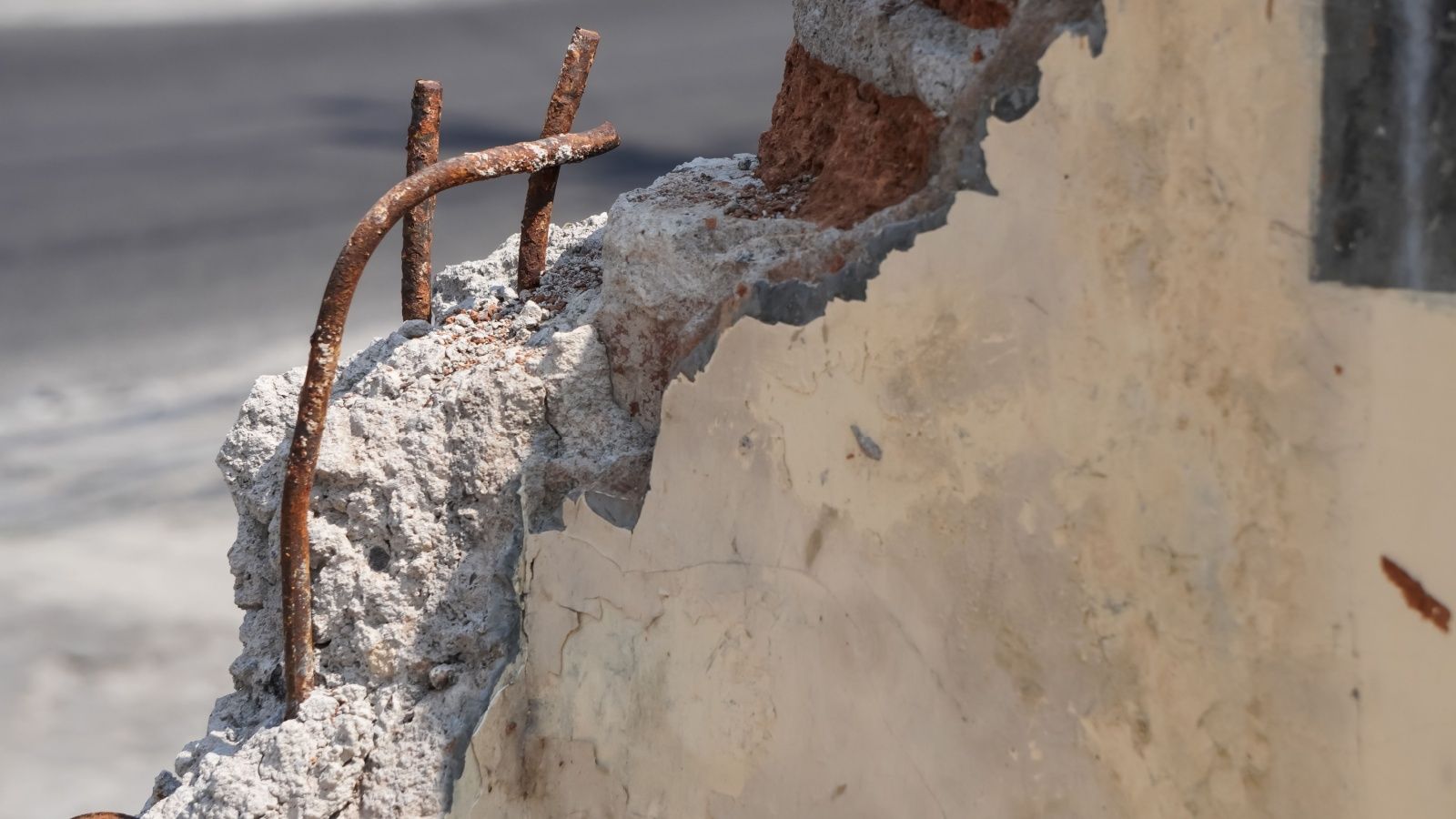
Metal, including steel, aluminum and iron, serves as a vital component of buildings and infrastructure. It provides the functional integrity required for stability and safety, keeping our facilities standing tall and strong for generations.
Unfortunately, if not properly treated, metal is highly susceptible to the risk of corrosion, which can compromise the safety and strength of a building if not addressed—causing structural damage, safety risks, financial losses and more.
Defined as “the deterioration of a material or its properties due to a reaction of the metal with its chemical environment,” corrosion can cause detrimental damage that often goes unnoticed behind surfaces. Awareness of this silent threat has increased, especially after tragic incidents like the Champlain Tower Condominium collapse in Miami. However, many are unaware that corrosion can occur due to factors beyond rust.
Increased heat and sun exposure, temperature swings, wind and other environmental elements also play a role. It is important to understand the key causes of corrosion and the surface finishing solutions designed to mitigate these risks.
CLIMATE AND GEOGRAPHY
The global cost of corrosion is estimated to exceed trillion annually. This figure alone highlights that corrosion can occur in any location and can be triggered by a variety of climate conditions. Some locations, however, are at increased risk due to their proximity to the ocean, high rates of precipitation, or elevated temperatures.
Salt content in the air is one of the most well-known causes of corrosion. Buildings situated on or near the coast are particularly vulnerable and require additional layers of protection to prevent the degradation of metal framing, fasteners and materials.
Humidity and precipitation further exacerbate corrosion risk, as moisture accelerates the formation of rust or swelling within the steel. Additionally, heat and significant temperature fluctuations can increase the rate of corrosion, causing structures to expand and contract, creating pockets where moisture can accumulate.
The Solution: With environmental conditions being a leading cause of corrosion, it is essential for construction companies to protect their buildings and infrastructure throughout the country while also reducing their carbon footprint. Electroplating is proven to provide enhanced corrosion protection while delivering safer and more sustainable solutions when compared to alternative coating options. With expansion and contraction, heat and UV radiation impacting buildings, multi-layer electroplated finishes are often selected as a protective layer. These stacked finishes absorb thermal movement on metal surfaces, reducing the risk of degradation in the protective layers. Specifically, engineered metal layers serve as a final finish to ensure functional performance while also protecting the surface color and appearance from blemishes, fading and wear. Selecting the correct layers and thickness for each application is crucial for achieving the desired performance.
COMBATTING BUILDING AGE
The age of a building significantly impacts the rate and risk of corrosion. Older buildings are subjected to prolonged environmental exposure, which can deteriorate the protective coatings applied during construction. Without proper maintenance and repair, localized corrosion can spread, leading to larger, more dangerous issues. Moreover, the protective measures employed at the time of construction may be outdated due to advancements in technology and stricter building codes. Age-related risk factors, such as paint chipping or structural cracks, further compromise the health and stability of metal structures and components, leaving them more vulnerable to oxidation.
The Solution: When proper surface finishing solutions are employed and maintained, buildings should stand strong for generations. Functional electroplated finishes are commonly used as sacrificial coatings, meant to preserve the integrity of structural components, including fasteners, framing and bracketry. When considering all of the parts in a structure joined by nuts, bolts and screws, or held together by brackets or supports, functional integrity is paramount.
Functional electroplated finishes, particularly alloys, such as zinc nickel, are far superior to barrier-type coatings, including paint. These sacrificial finishes distinguish themselves by maintaining their performance characteristics even when damaged or scratched, as can be expected during construction or normal wear and tear. Understanding which of these components are safety critical helps to identify where electroplated deposits should be selected over barrier-type coatings.
CLIMATE CHANGE AND ACID RAIN
The construction sector has placed an increased focus on climate change and urbanization. At the recent Building Innovation Conference in Washington, D.C., climate change was identified as a leading area of concern within the built environment.
Extreme temperatures and weather events, exacerbated by climate change, compromise buildings across the U.S. and around the world. Cities face additional challenges from urbanization and acid rain as densely populated areas introduce acid compounds into the air that relentlessly attack surfaces, accelerating corrosion.
The Solution: Whether caused by climate change or environmental factors, corrosion is a preventable risk that can be mitigated through the use of properly selected surface finishes. These chemistries are designed to protect structural integrity and are specially designed to meet the unique needs of densely populated urban areas more susceptible to acid deposition.
An example of this includes the window framing and building facades on many high-rise urban structures. Aluminum has become a material of choice due to its lightweight design and recyclability. Like traditional metal framing, these surfaces require protection from environmental conditions that can cause oxidation. Anodizing and passivation techniques are designed to preserve the integrity of the base aluminum surface, reducing the risk of oxidation while preserving the beauty of the building design.
SUSTAINABILITY BEYOND THE SURFACE
Looking to the future, plating technologies are available that eliminate harmful and forever chemicals like PFAS, reduce energy consumption, and enhance water reuse and metal recycling. Continual advancements in electroplating technologies ensure compliance with stringent regulatory standards while delivering safe and environmentally friendly finishing solutions worldwide.
Metal, despite its crucial role in construction and infrastructure, is vulnerable to corrosion. By understanding the various causes of corrosion and employing advanced surface finishing solutions accordingly, contractors can enhance the durability of the metal components with which they build and ensure the structural integrity of buildings and infrastructure for years to come.