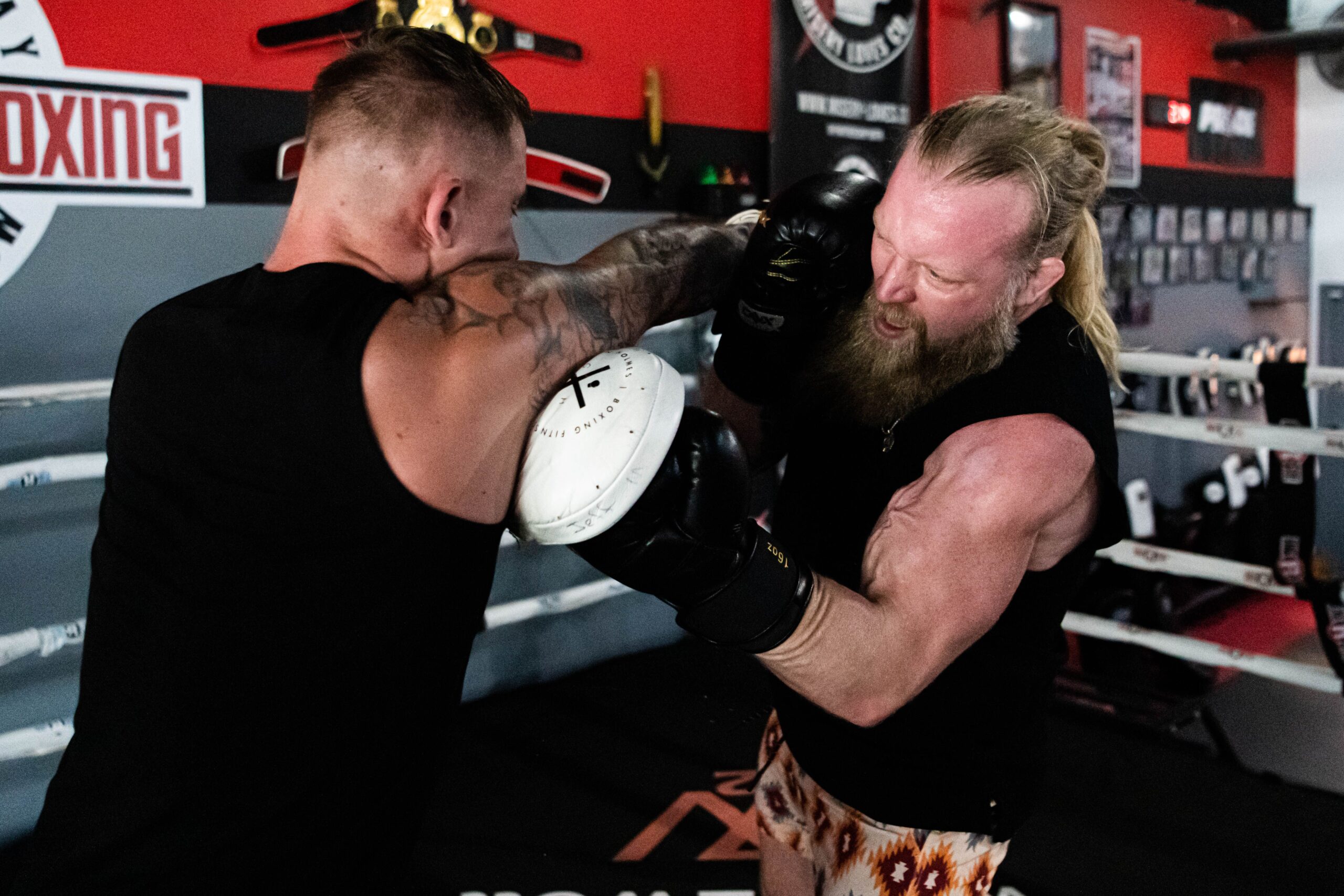
Born in 1987 to “the best mom ever,” Justin Wren made his way from Greeneville, Mississippi, to Fort Worth, Texas, where everything is bigger—even the bullies. “From the third grade to the eighth grade,” Wren says, “I was incredibly, heavily, relentlessly bullied—to the point of suicide. That’s why I found martial arts.”
At 13, Wren was immediately drawn not only to fighting but to the fighters themselves. He says, “I just remember thinking, ‘These guys don’t get bullied,’ and then I fell in love with the chess match from there.” He had finally discovered what he wanted to be when he grew up.
With the help of “a lot of sweat and some great coaches,”— specifically Olympic gold medalists Kenny Monday and Kendall Cross—Wren became a 10-time state champion, a five-time All American and a two-time National Champion wrestler. His standout style was Greco Roman, in which he won the National Championship the summer after his senior year in high school. That win earned him a spot to train at the U.S. Olympic Education Center at Northern Michigan University to train for the games. Although the accolades are the cherry on top, for Wren, the life lessons, values and discipline fighting instilled in him make up the rest of the sundae.
He says, “You can think of life as a wrestling match: There will always be something small, but sometimes something big to overcome. Whether that be relationships or business opportunities. You can use the grappling or jujitsu or boxing mentality in a fight and in life and in business. For a lot of casual fans, it’s the fighter with the biggest muscles who they think is going to win, but the fighters behind the scenes and their coaches know it’s the person with the most reasons why who wins.”
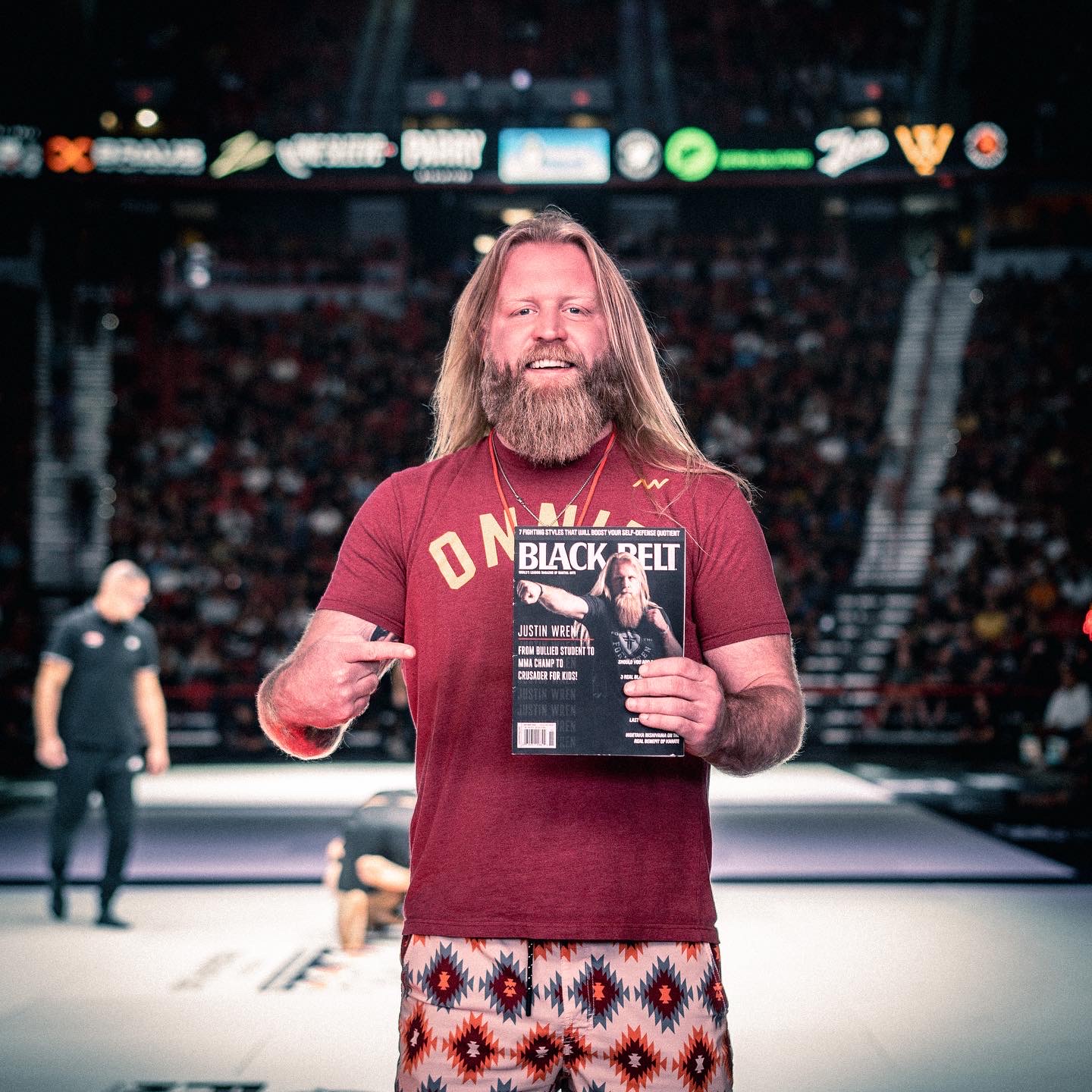
Following a remarkable high school resume, Wren’s reason why evolved when an injury held him back after receiving a full-ride scholarship to the Iowa State University wrestling team—but he didn’t let it pin him down. Wren pivoted, taking to MMA at just 19 years old and winning his first three fights. From there, he would go 15-2 as an MMA and UFC veteran and become inducted into the Black Belt Hall of Fame. It would seem from there, Wren had made his mark on history, but he always found another move—and another reason why.
Having accomplished all that he set out to and more, Wren felt called to join a bigger fight. “That’s my nonprofit,” he says. “My journey is one from fighting against people to fighting for people and that lights me up.”
THE ULTIMATE FIGHT
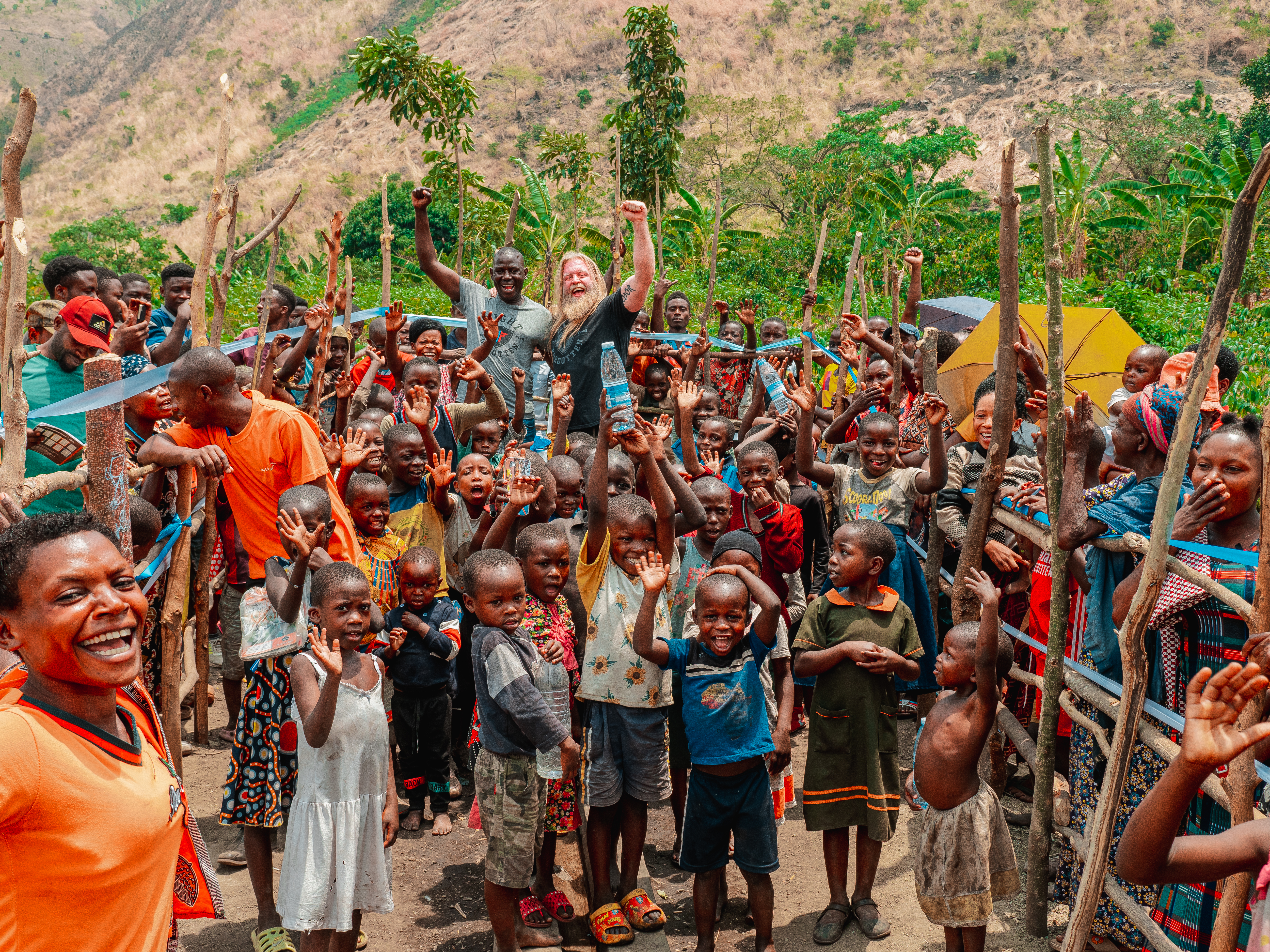
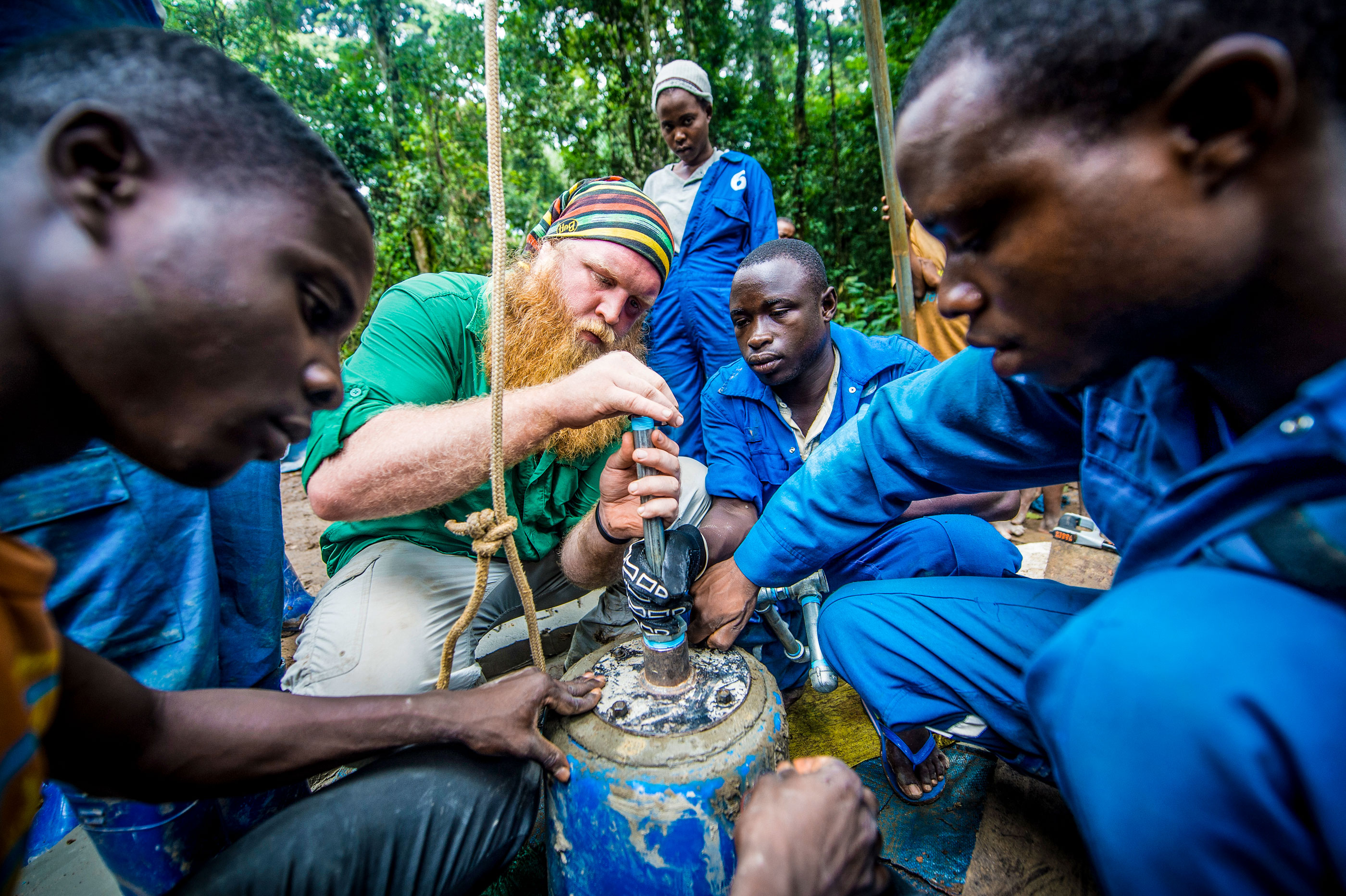
Today, Wren lives in Austin, Texas, with his partner Amy Edwards. Together, they produce the podcast “Overcome With Justin Wren” and run the nonprofit Fight for the Forgotten, which helps secure health and human rights for displaced indigenous groups in East Africa. Wren took what he learned about fighting for himself and applied it to fighting for others. In the midst of his fighting career, Wren began traveling to the Democratic Republic of Congo, taking a portion of his winnings with him to purchase land and build fresh-water wells for the Mbuti pygmy people. Today, those efforts have evolved into an official 501(c)(3) and that land has welcomed further water wells and other infrastructure—Wren and FFTF are currently building a hospital for the Mbuti and Batwa people.
But how did he go from the octagon to Africa? And what was the reason this time? It started at the Denver Children’s Hospital. “Then it was those experiencing homelessness at the Denver Rescue Mission, then to the Las Vegas Rescue Mission, to behind the bars of more than a hundred different prisons—juvenile detention centers, women’s units, death row, maximum security, Folsom, San Quentin. Then I met a guy who was doing great humanitarian work in Africa,” says Wren. “He took me with him on one of his trips and I’ve never stopped going back.”
Over the next 13 years, Wren would fly from UFC fights to Africa and back and forth, cataloging the moments along the way. It should come as no surprise that Wren took this next reason why and turned it into his book, “Fight for the Forgotten: How a Mixed Martial Artist Stopped Fighting for Himself and Started Fighting for Others.” If you asked a young Wren—someone who identifies as an “athlete first” and struggles with dyslexia—if he thought he’d be the author of one of Amazon’s best-selling memoirs, let alone turn that memoir into a nonprofit, he would have probably guessed you were talking about a different Justin Wren. But while this book was written by Justin Wren, it was not solely about him.
“The book was an opportunity to give a group of people a voice,” he says. “When I met the Pygmy people, the Batwa, the Efe, the Mbuti, they said, ‘Everyone else calls us the forest people, but we call ourselves the forgotten and we don’t have a voice. Can you help us have one and tell our story?’” Wren took his fighting platform and turned it into the Fight for the Forgotten platform. “It started by fighting, winning, telling their story, and then a podcast and then news [appearances],” Wren says. In 2014, he gave a twenty-minute interview to New York Times bestselling author Loretta Hunt for Sports Illustrated—two hours and twenty minutes later, she told Wren his story was actually a book. Then she told Simon and Schuster. In 2015, Wren was officially a published author.
“Of the 28 chapters, I wrote 27 of them and it was one of the hardest things I’ve ever done, but one of the most rewarding,” Wren says. “I never thought I would ever write a book. In fact, at my Barnes and Noble book signing in Dallas, my former high school English teacher showed up and even said, ‘There’s one person I thought would never write a book.’”
GROWTH MINDSET MASTERCLASS
With his book written, his nonprofit founded, and his retirement from the UFC made official in 2023, that doesn’t mean Wren is done learning life lessons—or teaching them. His partner in life and business, Amy Edwards, is proof of that. The pair met in a mastermind group for self- and business-development. “We were trying to become well-rounded human beings,” Wren says. “Then I was the first guest on her new podcast and I asked her out afterward.” Edwards is Wren’s “greatest daily inspiration.” Her life philosophy: Love yourself like your life depends on it, because it does—which Wren says she models through her actions and practices.
The pair complement each other not only emotionally but professionally. Alongside Fight for the Forgotten, Edwards is the founder of Fight for Her, a partner initiative of FFTF that focuses on the Batwa women and girls, who are most vulnerable to and affected by the water crisis.
“While we’re focused on building better lives [with] infrastructure or a building, what happens within that building is so beautiful,” Wren says. “And so her focus has been making sure the girls are getting education, the women have a safe place to give birth and that the women also have sustainable livelihoods. While I’m focused on raising the funds to build the hospital, to build the school, to build the other stuff, she’s making sure that they’re coming along too, and that we’re not just developing buildings, but developing the humans that are there too, or at least [ensuring] that they have the opportunity to develop themselves.”
That growth mindset is what unites Wren to Edwards to the Batwa Pygmy people and, in a couple months, to ABC members. At ABC Convention 2025 in Las Vegas, Wren will detail the time he was literally stuck in a small room with a mosquito—and how it almost killed him.
OBJECT IN MOTION
As someone who has fought men nearly seven feet tall, Wren is grateful he finished some of those fights in the first round, “Yet a mosquito almost took my life,” he says. During one of his trips to Africa, Wren contracted a parasite from a mosquito bite and became deathly ill, losing 33 pounds in five days. That brush with fate generated a big impact in his life: “Bigger than any fight ever has. And if that’s true about that little parasite, just think how much more of an influence and an impact we can all have in the lives of somebody else, or in our community, through our business, through [ABC]. It’s so much more than we’ve ever thought possible.”
An object at rest will remain at rest, thus human beings have a tendency to count themselves out—a law of thermodynamics and the human condition Wren knows on an incredibly personal level. “I almost took my life two different times. I attempted suicide and now I look at all the beautiful things that have happened that I almost didn’t get to do.” On the other hand, Wren also knows an object in motion will remain in motion. “I look at how many people [the nonprofit] has helped. We’ve seen 1,800 people transitioned out of a life of slavery and into a life of freedom; at least 52,000 people—probably more than 80,000 people—have gotten access to clean water. I hope people [at ABC] really take that away, that they’re making a difference in many ways.”
As someone who has lived so many versions of life in his one lifetime, what is Wren’s next why? He hopes he can continue to find and create opportunities to inspire others, but also learn from them, which is what piqued his interest about speaking at ABC Convention 2025. “I’m so excited about speaking to this group of construction professionals,” Wren says, “because it’s my first rodeo building infrastructure.” FFTF just completed 13 kilometers of road where it never existed before—around a rainforest and up a mountain—for a community in the most need Wren has ever seen. “To be able to come to a group that does things like that daily and has done it for decades…ABC and its members are the unsung heroes of society. They’re making a difference, creating impact.”
Wren hopes to feel that impact as he steps away from the stage and into some of the breakout sessions throughout the week—a unique opportunity for someone who has been center stage and center ring for decades. “As a fighter,” he says, “I used to send people to the hospital. Now I’m building a hospital. As much as I’m coming in to bring inspiration, hope, knowledge and wisdom, I will get just as much out of the people of ABC—the people who have built hospitals long before me. I’m honored. I’m humbled. What a privilege for me to be able to share [my story] with them. But I know they’re going to share something that I walk away with, too.”
SEE ALSO: SHARING IS CARING