CES [Consumer Electronics Show] is one of the world’s largest and most influential technology trade shows, held annually in Las Vegas. Organized by the Consumer Technology Association, CES serves as a global stage for innovators and breakthrough technologies across diverse industries, including consumer electronics, automotive, health tech, and smart cities. Since its inception in 1967, CES has become a launchpad for revolutionary products, unveiling innovations such as the VCR, HDTV, and self-driving cars. The event attracts attendees from around the globe, including tech enthusiasts, industry professionals, and media outlets, making it a hub for networking, collaboration, and discovery.
CES 2025, held from Jan. 7 to 10 in Las Vegas, spotlighted advancements in artificial intelligence, robotics, automotive technology, health tech and sustainability. This year’s show brought together 140,000+ attendees representing over 150 countries. The 4500+ exhibitors, educational sessions and keynotes were spread throughout 12 venues, grouped into three campuses: Las Vegas Convention Center, Venetian and Aria.
TECHNOLOGY IMPACTING CONSTRUCTION
Understanding the sheer size and overall footprint of the event is a crucial factor for when it comes to planning where to go at CES. It’s easy to become overwhelmed and mindlessly enthralled with all the flashy technology. Fortunately for those mostly interested in technology impacting the construction industry, CES offered a ‘Construction Tech’ filter when searching for exhibitor booths.
Construction technology made its impact known as innovators unveiled groundbreaking solutions poised to transform the building industry. From autonomous machinery to end-to-end software solutions, the event highlighted how cutting-edge technologies are redefining construction processes, enhancing efficiency and addressing critical challenges like labor shortages and sustainability. Key themes included the integration of artificial intelligence, robotics for precision and safety, and digital twin technology for project planning and management. As construction increasingly embraces innovation, CES 2025 showcased the potential of smart tools and connected systems to build smarter, greener and more resilient infrastructure for the future. Below are just a few highlights of the vast amounts of technologies poised to impact the construction industry:
VEHICLE AUTOMATION, ELECTRIFICATION, DIGITAL JOBSITES AND REMOTE OPERATIONS

John DeereJohn Deere has continued to develop its autonomous technology through its second-gen kit that includes computer vision, AI and cameras to help navigate their environment. Much of this technology is interchangeable throughout its autonomous fleet, including the 460 P-Tier Autonomous Articulated Dump Truck.
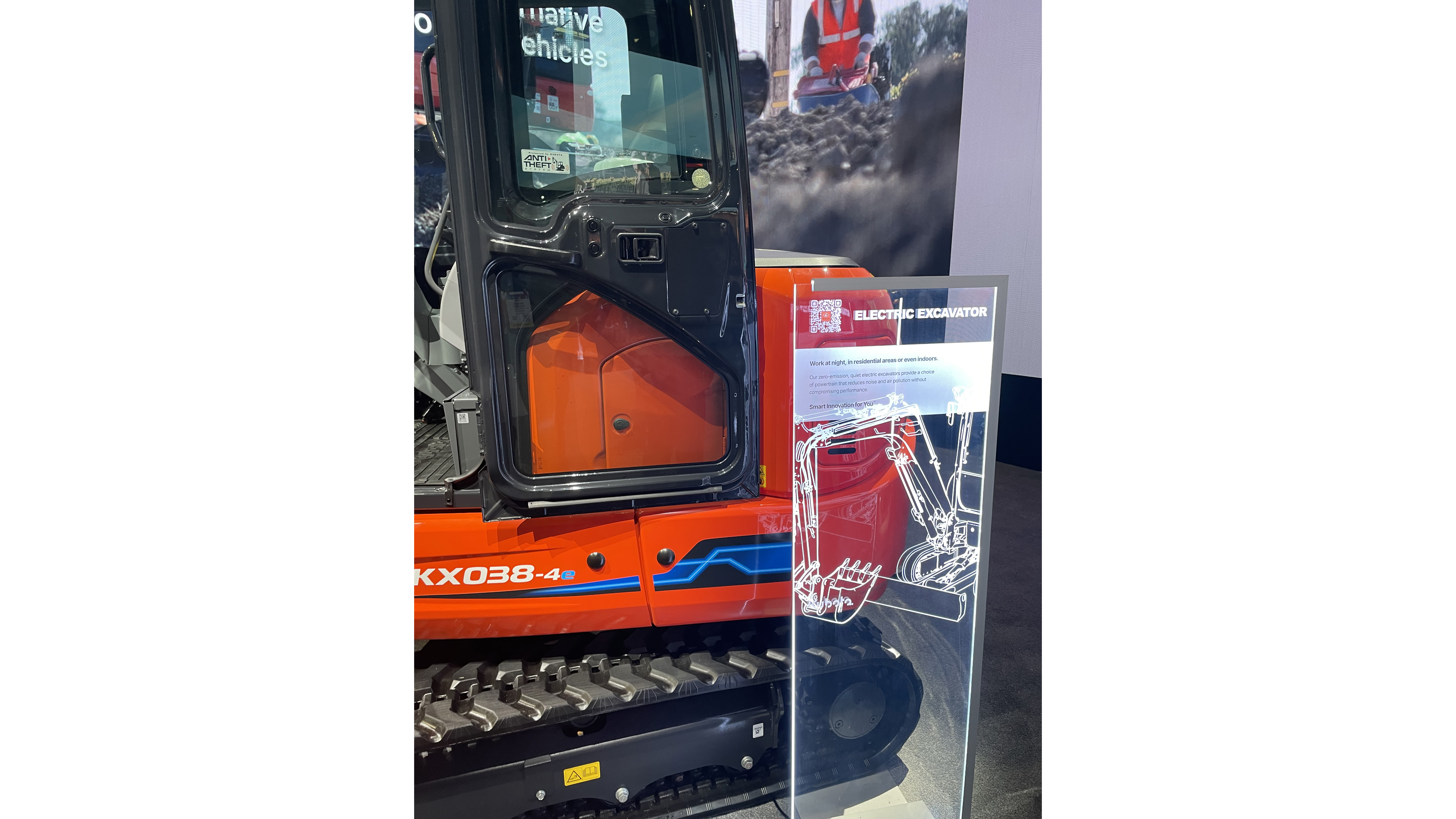
KubotaOn full display was the KX38-4e electric compact excavator. The built-in lithium-ion battery technology allows for up to five hours of continuous operation. The onboard DC fast charger also means it can be quickly recharged.
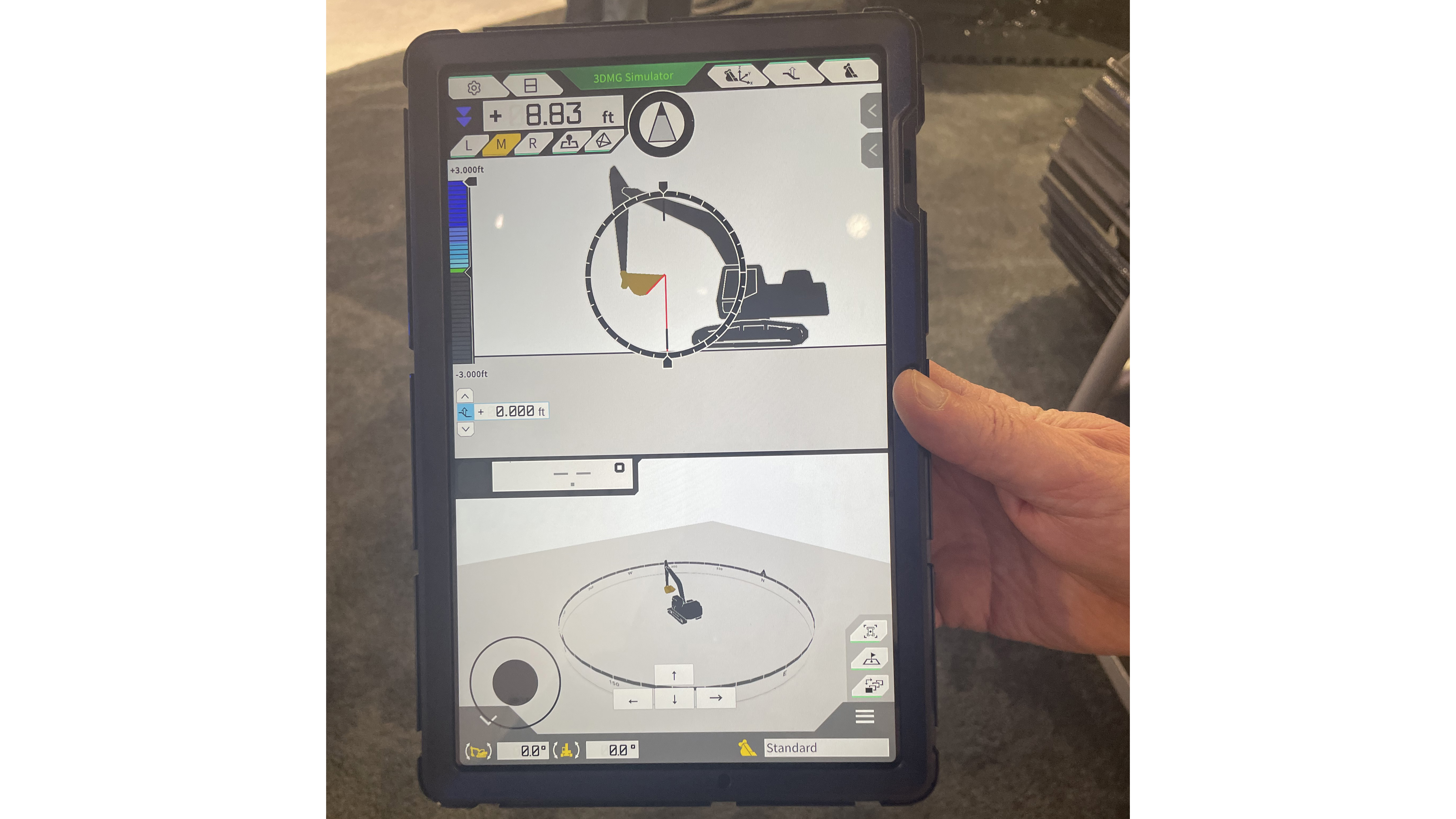
KomatsuKomatsu highlighted their efforts in keeping construction sites connected throughout every phase of the project. Their Smart Construction suite provides a one stop solution for design documents, 3D machine guidance, fleet management, base/rover controls, drone data processing and more.
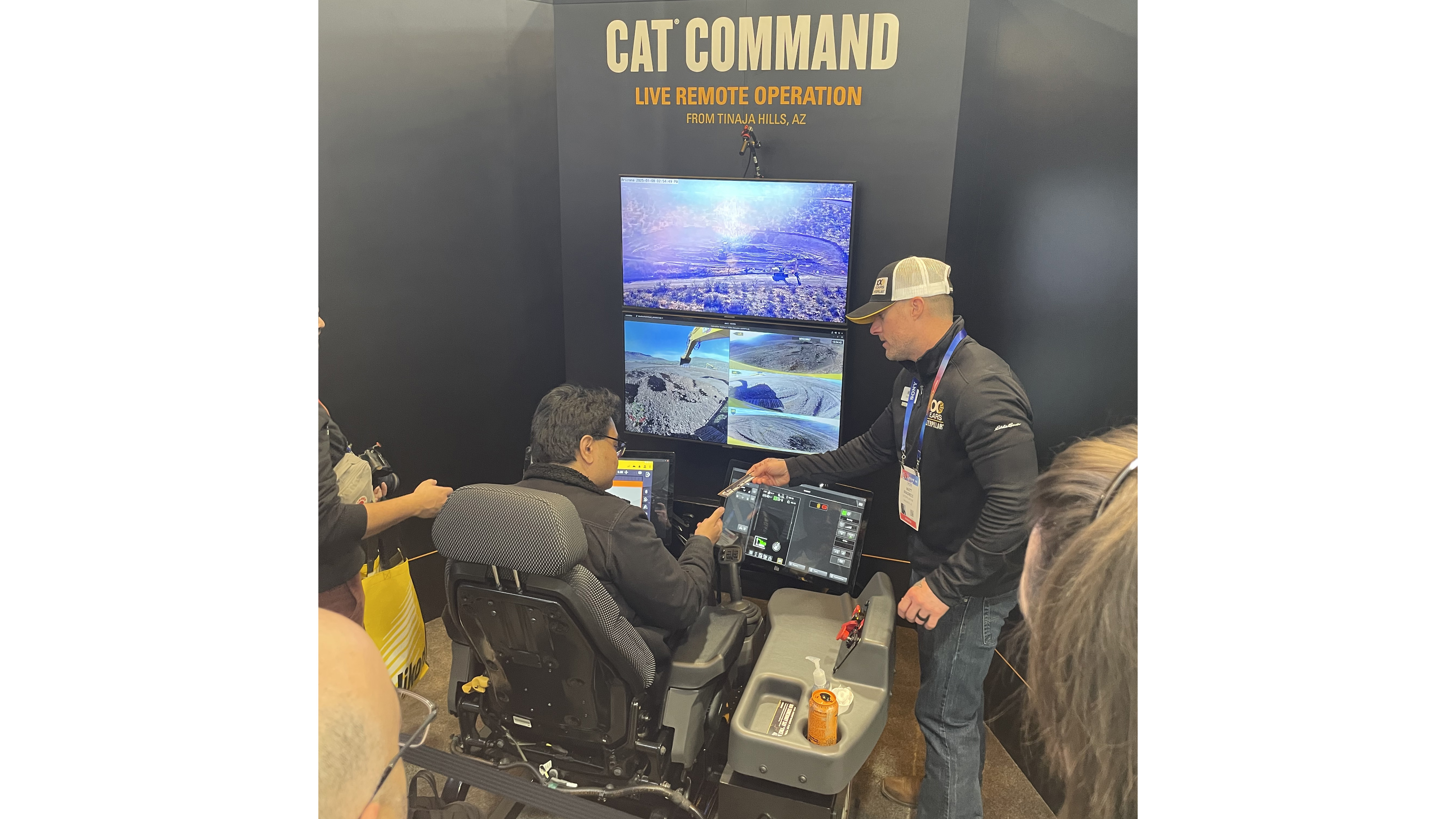
CATCaterpillar had their CAT Command set up and ready for anyone to demo. The remote-controlled technology allowed full control of an excavator that was set up on a remote jobsite in Tinaja Hills, Arizona.
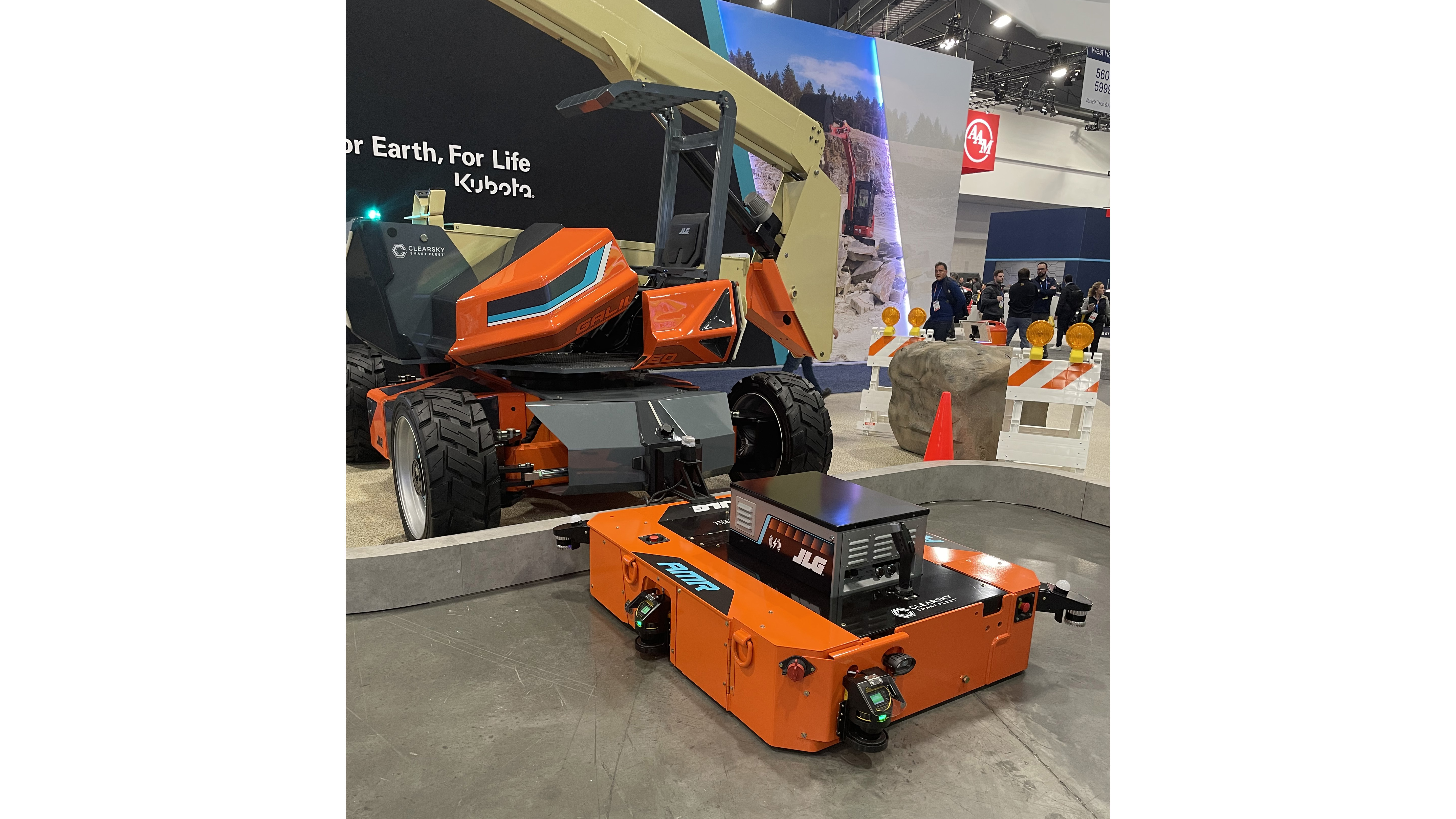
JLGJLG brought along their fully electric Galileo multi-use mobile elevating work platform along with an autonomous mobile robot. A demo simulated the work platform running low on battery and prompting the AMR to drive to the equipment and plug in to charge.
ROBOTICS AND EXOSKELETONS
There was absolutely no shortage of robotics on full display at CES. Up to this point, the majority of the construction workforce may not have had the opportunity to stand alongside a robot assistant on a construction site. Several of the companies at CES showcased a reminder that robot assistants come in all shapes and sizes.
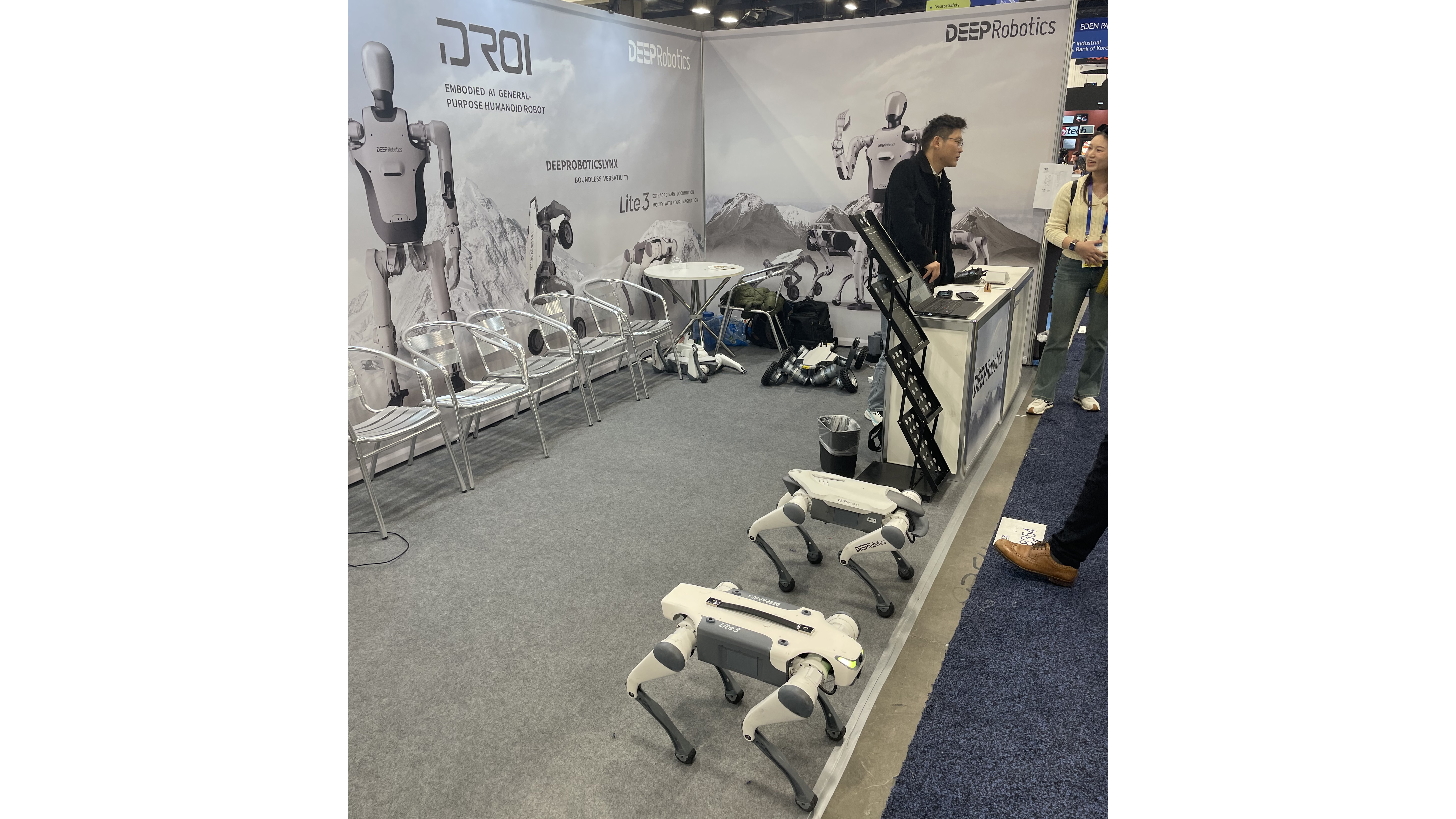
Deep RoboticsDeep Robotics showcased a full roster of diverse robots. Anywhere from humanoid/bipedal robots to the X20 quadruped robot made for carrying scanning/surveying-based payload solutions.
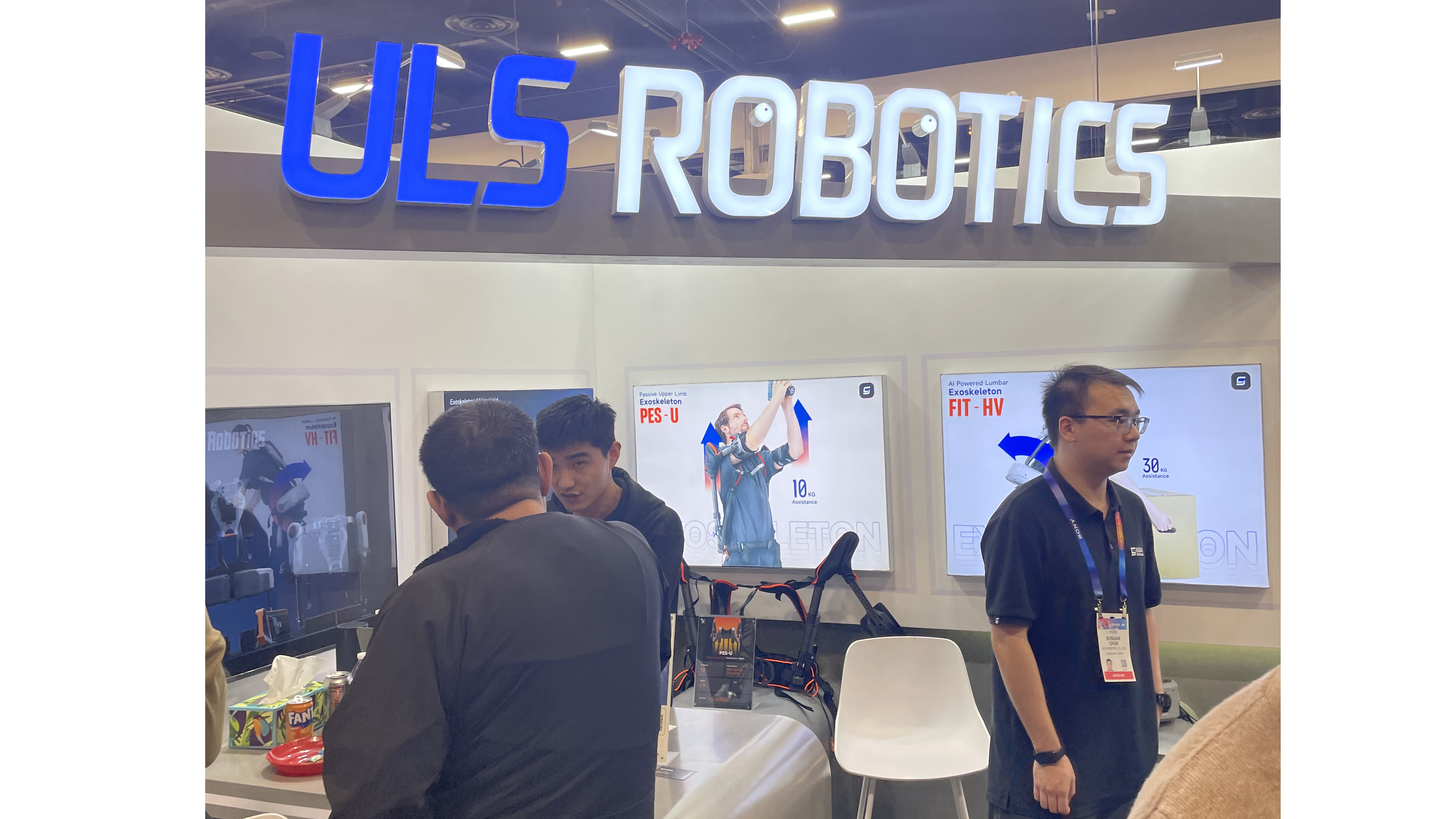
ULS RoboticsExoskeletons and human augmentation devices had a large presence at CES. ULS Robotics unveiled their AI lumbar exoskeleton, which is capable of lifting up to 66 pounds.

UnitreeUnitree showcased some of its most advanced robotics based around quadrupedal, wheel-leg and humanoid technologies. Similar to other ground-based robotics, these robots are capable of carrying reality-capture based payloads like lidar scanners and 360 cameras.
ARTIFICIAL INTELLIGENCE AND SMART VISION
Artificial intelligence at CES was hard to hide from. Most products had mention of AI in their booths—“Powered by AI”, “Next Gen AI”, or “AI [insert product name here]”. The excitement and hype surrounding AI only seems to be gaining momentum, allowing companies to continue to push innovative use cases.
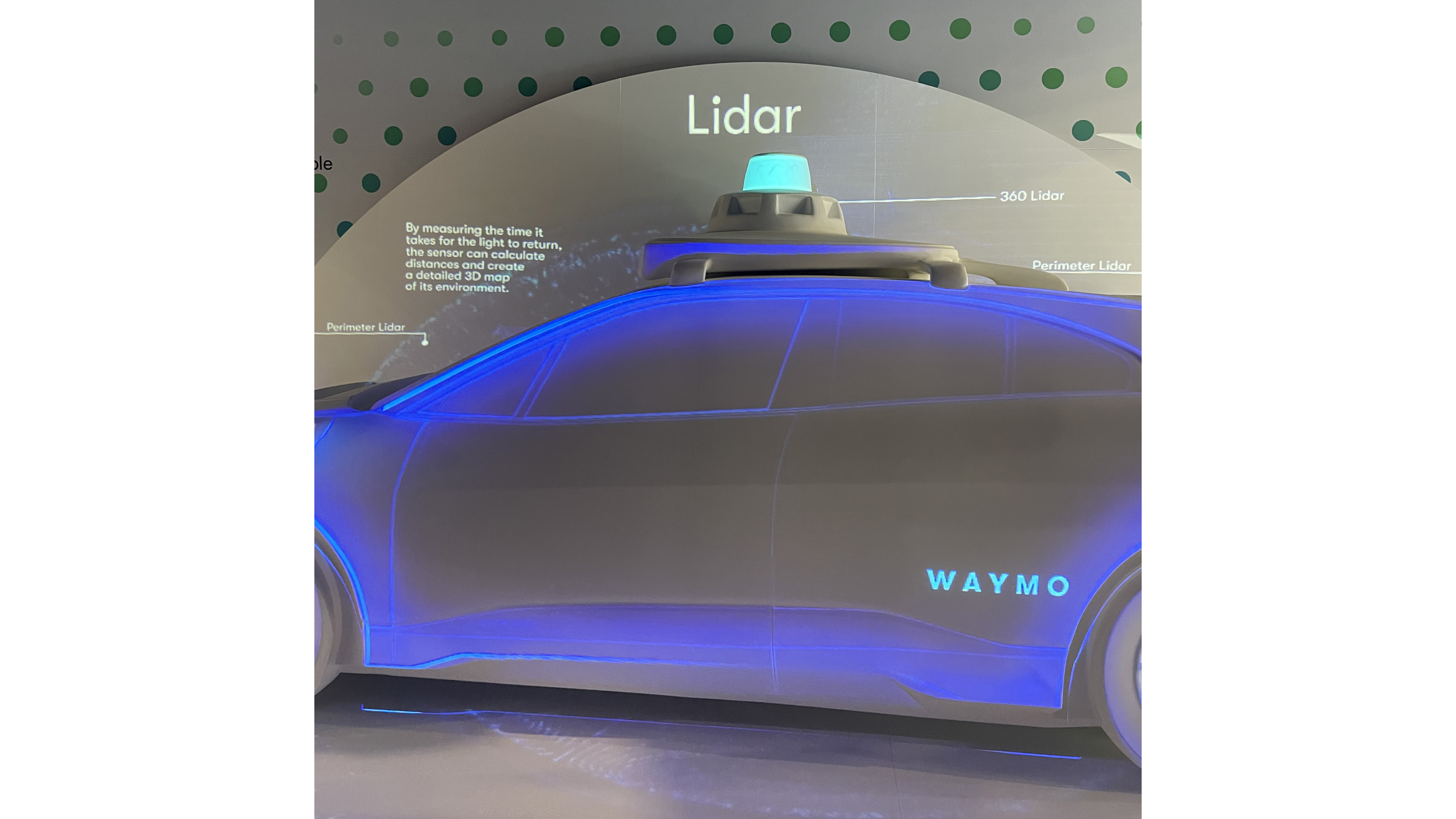
KomatsuSeveral autonomous vehicle and technology companies were highlighting technology somewhat similar to what Komatsu had on display—smart-vision based AI to track proximity to machines and ensure safety. Another example currently on the street in today’s market is from the self-driving company Waymo.
TimekettleW4 Pro Earbuds powered by Babel that interpret and translate in real time whether online or in person. To date, the device can translate 40 languages and interpret 93 accents.

DeepXA full display of AI-powered hardware from DeepX’s various partners. One example is from Hyundai, where they showed off hardware powering face authentication vision and autonomous robot vision.

CES 2025 showcased groundbreaking innovations that promise to revolutionize the construction industry. From advanced robotics and AI-driven project management tools to sustainable materials and energy-efficient building systems, the event highlighted how technology can make construction smarter, safer and more efficient.
For professionals in the field, these advancements mean faster project delivery, reduced costs and a stronger focus on sustainability. The integration of smart sensors, IoT devices and autonomous machinery can help improve jobsite safety while optimizing resource use. As the construction sector adopts these innovations, it will be better equipped to meet the demands of modern infrastructure, sustainability goals and urbanization challenges.
Ultimately, CES 2025 reaffirms that the future of construction lies at the intersection of technology and innovation, inspiring a new era of possibilities for builders and designers worldwide.
OTHER RESOURCES
SEE ALSO: WITH GREAT TECH COMES GREAT RESPONSIBILITY: ABC’S 2024 JOINT TECH SUMMIT