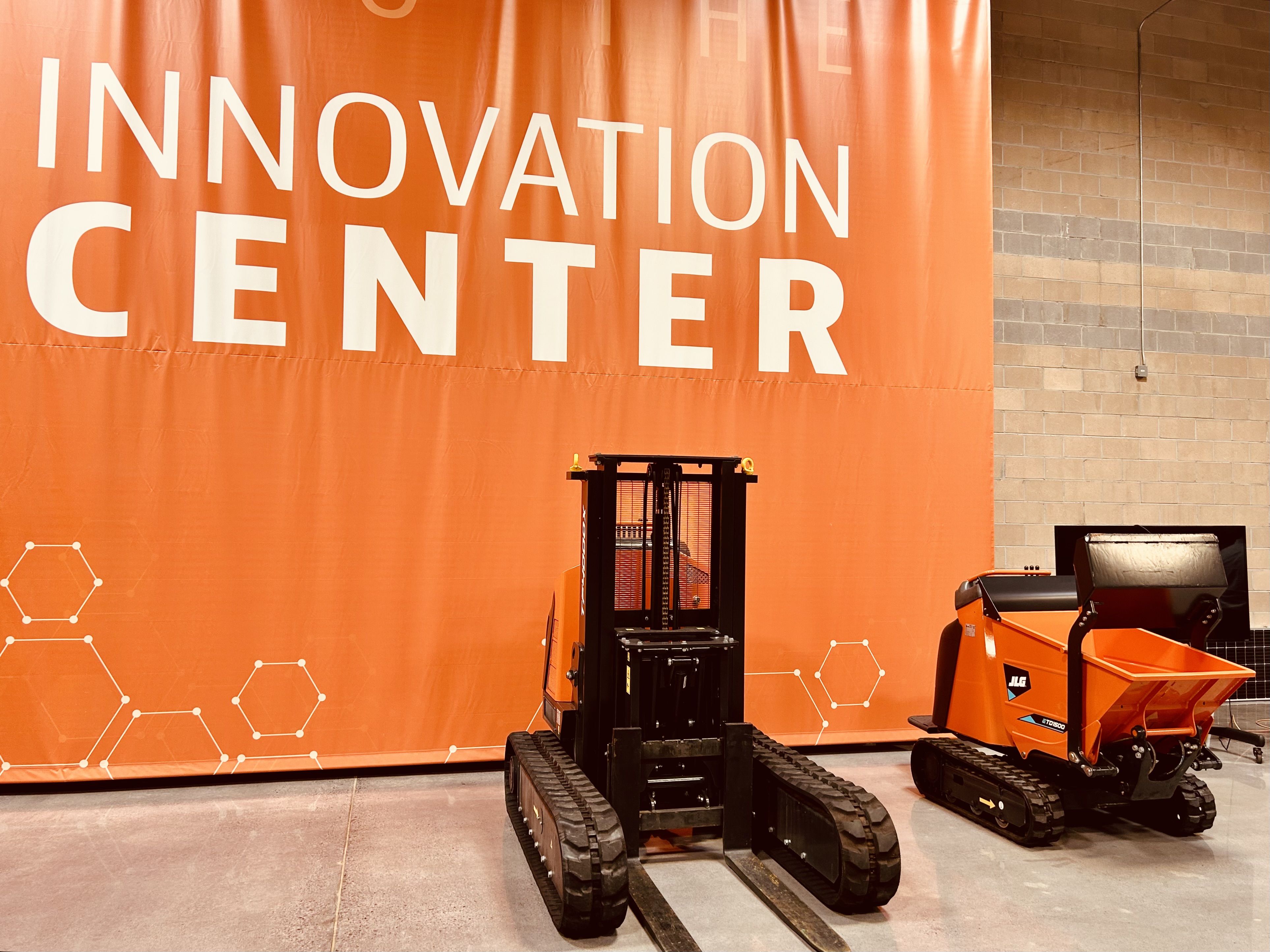
While covering the 2024 ABC Construction Technology and Innovation Committee Field Trip, Construction Executive found itself at the JLG Innovation Center in Hagerstown, Maryland, where brainstorming, prototyping, product testing and sneak-peaking all take place. In addition to developing and deploying construction manufacturing equipment, JLG is also in the business of furthering company culture and construction technology. CE sat down with Craig Edwards, vice president of strategic accounts at JLG, to discuss their recent advancements of not only construction technology but company culture that it aims to bring to the industry this year.
CONTECH MARKETPLACE
Why are relationships like that with not only ABC but the ABC Construction Technology and Innovation Committee—and its in-person field trip—so important for companies’, like JLG’s, operations?
Relationships with the ABC Construction Technology and Innovation Committee, and its in-person field trip, are important for several reasons. These connections provide a unique opportunity to showcase the behind-the-scenes aspects of our industry’s work, such as engineering, patents and testing. Many industry professionals, especially those with experience in a broad range of technologies, don’t always have visibility into these internal processes. The committee members, who are strategic end-users volunteering their time, represent a vital group that can help bridge this gap by learning about and spreading knowledge of [contech] advancements. They can also inform [companies like] JLG so we can better serve the industry. This collaboration fosters a positive impact for both organizations and enhances the industry’s overall growth and adoption of advanced technologies.
How is the changing workforce (shortage of skilled labor, retirement of older generations, entrance of younger, more tech-savvy generations) informing what products are being developed?
The changing workforce, marked by a shortage of skilled labor, the retirement of older generations and the entrance of younger, more tech-savvy individuals, is significantly influencing product development. As the industry becomes more complex, manufacturers are focusing on making machines more user-friendly and consistent. This includes simplifying controls and designing machines with commonality to make them intuitive and efficient for less experienced workers to operate.
For example, streamlining the learning process has become a priority. Product designs incorporate features that make understanding and operating machinery straightforward without requiring previous skills training. For example, load-sensing technology is built into machines to reduce the possibility of exceeding the machine’s load capacity, reflecting broader trends toward safety and ease of use.
Additionally, serviceability is a key consideration. Machines are designed to include features allowing enhanced diagnostics, enabling workers to identify and fix issues more efficiently. Technologies like JLG’s ClearSky Smart Fleet™ and Online Express parts ordering systems are helping streamline maintenance and repair work, digitizing those processes for the digitally native workforce.
As data gets cheaper, more prolific and can be gathered from more sources, how does JLG expect to (a) consolidate that data at faster speeds, (b) use that data to inform its future project development, (c) disseminate that data to its clients? (i.e. During the field trip we saw the SmartFleet subscription software.)
As data becomes less expensive and can be gathered from more sources, this shift can be leveraged in several key ways:
Consolidating Data at Faster Speeds: With the decreasing cost of data collection, JLG can gather a broader range of data points from machines, such as detailed utilization metrics, diagnostic information and machine specifications. By integrating more sensors and technologies into our machines, we can collect more granular data faster. This enables JLG to move beyond basic data, like location and hours, to more detailed insights, such as how frequently a machine is used and in what manner. This evolution, similar to how smartphones have developed with apps, allows for rapid and efficient data consolidation.Using Data to Inform Future Project Development: JLG can use this influx of data to improve and innovate future projects. We can identify patterns and trends that inform design decisions by analyzing detailed utilization data, diagnostics and machine performance. This allows JLG to tailor products more precisely to meet the needs of the industry, improving machine performance, safety and efficiency based on real-world usage insights.Disseminating Data to Clients: JLG already uses tools like ClearSky Smart Fleet to disseminate this data. As the data collected becomes more comprehensive and valuable, JLG can provide users with access to actionable insights, allowing them to monitor their fleets more effectively. This data helps our customers understand machine usage, optimize maintenance schedules and make informed decisions about their equipment. By offering a platform to access this information in real time, JLG ensures customers can leverage the data to enhance operational efficiency and reduce costs.
In essence, JLG is capitalizing on more abundant data to enhance both product development and customer service, moving towards more sophisticated, data-driven solutions that improve overall machine performance and management.
For how far JLG can see, what does the future of the technology marketplace look like for the construction industry, considering the exponential pace at which technology like AI and robotics are being developed, as well as their increasing accessibility?
Looking to the future, JLG envisions a construction technology marketplace that will continue to evolve rapidly, driven by advancements in AI, robotics and increased accessibility of these technologies. As the construction industry faces challenges similar to those faced by other sectors—such as eliminating safety risks and improving efficiency—integrating these technologies will play a key role.
As a manufacturer, we anticipate that technology will increasingly be used to improve safety at height and allow for more work to happen remotely, from the ground. Robotics and autonomous equipment could enable construction tasks to be completed safely and efficiently, with machines handling more physically demanding or dangerous work. For example, JLG’s 450J boom lift has already been paired with robotics for solar panel installation, demonstrating how advanced technologies can enhance the capabilities of existing equipment.
Moreover, the trend toward modular construction, where work is done on the ground and lifted into place, will likely become more common. This approach reduces risks and aligns with the growing demand for safer and more efficient construction practices.
We believe that the future of the construction technology marketplace will be shaped by smarter, more automated machines that enable workers to do more with less while enhancing safety and productivity. Manufacturers’ roles will be to continuously innovate and adapt equipment to meet these changing needs, ensuring that products are at the forefront of this technological revolution.

PRODUCTS
When developing new products, what is JLG’s creative process? How does it use old and current products to influence new ideas? How does it funnel feedback from the broader industry to improve its offerings? (i.e. Correct me if I’m wrong, but I heard the VR goggles were initially more of a marketing tool and they’ve been transformed into a staple training product.)
JLG’s creative process* for developing new products is deeply rooted in customer-inspired innovations. The process begins by defining the product’s purpose through a strong focus on Voice of the Customer. During this process, gathering feedback from various stakeholders, including operators, owners, rental distributors and other industry players is paramount. By listening to their insights and challenges, JLG identifies areas for improvement and innovation, ensuring that new products address real-world needs.
JLG uses lessons learned from past products to inform improvements and upgrades. We refine existing designs based on feedback and performance data, making adjustments that enhance safety, efficiency and usability. This iterative process ensures that new products build on the success of older models while incorporating the latest technological advancements.
For example, transforming the VR goggles from a marketing tool into a staple training product reflects how JLG uses feedback to adapt and evolve its offerings. Initially seen as a way to showcase technology, the VR goggles were reimagined into a practical training solution after recognizing their potential to improve operator training. This shift demonstrates JLG’s ability to pivot in response to feedback, ensuring our products meet current needs and anticipate future demands.
Ultimately, JLG funnels industry feedback into every stage of product development to drive meaningful innovations that improve safety, productivity and overall user experience.
How does JLG develop its internal company culture and use that to develop better products?
JLG develops its internal company culture by fostering an environment where employees are deeply engaged in building purpose-driven vehicles. Since most employees are directly involved in manufacturing, they gain an unparalleled understanding of the equipment. This hands-on experience empowers them to contribute valuable insights and ideas for product improvements.
Our company encourages a culture of open communication and innovation, where ideas are welcomed and explored. Employees are empowered to suggest ways to enhance aspects such as inspections, service points and other features that can reduce complexities in the field. By continuously refining these processes based on internal feedback, JLG ensures our products become intuitive to use, maintain and repair.
This culture of collaboration and innovation helps JLG develop products that meet current industry demands and anticipate future challenges, ensuring that we, as a company, continue to lead the industry in offering high-quality, high-value equipment.
Manufacturers like JLG are working so far ahead while some companies are hesitant to adopt some of the technology manufacturers are making (some people are stuck on spreadsheets and analog payroll or are using manufacturing equipment but not the latest/smartest versions). How do technology companies and manufacturing companies create buy-in from hesitant/tech-resistant clients?
Manufacturers can create buy-in from hesitant or tech-resistant customers by making technology accessible and adaptable to various customer sizes and needs. With customers ranging from small businesses to large corporations generating billions in revenue, JLG aims to design products and solutions that cater to both ends of the spectrum. The key is to ensure that technology, whether related to safety, operations or other aspects, is accessible and beneficial to all customers, regardless of their size or tech proficiency.
To achieve this, JLG emphasizes the importance of training, support and distribution. By offering comprehensive training and ongoing support, we help customers understand how to use new technologies effectively, alleviating concerns about adopting unfamiliar tools. This approach ensures that users, whether small operators or large enterprises, feel confident in integrating the latest technology into their operations. JLG also works closely with our rental partners to ensure they can assist customers at every stage, from initial adoption through continued usage.
Focusing on broad accessibility, not just catering to one market segment, makes it simple and intuitive for hesitant customers to embrace newer technologies. They bridge the gap between tech-resistant users and the advancements shaping the industry, ultimately helping users move away from outdated methods and adopt more efficient, modern solutions.
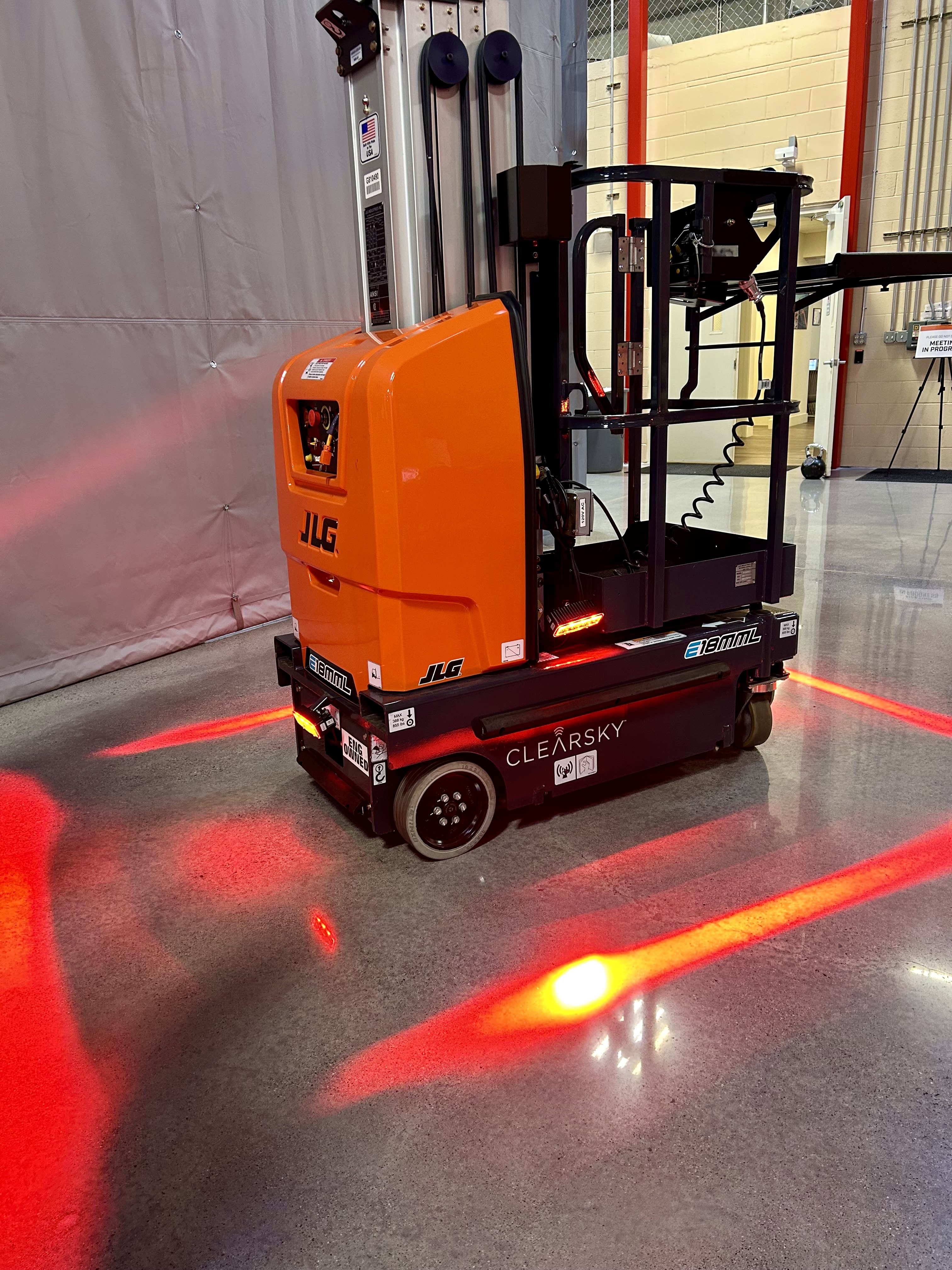
What does the future of electric vehicles look like for the industry? Autonomous vehicles?
The construction industry’s future of electric and autonomous machines looks promising, with significant developments driven by customer demand and technological advancements. For electric vehicles, the primary focus is on meeting customer desires for cleaner, quieter machines with zero emissions. However, challenges remain. Issues such as battery life, charging/recharging times and the ability to maintain productivity without running out of power are key considerations. We are addressing these considerations as we develop electrified products to meet the demands of existing duty cycles.
As for autonomous vehicles, customers are increasingly interested in lower-level autonomy. While JLG has already incorporated some autonomous capabilities for specific applications, the challenge lies in adapting to the highly dynamic nature of construction jobsites. These sites change daily regarding geography, climate and task requirements, making creating one solution that works universally difficult. However, there is a growing appetite for autonomous systems that assist with material manipulation, such as lifting and welding, as they can enhance productivity and safety.
The future of electric and autonomous vehicles in the construction industry will involve continuous innovation to address challenges related to efficiency, cost and adaptability, while meeting customers’ evolving needs.
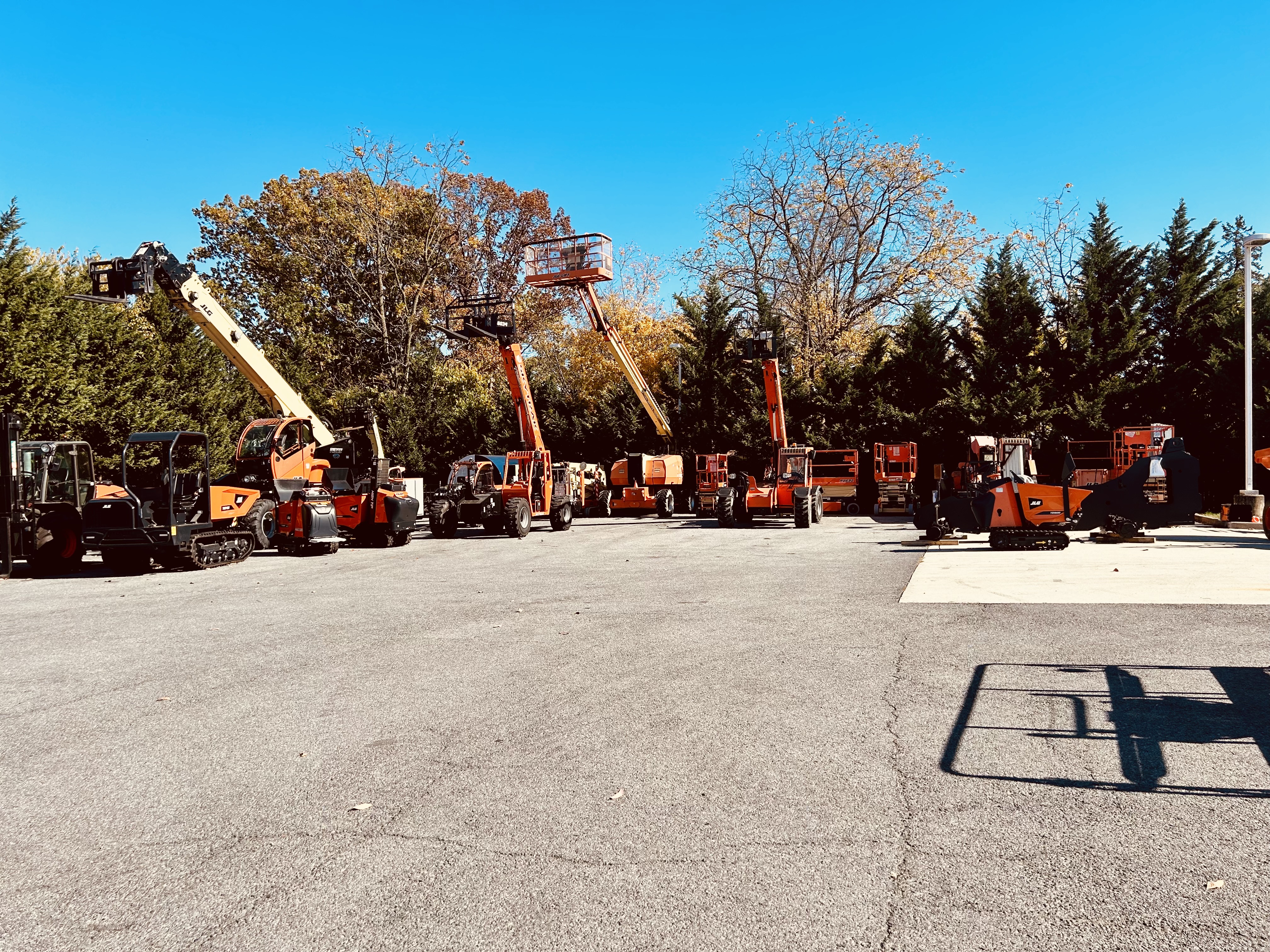
*This approach aligns with Oshkosh Corporation’s—JLG’s parent company—corporate strategies to build purpose-driven vehicles, accessories and services that go beyond their original design to meet evolving needs.
SEE ALSO: MEETING THE GROWING DEMAND FOR AMERICAN SEMICONDUCTOR FACILITIES