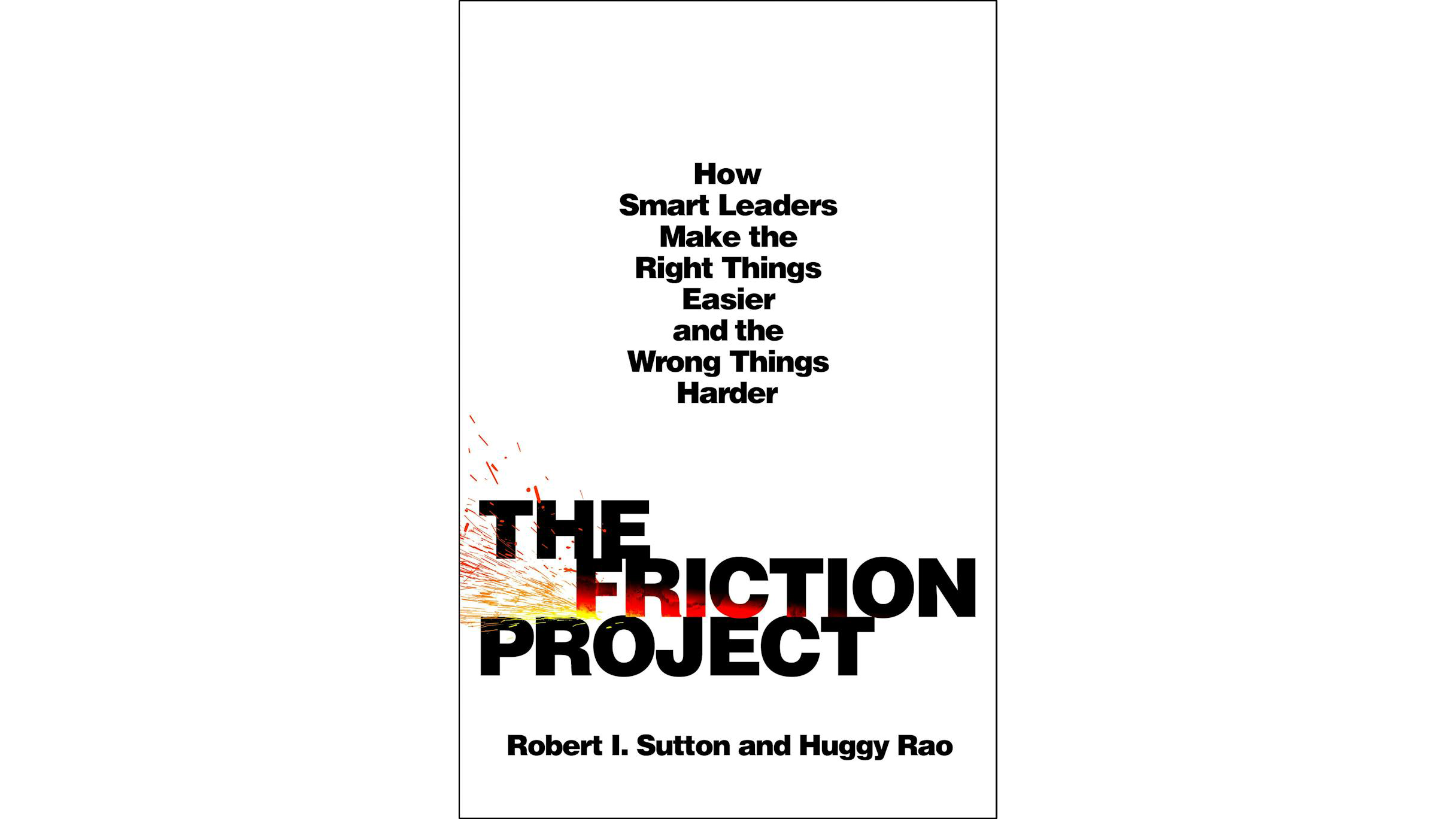
In the business world, friction involves “forces that make it harder, slower, more complicated or downright impossible to get things done in organizations,” according to Stanford professors Robert I. Sutton and Huggy Rao—and it’s not always bad. The key is figuring out “why and when such friction is destructive, useful or a mixed bag.” In this excerpt from “The Friction Project,” Sutton and Rao zero in on the destructive kind:
Anyone who has tangled with organizations as an employee or customer has had moments, days and, sometimes, months and years when it felt as if the overlords who imagined and run the place have no respect for their time. Such as encounters with systems that seem designed to create maddening ordeals rather than give the simple answers, services or refunds we need. Or unbearable meetings with ill-defined agendas and clueless blabbermouths that stretch on for hours. Or wrestling matches with rules, procedures, traditions and technologies that once made sense but are now so antiquated, pointless and inefficient that they make you want to pull your hair out. All are forms of friction that chip away at our initiative, commitment and zest for work. That hurt our coworkers and the customers and clients we serve. And that undermine the productivity, innovation and reputations of our organizations.
That’s the bad news. The good news is that so much can be done to dampen the damage inflicted by friction problems, to reduce or eliminate such troubles and to stop such ugliness from rearing its head in the first place. Every leader, whether you have influence over one or two people, or over hundreds or thousands, can be part of the solution.