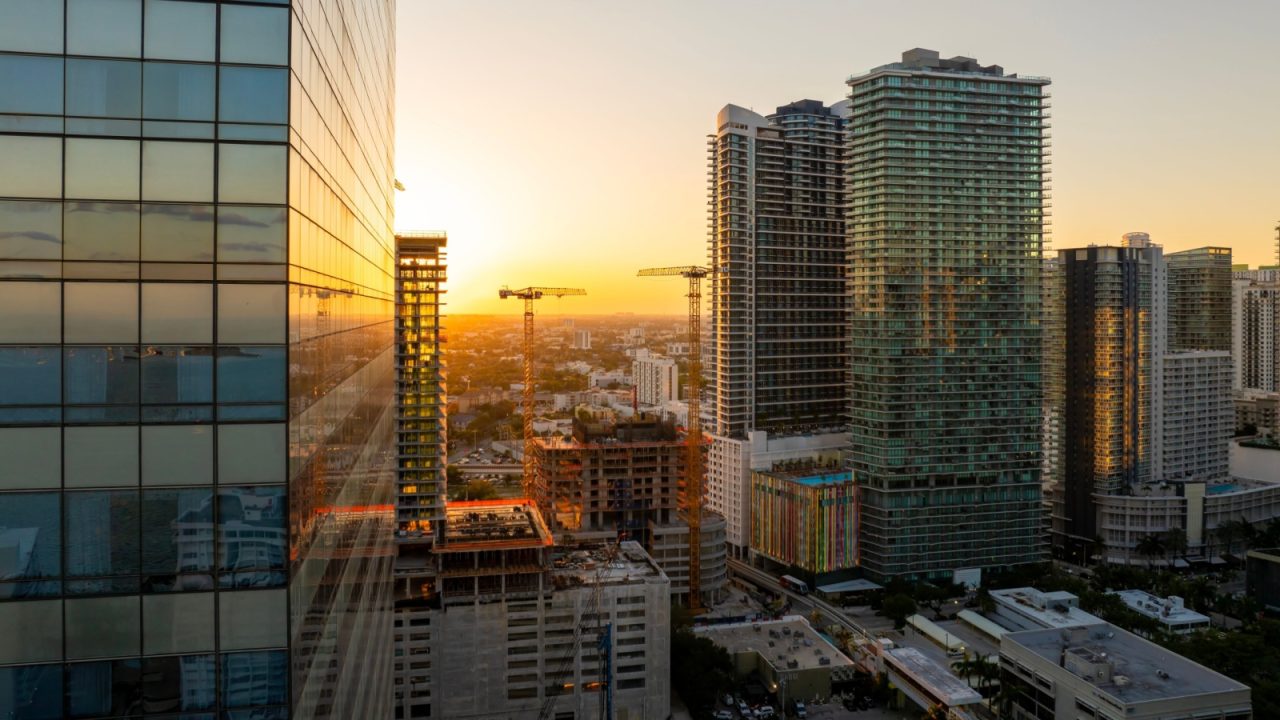
In both 2023 and 2024, American capitalism shrugged off higher borrowing costs as investors desperately sought higher rates of return. Certain segments, especially those pertaining or adjacent to artificial intelligence were especially strong, often taking the form of data center construction. The supply-chain catastrophes accompanying the pandemic also spawned a desire to simplify logistics and place both manufacturing facilities and distribution centers closer to final consumers. That, along with an acceleration in the role of e-commerce, spawned the construction of fulfillment centers and manufacturing facilities.
But there has been even more than that driving demand for contractor services and expanding backlog. On Nov. 15, 2021, as the pandemic upended daily living, President Biden signed the Infrastructure and Investment and Jobs Act. That $1.2 billion package has helped to fuel demand for construction services in segments like roads and highways, bridges, water/sewer and waste disposal. Not surprisingly, contractors associated with publicly financed segments have experienced among the largest increases in revenues in recent years.
On top of all that was an apartment building boom. A confluence of factors has driven Americans into high-end apartments. With mortgage rates and home prices higher, many millennials (the oldest of which turn 45 this year) opted to rent. Many are approaching their peak earning years. They have sought to live well, frequently opting for apartments in swanky sections of urban centers or emerging edge cities. That has spawned apartment building booms in Denver, Dallas, Austin, Nashville, Charlotte, Tampa and many other communities.
Surveys conducted by Associated Builders and Contractors indicate confidence among contractors. The Construction Confidence Index entered the year meaningfully above the threshold reading of 50 in sales, employment and profit margins categories, signaling anticipated growth over the next six months. One wonders if this confidence will prove short-lived during the months ahead.
CONCERNS MOUNT
Even before the recent spate of international trade wars, concerns were rising. The multifamily boom has been winding toward a close as elevated inflation over the past four years has worn down household finances while elevated construction and project financing costs rendered it more difficult for pro-formas to pencil out. According to a recent Realtor.com article, there were fewer than 294,000 multifamily rental units permitted for construction in 2024 across America’s 50 largest metropolitan areas. That is the lowest number since 2017. Among the regions sustaining the largest declines in rents over a recent one-year period were Denver (-6%), San Diego (-6%), Austin (-5%) and Phoenix (-3%). Obviously, declining rents do not translate into simpler project financing.
Certain public contractors may also have become more nervous recently. Tariffs, of course, increase project delivery costs in a number of ways, including by putting upward pressure on the price of steel and other key inputs.
The Trump administration began implementing its 25% tariffs on March 12, 2025. Accordingly, the most recent producer price index data indicate sharp increases in the prices of steel mill products and other key construction inputs. Higher construction delivery costs coupled with stubbornly elevated interest rates are conspiring with growing local and state government fiscal issues to threaten public construction momentum. Having spent down pandemic era stimulus, several states are facing challenges during the fiscal years ahead, including Alaska, Arizona, California, Maryland, New York and Pennsylvania.
Even the world of data center construction has been rattled by recent events. On Jan. 27, the Chinese start-up DeepSeek “sent waves through the global tech community” by offering a new open-source artificial intelligence model offering similar performance to other leading models at a fraction of the cost. According to the World Economic Forum, DeepSeek’s AI assistant surpassed ChatGPT to emerge as the top-rated free app on the U.S. Apple App Store. All of a sudden, it became conceivable that generating powerful AI platforms would not require inordinate expenditure, including on computer chips or data centers. Shares of companies like Nvidia, a producer of computer chips used to support such platforms, tumbled in response.
Nonetheless, enterprises like AWS, Meta, Google and others continue to push ahead with major data center construction projects. J.P. Morgan has estimated that spending on data centers could add between 10 to 20 basis points to U.S. economic growth in 2025 and 2026. Spending on data centers likely contributed 0.1 to 0.3% to GDP in 2024, according to J.P. Morgan estimates.
Still, concern lingers. Tech giant Microsoft recently indicated that it is “slowing or pausing” some of its data center construction, including a $1-billion project in Ohio. This is the latest indication that demand for artificial intelligence infrastructure may not implicate as much demand for hyper-powerful computers and computer chips as anticipated.
Much of that does not appear especially promising, but the notion that policymaking related to tariffs is designed specifically to bring more supply chain/manufacturing back to America is encouraging. This suggests good things to come for America’s construction industry.
On April 2, 2025, America commemorated Liberation Day with the Trump administration’s announcement of a set of “reciprocal” tariffs. Though economists generally do not look favorably upon barriers to trade like tariffs, the notion of reciprocal tariffs was viewed more favorably because of the dynamics that it could trigger. The idea was that if, for instance, Brazil charged 35% tariffs on American vehicles and parts, the U.S. would reciprocate by setting its tariff rate against corresponding Brazilian output at the same level. That would, presumably, induce the Brazilians to reduce their tariffs to regain prior access to U.S. markets, prompting America to do the same. As this dynamic played out, tariff rates could decline to incredibly low levels, promoting both freer and fairer trade in the process.
That is not what occurred. Instead, the Trump administration generated a formula that effectively equaled (exports-imports)/(imports) divided by two. The tariff on China was set at 34% which, when added to a previously enacted 20% tariff, meant that there were now 54% tariffs on Chinese goods. Subsequent retaliations pushed America’s tariff on China up to 145% while China pushed its tariff on U.S. exports to 125% on April 12. The tariff on India was set at 26%, 24% on Japan, 20% on the European Union, 46% on Vietnam and so on. Less than a week after Liberation Day, the Trump administration reversed course, pausing the implementation of the new tariff formula on all but China.
Prior to recent events, the prediction had been that tariffs would push more manufacturing into America. That may still occur, but with tariff policy shifting so frantically, CEOs and other decision-makers are likely to embrace wait-and-see attitudes before shifting supply chain around. For many manufacturers, tariffs, including 25% tariffs on key trading partners Mexico and Canada, increase costs and compromise global competitiveness, and have actually already produced several high-profile layoff announcements.
LOOKING AHEAD
The macroeconomic outlook has become decidedly complicated. Risk of recession has expanded substantially since the year began. While tariffs have grabbed the headlines, contractors are encountering additional sources of uncertainty.
At the heart of those concerns are gyrations within the U.S. labor market. Immigration policy has shifted, with the southern border effectively shut down. While many Americans voted for such things in 2024, there are additional effects. Not only has the inflow of would-be workers to America declined, but high-profile deportations have induced many undocumented people to withdraw from the labor market for fear of capture. In some instances, their children have stopped attending school.
Whatever side of the aisle one is on, the implication is that worker availability has shrunk. That stands to push construction delivery costs higher at a time of great uncertainty among those who make the decisions to move forward with construction projects. In short, more construction projects are likely to be postponed and cancelled in an environment characterized by rising long-term interest rates (the U.S. bond market began to feel stress in early April), rising materials and equipment costs, and shrunken construction delivery capacity.
It does not help that the stock market has also been under pressure, resulting in massive financial losses. Consumer sentiment as measured by the University of Michigan has tumbled 34% over the past year and is now at its second-lowest reading in the survey’s history, which dates back to 1952. Expected inflation among consumers hit its highest reading since 1981.
Those inflationary pressures could keep interest rates higher for longer. Contractors and the people who hire them are desperate for lower rates. Construction is bulky and expensive. It is often financed. Lower interest rates would allow more projects to move forward, but with inflation remaining stubbornly high and prospectively reaccelerating, the Federal Reserve may not have the wherewithal to cut rates meaningfully this year. That represents yet another potential headwind facing the U.S. construction industry.
On a more positive note, contractors are more insulated from such short-term gyrations than most economic actors. Construction takes time. Backlog has entered this moment in economic history at a solid level. It will take months before that backlog is worked off. It is conceivable that the prior status quo will expeditiously return given the constant political pressures directed at leadership. This year was supposed to be a particularly good one for the U.S. economy—and while time is running low, it can still be turned around.
SEE ALSO: EXECUTIVE DECISION: AN ANALYSIS OF TRUMP EXECUTIVE ORDERS