For crews working on construction jobsites, safety should be top of mind all day, every day. Although jobsites can vary significantly, every construction site requires alertness to remain safe during the workday—especially when working around heavy machinery, construction equipment and different fuels.
According to the Occupational Safety and Health Administration, one in 10 construction workers are injured annually. Of every 5,000 private-industry worker fatalities, 20% are in the construction industry, meaning that one out of every five worker deaths are construction-related, according to OSHA.
Providing ongoing education and training opportunities, conducting regular safety meetings and performing regular equipment inspections can save lives and reduce injuries. Additionally, these practices can boost employee engagement and morale—and even yield financial advantages.
Whether powering jobsite generators, lighting, heat, material handling equipment or concrete construction equipment, propane is a commonly used energy source, which is why it’s important that everyone on-site—even those who aren’t working directly with propane—is familiar with propane safety procedures.
- Make sure that everyone on-site is familiar with propane safety procedures and knows how to identify a propane leak. Propane is naturally odorless and nontoxic, so processors add a chemical odorant called ethyl mercaptan to help users detect leaks. If employees get a whiff of rotten eggs, you likely have a leak. Turn off the propane supply and call your propane supplier.
- Know the signs of carbon monoxide poisoning, which can include headache, dizziness, weakness, chest pain and confusion. Fortunately, almost all new indoor use equipment has a carbon monoxide detector onboard. If you are using temporary propane heaters and equipment in a closed indoor area, just make sure that equipment is designed for indoor use.
- Keep temporary propane containers at least 10 feet from ignition sources, combustible materials (such as lumber and brush), air intakes and building structures.
- Always keep cylinders in the upright position on a flat, stable, fireproof base.
- Use crash protection and bollards to prevent potential damage or denting to propane equipment, cylinders or containers.
- Follow proper refueling procedures. When refilling propane cylinders on-site, safely do so outdoors or in an approved filling area, with the proper PPE.
- Keep a propane cylinder’s pressure relief valve clean, unrestricted, set to the 12:00 position and directed upward at a 45º angle when the cylinder is mounted horizontally. The pressure relief valve provides overpressure protection to the cylinder.
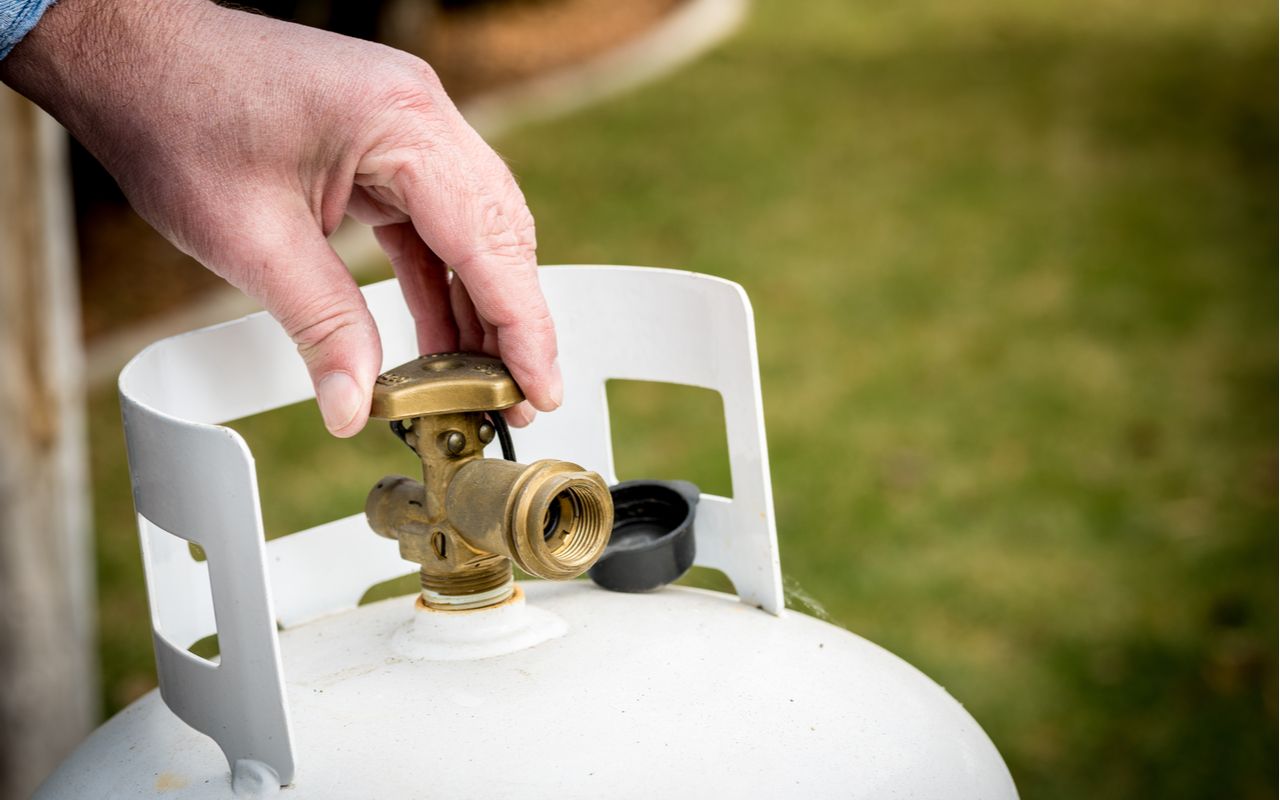
- Close the service valves on propane cylinders when not in use. Turn them clockwise until completely closed to prevent unintended fuel loss and potential injury.
- Store cylinders in a secure rack or cage. They should be protected from sunlight and rain.
- Work with your local propane supplier to ensure the proper placement and handling of propane equipment.
In addition to ongoing safety discussions among a workforce, crews operating propane-powered equipment have a built-in safety resource at their fingertips: their local propane supplier. Propane suppliers have dedicated procedures in place to support customers and can ensure crews are properly trained to work with this energy source.