By 2050, the world population is estimated to reach 9.8 billion, an increase of approximately 83 million people every year for the next 32 years. This explosion will undoubtedly see significant growth of urban centers as populations migrate away from rural areas, placing a dramatic increase in demand for more housing, schools, buildings and upgraded and enhanced infrastructures. The reality is cities, as they exist today, cannot sustain this population growth.
And while demand for construction explodes, skilled construction labor is a shrinking resource in many countries across the world, including the U.S. The available labor pool needed to meet the demand for new construction is quickly evaporating, and what’s available has been squeezed with recent fires, floods, hurricanes, earthquakes and other natural disasters.
The challenges facing construction today add to an already frustrating process – by the time a project is designed, value engineered and permitted, the build cost has often well outstripped the project budget due to rapid cost escalation. This isn’t isolated to a small slice of building types, it spans from small single-family home projects to commercial high rises. It is a vicious cycle where demand goes up, leaving designers, engineers, builders and regulatory agencies scrambling, while available labor dries up. In San Francisco, a number of housing projects have been stalled or abandoned for this exact reason. And California is just the canary in the coalmine; this trend will intensify across the U.S and around the globe in the coming years.
Industrialized Construction
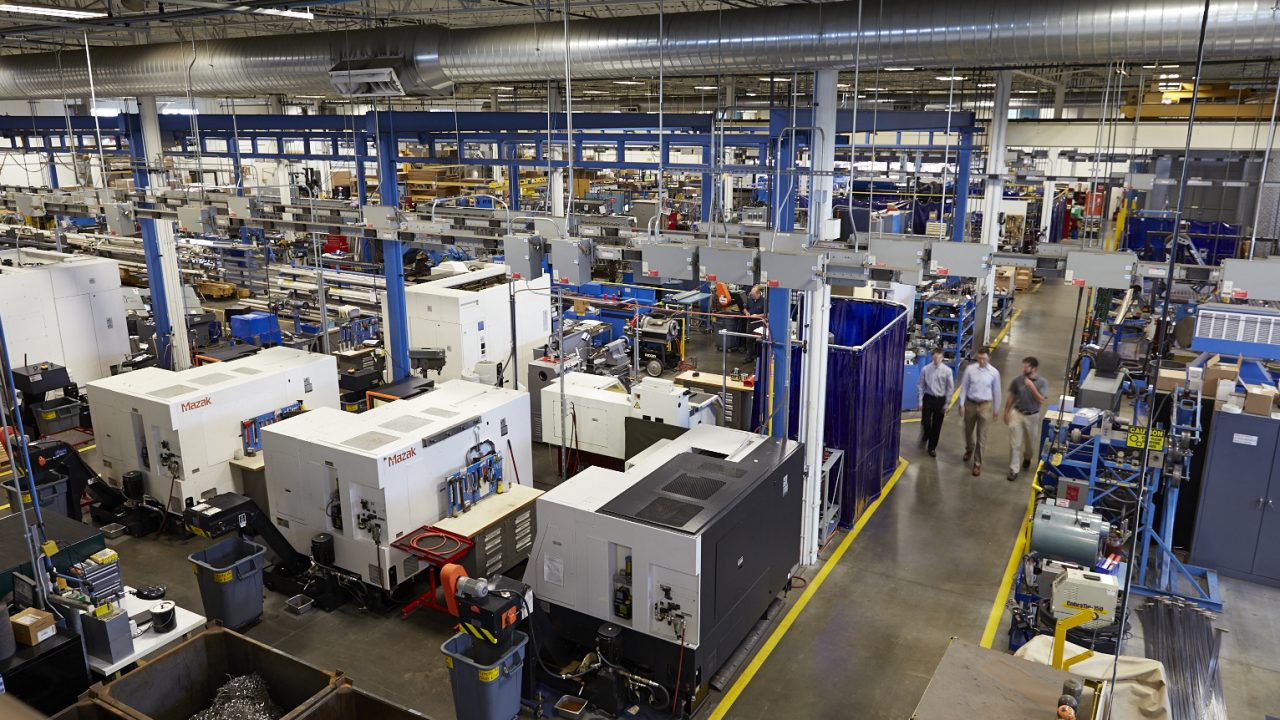
In recent years, the emergence of a market segment coined “industrialized construction” has taken hold. By definition, industrialized construction is a building system that uses more innovative techniques and processes to enable structural components to be manufactured offsite, then transported and assembled at the build site. Historically, the term “modular” or “pre-fab” with regard to building translated to low quality, heavy limits on options and virtually no design freedoms. This doesn’t have to be the case with an industrialized construction approach.
While the industrialized construction movement began to address all the challenges noted above, it’s currently lacking the embrace of technology from architectural design, engineering and the overall construction industry. Currently, all stakeholders are exchanging data and information using disparate, siloed software, tools and disjointed middleware that attempts to link these three processes as a project moves through design, permitting and construction phases. In most cases, this results in slow, disjointed exchanges of data, prone to error or loss in translation. Even with standardized components, the project team has no way to manage the process from beginning to end.
Specifically, what industrialized construction is lacking both a cloud connected software platform and a rules-based “kit of parts” that seamlessly links design, manufacturing and construction.
The Marriage of Kits and Technology
The industrialized construction industry must be supported by a two-pronged approach – with an emphasis on building systems, or a standardized “kit of parts,” designed for manufacturing and assembly (DfMA). This “kit of parts” must be supported by a software platform that will enable an accessible, mass-customized approach to dramatically accelerate design through construction workflows.
In order for this process to be scalable, it must be adopted globally, to ensure this new way of designing and building isn’t limited to a few companies developing proprietary solutions. The solution must incorporate a unified approach that addresses the thousands of workflows, data management issues and lack of automation in traditional design and construction.
The kits must allow for maximum flexibility and configurability in order to reach the broadest market possible based on varying programmatic needs, site conditions, owner requirements or budget constraints. And the underlying platform must support this level of flexibility as well. Much like iOS and Android have done for the mobile space, a dominant cloud-based network or platform for the AEC industry is critical and will be the foundation to allow for interconnected, interoperable applications and will address the myriad of work and data flows for all stakeholders across the life of a project. Autodesk’s Forge platform is an example of an emerging leader in this space and is expected to become one of the dominant platforms for developers.
“Kit of Parts”
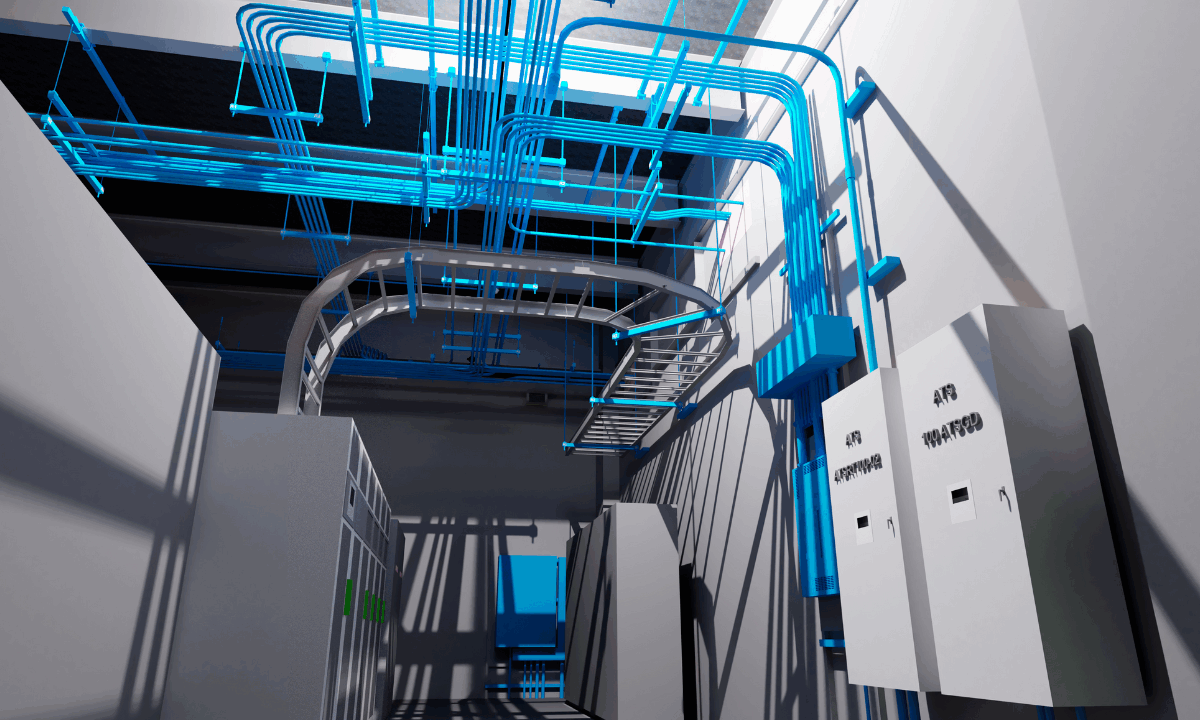
A standardized “kit of parts” solution allows for an accessible, mass-customized approach that meets the specific needs of the customer. For example, with a few dozen fixed building components, architects and owners can easily create hundreds of thousands of building variations without affecting design or engineering time. With cost, schedule, manufacturing and assembly instructions integrated into each kit component, designers can make more informed decisions early in the design phase with less rework or value engineering, and builders and owners take on less risk with predictable, reliable schedules and high-quality factory-built components. In fact, this high-quality, rapidly configurable and rapidly deployable manufactured building process can deliver finished buildings in half the time, with minimal RFIs or change orders.
Cloud-Connected Software Platform
The underlying platform supporting the building components must manage data flows and workflows across a multitude of stakeholders – from design to manufacturing and construction. As part of the platform, three key areas must also be addressed to ensure scalability – automation, data standards and cloud-connected tools/applications. While the kit of parts automates design, there are still numerous manual processes that take place from design through manufacturing and construction. Building high-value automated processes to reduce time and effort spent drawing, calculating, optimizing and manufacturing those components is critical. By creating an automated, data-at-the-center approach, processes that typically take weeks can be reduced to hours or even minutes.
Closely linked to automation are data standards. Any kit of parts will be made up of a combination of in-house proprietary components and off-the-self purchased parts. For example, an in-house manufactured wall panel incorporates purchased anchor bolts and hangers. Certain data standards must exist to manage these components, supporting interoperability regardless of application, tool or environment.
Finally, all applications must be cloud-connected, and in order to support this market, thousands of applications are needed. Architects, engineers, manufacturers and builders cannot rely solely on well-established core desktop applications to address the multitude of workflows across this complex data landscape. Those core applications must be extended into the cloud. Then, developers must build thousands of other cloud-connected tools to broaden reach, break down siloed workflows and fill in data handoff gaps. With a dominant cloud platform powering these applications, there will eventually be new solutions and approaches to industrialized construction never before thought possible.
The current construction industry will not be able to support the growing demand for new housing, revitalization of urban infrastructure, population growth or response to the seemingly endless string of natural disasters. By establishing a strong cloud-based software platform, a standardized kit of parts and supporting applications will eliminate barriers to adopting an industrialized approach to construction. Then the industry will be able to respond to the needs of a world home to more than 10 billion people.