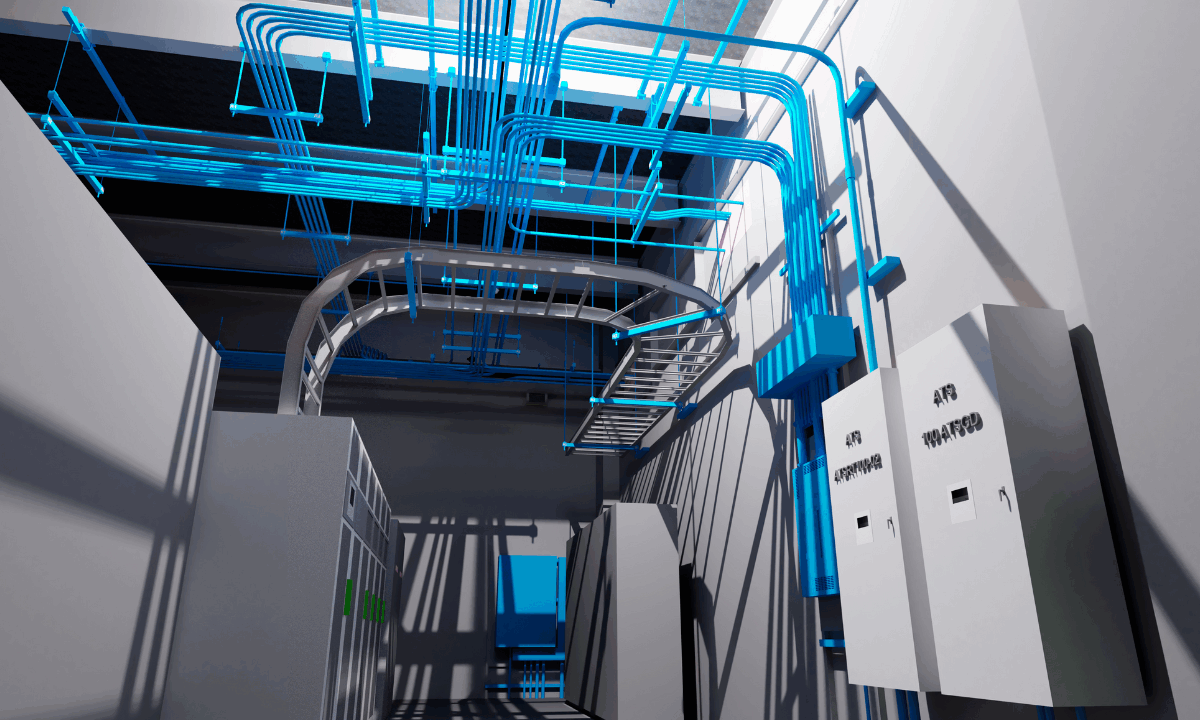
According to a commissioned study conducted by Forrester Consulting, 75% of retail and commercial real estate leaders believe smart buildings are crucial for accelerating digital transformation, but only 13% of leaders have fully integrated building systems. While the gap between aspiration and reality is wide, it’s evident these systems can deliver enhanced efficiency, reduced costs and greater sustainability.
WHY BUILDING INNOVATION HAS LAGGED
Despite the promise of new technology, the construction and building operations sectors have been slow to change. Why? For decades, traditional procurement and delivery models have pushed critical decisions for HVAC, fire and security building systems to the end of the construction timeline. These systems are seen as bolt-on components, rather than foundational infrastructure.
Of all the technology you can deploy, HVAC, controls, and fire and security deliver outsized outcomes in energy efficiency, emissions reduction, resilience, occupant experience and safety. Treating them as afterthoughts is a missed competitive advantage and can dilute results. A few common missteps include:
- Misaligned timing: When architects select HVAC equipment during the design phase while owners weigh in on security needs later, the fragmented timing limits integrated solutions and lifecycle planning
- Silos over systems: Without a common, data-driven platform, performance visibility is narrow, handoffs are manual and change orders multiply
- Perceived complexity and cost: Teams assume smart tech adds cost, but real-world experience proves the opposite, as digital systems are cutting operating costs by up to 50% and delivering ROIs of 155% and more.
EMBEDDING TECH EARLY SETS THE TABLE FOR FUTURE SUCCESS
When smart solutions inform planning and decisions from the start, they do more than drive efficiency and deliver cost savings. They enable organizations to reinvest in their mission, create strategic advantages and differentiation, while making a positive impact on society.
Connected building technology has transformed the operations at Cortellucci Vaughan Hospital in Ontario, Canada. By integrating clinical and building systems from the outset, the hospital has reduced energy consumption by 19% and now operates 33% more efficiently than the healthcare industry average. Digital tools have saved the hospital 4,000 hours in manual troubleshooting and 600 hours per year in preventative maintenance, efficiency that helps the hospital focus on improving patient outcomes and saving lives.
Stanford University faced the daunting challenge of updating its energy infrastructure while lowering their reliance on fossil fuels and water consumption. Johnson Controls AI-driven OpenBlue technologies were deployed to deliver reduced energy and water use in the central plant. The university reduced emissions by 68%, water use by 15% and in-peak energy demand by 17%. Together with energy use savings, Stanford cut costs by $500,000 a year and is projected to save $459 million over the course of the project lifetime.
Smart technologies deliver returns that go beyond operational efficiency, easier maintenance and greater adaptability. Encouraging owners and developers to shift their focus from upfront installation costs to total lifecycle value achieves better long-term results.
As buildings become more complex and performance expectations rise, reactive deployment of building systems is no longer sufficient. Technology cannot be a finishing touch. It must be foundational and inform decisions from the start.
WHAT CONSTRUCTION LEADERS SHOULD DO NOW
Construction executives are uniquely positioned to make early integration the norm. Understanding the value of smarter building systems is one thing, but acting on it requires rethinking traditional workflows and partnerships.
Here’s a practical playbook:
- Set goals with smart solutions in mind. The most effective way to ensure project goals are met is by leveraging AI and technology from the very beginning, integrating digital tools early in planning and design to align decisions that maximize efficiency, sustainability and cost savings. Rather than relying on bolt-on solutions later, this proactive approach transforms aspirations into measurable results.
- Select the right partners. One of the most impactful steps project teams can take is choosing providers who support a building throughout its entire lifecycle, ensuring smooth operations and easier upgrades. Equally important is involving technology experts at the very start of the design-build process, so systems are fully integrated from inception rather than added as bolt-on solutions.
- Insist on interoperable, AI-ready platforms. Choose controls, sensors and security solutions that are pre-integrated, built for data sharing and predictive maintenance
- Bake in operating readiness. Commission to real‑world baselines, instrument for continuous monitoring and set up service strategies that shift from reactive to proactive
- Measure and iterate. Establish KPIs and dashboards that facilities and finance both trust; revisit quarterly to capture new savings
A SMARTER, MORE SUSTAINABLE FUTURE
Technology is no longer optional; it’s essential. From climate resilience and energy efficiency to safety and user experience, smart systems help meet rising expectations.
By embedding innovation early and fostering collaboration across stakeholders, construction leaders can deliver buildings that are both ready for today and ready to address the challenges of tomorrow.
Those who embrace integrated, forward-thinking approaches have a clear competitive advantage and will also shape the next era of the built environment.
SEE ALSO: ENSURING SECURE REMOTE ACCESS FOR SMART BUILDINGS