Elevator equipment systems come in lots of shapes and sizes, each of which ultimately falls into one of two categories: proprietary or non-proprietary. Choosing the right vertical transportation systems, and maintaining and updating them, can impact everything from safety of building users to the profitability of building owners.
While contracts can make for some variations, proprietary elevators are considered “sole source,” consisting of exclusive equipment that is designed, manufactured and maintained by one company and restricted—by patents—from service by other companies. By contrast, a non-proprietary elevator system consists of open-source equipment that is intended to be serviced by any company that the buyer of the system selects.
The “Big 4” elevator companies—OTIS, KONE, Schindler and ThyssenKrupp—fall into the proprietary categories. The companies describe their products—which may be sold at a discount—and services in various ways. A sampling of some of their own descriptions includes providing “all materials necessary for the elevator installation, eliminating guesswork and possible delays;” “innovative elevator technology;” “personalized service;” a “predictive elevator maintenance system;” and so on.
Non-proprietary elevator companies, or independents, provide a range of products and services and see things differently. William McGrath, president and CEO of South Jersey Elevator, states it plainly: “Saving a few bucks upfront can cost you big later. Non-proprietary equipment gives the building owner freedom—freedom to pick their service company, to avoid getting stuck with one vendor and to manage costs over the life of the elevator.”
That being said, there are challenges with a combined share of about 55% of an elevator market that is valued at about .4 billion in the United States.
COMPLEX CONTEXT
There were just over one million low-, mid- and high-rise elevators of various designs in service across the nation in 2024, with 44% of them, or about 453,000, traction elevators; 28%, or about 288,000, hydraulic systems; and another 24%, or 247,000 pneumatic, also called machine room-less. In the United States last year, there were more than 175,000 men and women working in the elevator installation and service field, according to research firm IBISWorld, with another 9,858 employees in elevator manufacturing.
Facets of the business are seeing gains. For example, market research firm IndustryARC projects that the elevator modernization and maintenance industry in the United States will grow from 2024 to 2030 by a compound annual growth rate of 4.0%.
While there are no federal requirements for elevator inspections, the U.S. Department of Labor’s Occupational Safety and Health Administration has maintenance guidelines, and there are elevator safety and mechanic licensing codes in states as well as regulations in local municipalities. There are federal Americans with Disabilities Act mandates for elevator accessibility.
With such rules and regulations in place—and with all that crucial equipment running—the need for service, maintenance and upgrades is crucial and frequent. One way to put it? The wisdom of the initial buy plays out over time.
TELLING CASES
In a recent American Institute of Architects presentation, two non-proprietary companies, Delaware Elevator and Alliance Elevator Solutions, explained, “It is common practice to sell a proprietary elevator at a low price to the general contractor then make up the cost with an inflated maintenance contract with the building owner.”
The DE-AES presentation indicates that there are other advantages to non-proprietary elevators, including not being locked into long-term service contracts (“no mandatory equipment updates”) as well as “longer life cycles and a trusted supply chain,” and “open-source equipment and parts; no expensive sole-sourced proprietary parts.”
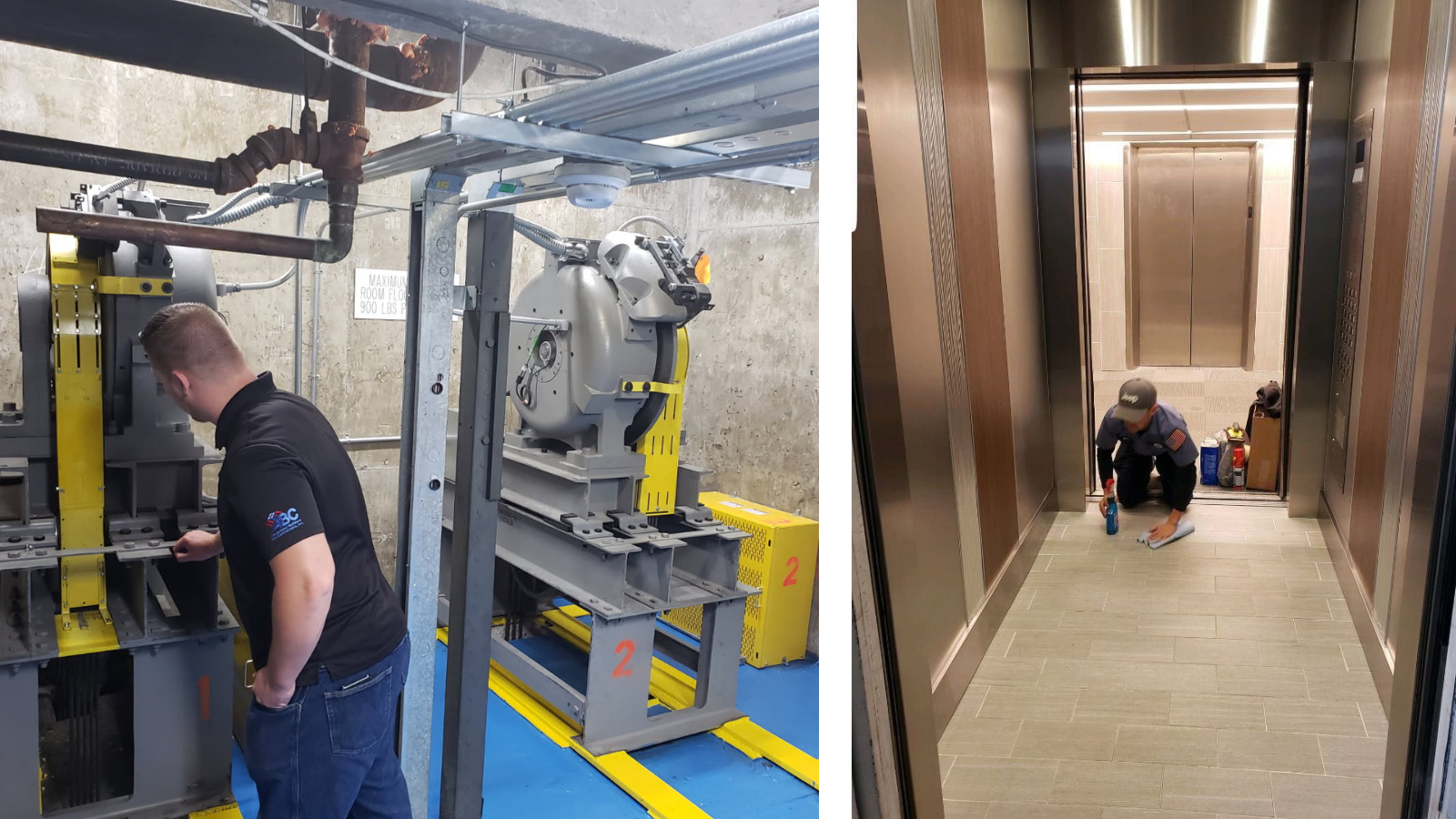
Three years ago, when owner and developer SteelWave renovated a Class A office building in downtown Denver, they selected an independent installer for the building’s eight elevators—passing over three proprietaries, explains Paul Giovannetti, senior vice president of business development for Catalyst Strategic Advisors. A major proprietary company had installed the original equipment, but change was needed due to “maintenance terms, response time and customer service,” he says.
Giovannetti, who was director of design and construction for SteelWave at the time, explains that the non-proprietary “responded excellently” to SteelWave’s RFP. While the proposed costs in the bids were roughly the same, the independent’s “schedule was detailed, its procurement process was outlined, they interviewed great,” Giovannetti says, “and they were not hiding behind the shield of the big brand.” Giovannetti reports that three years later, the elevators are running smoothly and maintenance costs have been about 15% less than what they were with the old equipment.
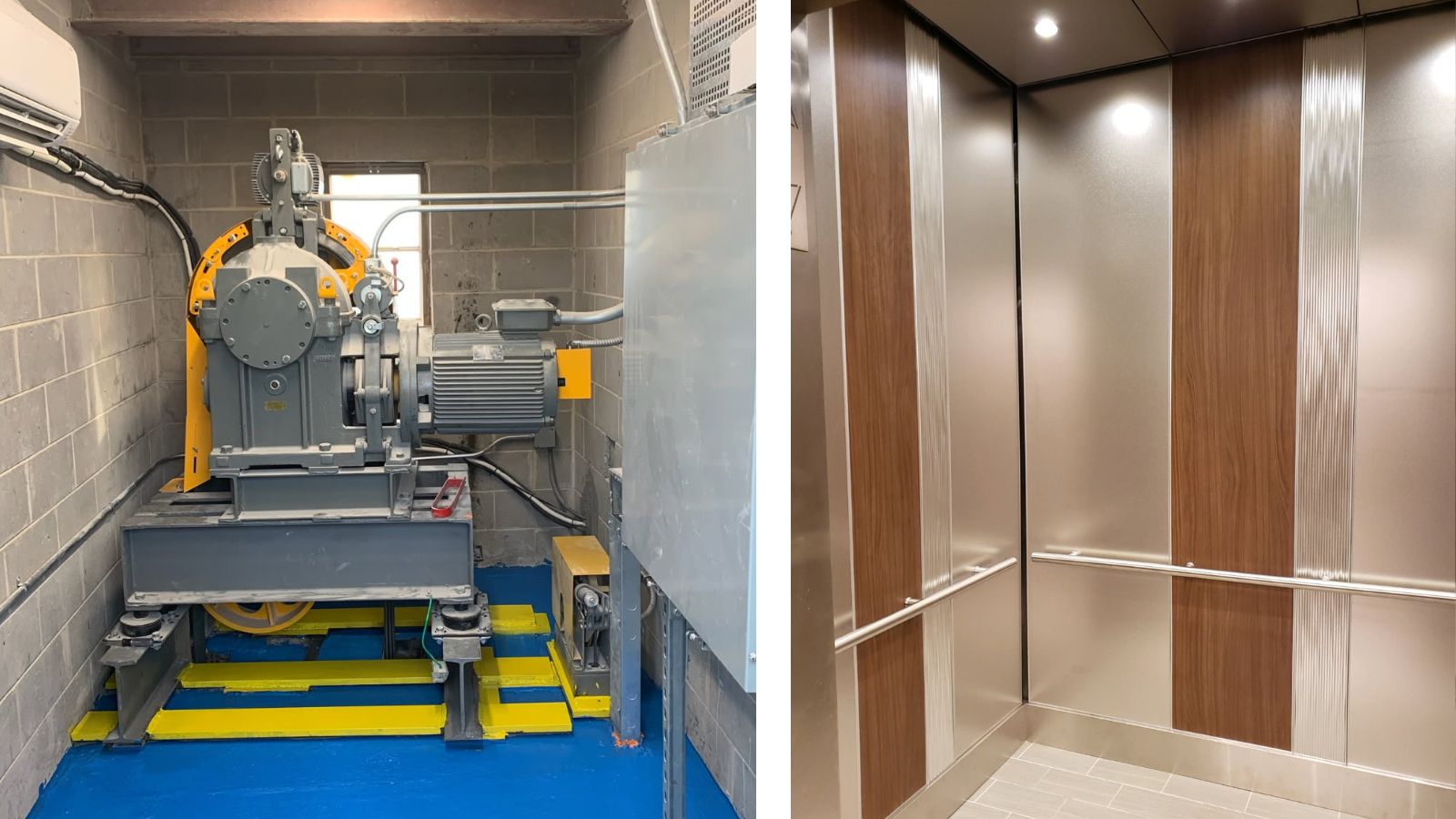
Elsewhere, at a mid-rise apartment building in southern New Jersey with a proprietary system, the owner was informed “that they needed a new controller and software for more than $120,000—and only that company could do the work,” McGrath explains, “The customer was fed up and called us.”
The end result: South Jersey Elevator modernized the elevator “with fully non-proprietary components and saved them close to $40,000,” McGrath says, explaining that the owner now has control of their elevator system. Further, “we’ve had plenty of customers in similar situations,” he says, including schools, senior living communities and medical buildings.
TOUGH CALL
Still, the decision-making process is not necessarily simple. Elevator systems have their complexities, as does the process of selecting and servicing them.
The National Elevator Industry Inc. trade group has countered criticisms of proprietary installers in part by indicating that proprietary technology is found in various industries, not just elevators, and there are safety codes in place that dictate that companies provide “special tools if needed for their equipment, as well as unique procedures to guide other companies in how to work on their systems.”
On another point, as the DE-AES presentation points out, “it can be complex to separate the initial purchase price from the cost of upgrades and maintenance, and therefore difficult to calculate the true cost of ownership. The temptation may be to rely on brand names instead of a full examination and comparison of systems.” Then, once bought, “without competition among service or parts providers, the lifetime costs to maintain proprietary systems are much higher than for non-proprietary systems,” according to the presentation.
Karen Kennedy Dodds, regional vice president Mid-Atlantic for American Elevator Group, an independent company, puts it this way: “Property owners and managers are often faced with a difficult choice: Save on upfront costs with a proprietary elevator system or invest in the long-term flexibility of a non-proprietary one.” As she explains, “While the initial price tag may be lower for a proprietary system, the long-term costs and limitations can far outweigh those savings.”
Charles Meeks, president of Delaware Elevator Company, also acknowledges that general contractors can be under considerable pressure to go with the low bid, and estimates that selecting a proprietary system can save about 20% in the initial purchase price. That would mean that for a $150,000 elevator designed for a three-story building, the cost saving would be about $30,000. However, if the buyer goes with a non-proprietary system and “they save 30% for the next 30 years on maintenance, it’s a no-brainer,” he says.
There’s more. For example, “in instances where proprietary suppliers say they’ll allow non-proprietary service, the proprietary suppliers may jack up the price for parts,” Meeks argues. And if a building owner decides to go elsewhere for service after the fact, there may even be legal issues, he says. For example, it can be a mixed picture legally whether a building owner who bought a proprietary system may then select any company to provide service to it, with proprietary suppliers pointing to their investments in developing the system, Meeks explains.
Other dynamics can impact the selection process. For example, Meeks explains that “developers of low-to mid-size buildings, particularly hotels, get them operating, get a positive cash flow and then flip it in five years. So, they don’t care how long a system lasts. It’s somebody else’s problem,” he says, “But if it’s a long-term hold of a condo or office building, or any property that’s not going to be flipped, then they need to be careful and buy products that are going to last.”
CONTINUING EFFORTS
Looking at the market today, “the trend is still toward the Big 4,” says Giovannetti, who cites “name recognition, contract and specification constraints, [which] keep decision makers going back to the standard options. Many design teams and decision makers do not have a ton of experience approving a system that is ‘not as specified.’”
Given all the complexities, “it’s easy for general contractor to just go with the Big 4,” says Brandon Ray, senior director of State and Local Affairs for Associated Builders and Contractors. Nevertheless, efforts are underway at ABC’s Elevator Contractors Council to get out the word about the various issues and to share insights about safety, training and business development in the industry. About 50 ABC members belong to the council, which meets regularly online and in person at association events.
A key goal of the council, Ray says, is “for general contractors to understand the value that’s brought by independent elevator contractors as merit shops that have cultivated and trained up their own specific workforce. There’s no reason to think that non-proprietary, independent contractors are any less equipped or skilled to do the job, or that non-proprietary equipment is any less safe” than that offered by proprietary companies. In his view, “the message is getting through, but there’s work to be done,” to make decision makers across the board aware of that fact.
“People need to give the non-proprietaries a shot,” says Giovannetti, “because they are just as good as proprietary, they’ve got better contract terms, they’re more motivated to do good work and they focus on customer service.” He adds that in his 26 years of experience in the industry, his best experiences have been with non-proprietary elevator companies.
Meeks compares the overall situation to getting your car serviced: “You can’t take your car down the street anymore to the local garage for a tune-up. They can’t do it—it’s too proprietary. You have to take it to the dealer, they plug into the black box and they’re going to charge you three times the cost.”
So, as Meeks adds: “Buyer beware.”
SEE ALSO: ELEVATORS TAKE SUSTAINABLE SMART CITIES TO THE NEXT LEVEL