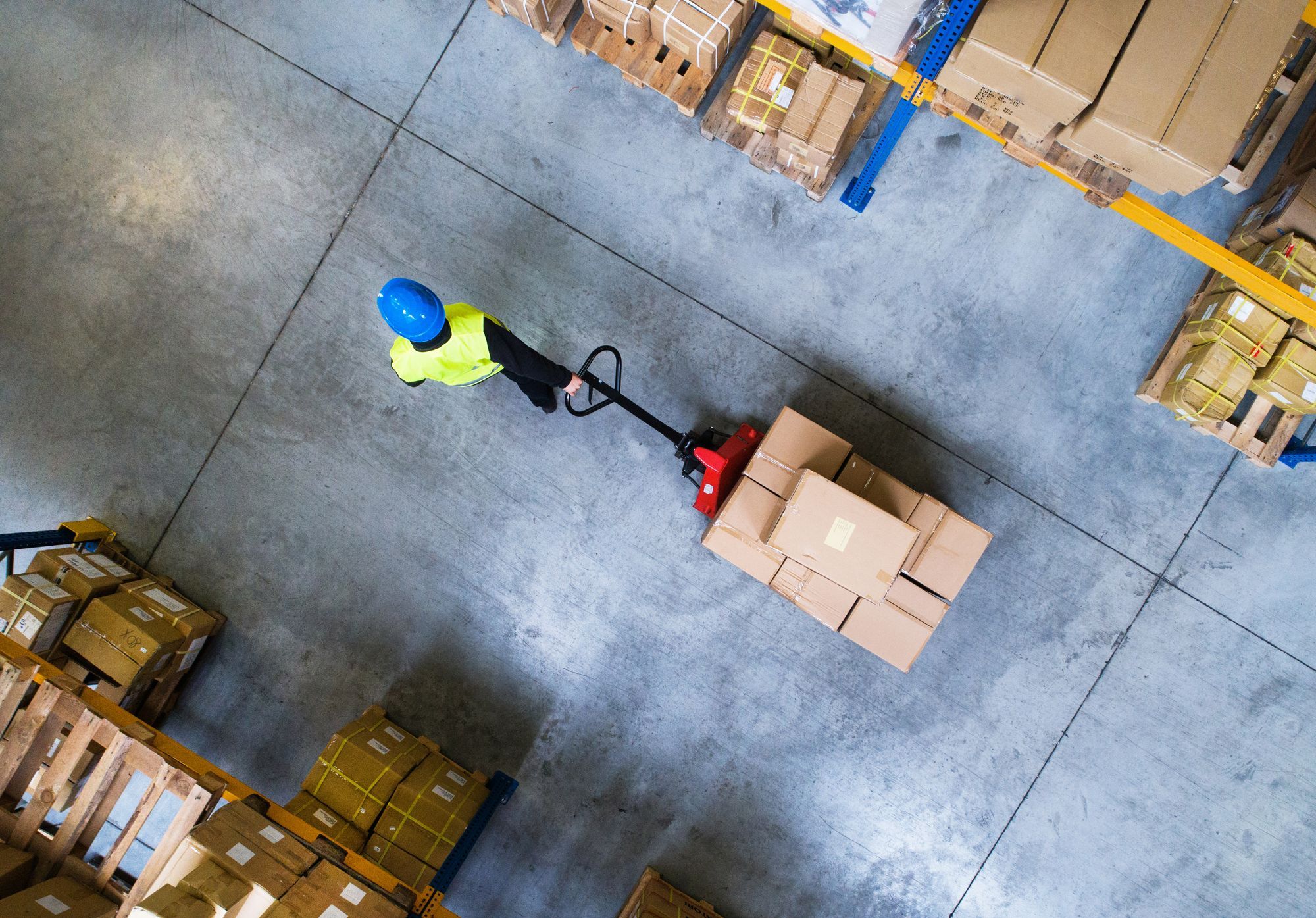
Warehouses are an integral part of nearly every supply chain in the country, but the use of heavy equipment in small spaces can often lead to worker injuries and product damage. What can construction managers and other administrators do to improve worker safety and material protection on construction sites?
Here are some resources for managers and employees alike to help make jobsites safer and reduce supply damage.
Training Is Key
Construction is a field where many of the skills necessary for success are learned on the job, but that doesn’t mean individual skills can’t benefit from some additional training. The Occupational Safety and Health Administration (OSHA) has published safety standards to help managers train new employees and refresh the skills of experienced employees.
There are plenty of workshops, videos, printable pamphlets and other tools that can be accessed for free on the OSHA website.
Foster Communication
If employees are unsure of what to expect or unsure of what their responsibilities are on the jobsite, accidents are more likely to happen. Equipping workers with headsets or walkie-talkies can help improve onsite communication — and fast answers from management can help prevent these communication-related accidents.
Maintenance
Heavy equipment is expected on a jobsite, but it also comes with additional risks. Properly maintained equipment can keep a jobsite running smoothly while preventing worker injuries. By keeping up with equipment maintenance, managers and employees can ensure small problems are caught and fixed before they become big ones, and that big problems are caught and fixed before they can cause equipment failure.
Equipment can fail in one of two ways: it can simply break down and stop working, or it can fail in such a way that it causes worker injury and equipment or product damage. Both of these can be prevented simply by keeping up with equipment maintenance.
Aerial Awareness
Many construction projects require that workers complete their jobs while high above the ground. In fact, nearly half of all deaths on construction sites are caused by falls from less than 25 feet. Being aware of these risks isn’t enough, though — construction managers need to make sure all of their workers are wearing fall protection equipment no matter how high off the ground they are.
Rules regarding fall protection equipment also need to be strictly enforced, and violations swiftly corrected or punished, to prevent workplace accidents and deaths.
Embrace Innovation
Construction site accidents are not always avoidable but these jobsites are much safer now than they were in the past. Just look at pictures of steel workers building the Empire State Building in the 1930s, riveting steel girders hundreds of feet above the streets of New York with little to no safety equipment. One of the best (or scariest, depending on the point of view) photos shows nearly a dozen steel workers sitting on a girder, hanging over the street below, enjoying their lunch.
Of the 3,400 workers involved in the construction of this monumental building, only five died despite the lack of construction safety regulations at the time.
Safety innovations in the last 50 years have made jobsites safer than ever before, but there are still accidents. Embracing safety innovations as they are released to the public can be an expensive proposition, but nothing is worth more than the safety of a company’s employees.
Packaging Attention
For sites that are shipping products or equipment out, packaging might be the last thing on anyone’s mind, but it’s the first and often only line of defense to keep the products safe during shipment. Supply damage can be expensive, especially if the project calls for rare or hard-to-obtain construction materials.
Pay careful attention to packaging, both when receiving and when shipping products. A product received with a damaged package and damaged goods might be replaceable for free by the shipper, but only if the packaging is retained as proof.
Worker safety should be everyone’s first priority, especially on construction sites where the potential for accidents and injuries can be so high. Reducing project costs and protecting workers is beneficial for everyone.