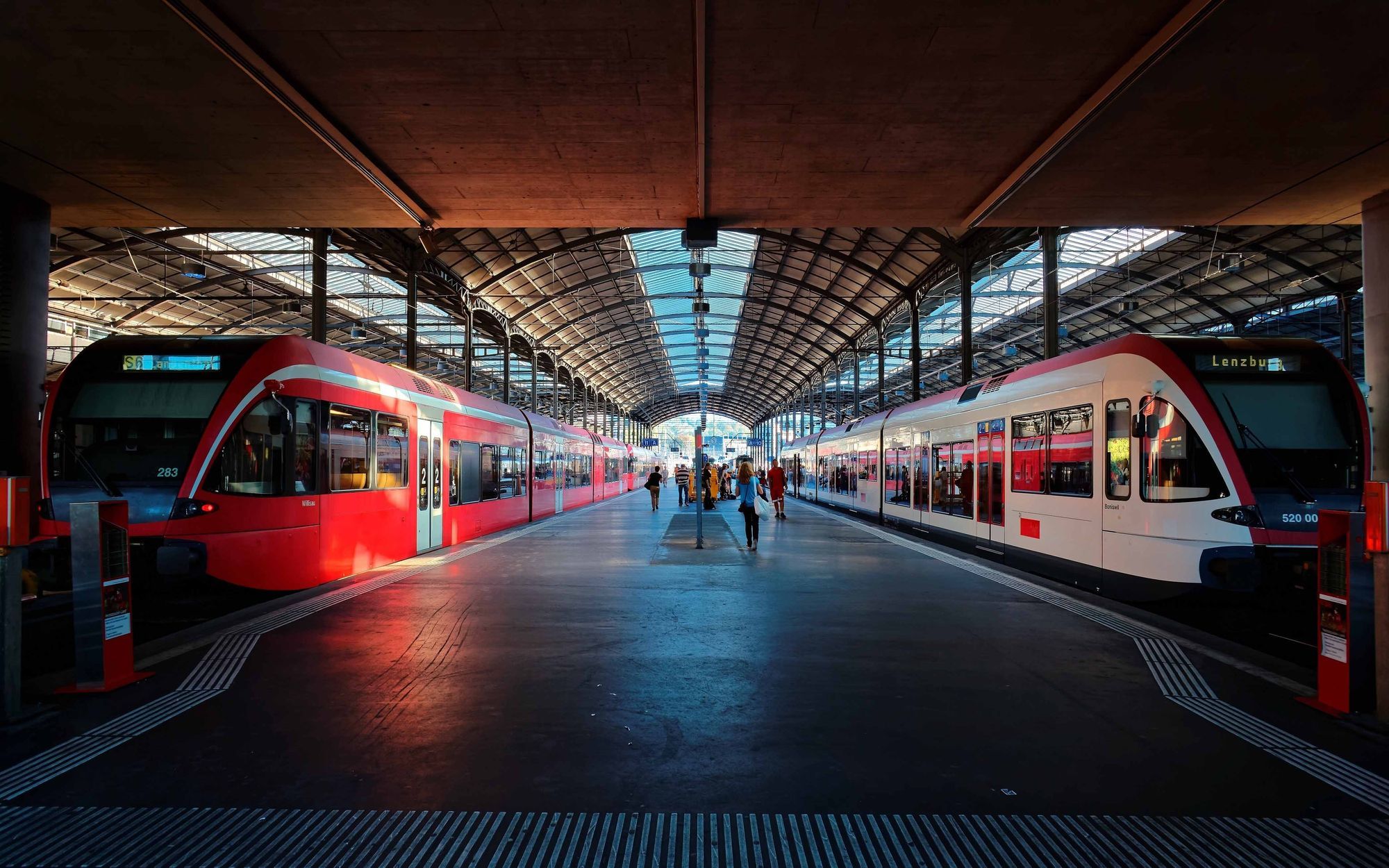
As U.S. cities continue to grow, the need for additional transit infrastructure brings inherent disturbances. Their impact is being felt (and heard) by communities and their citizens across the country.
The Rise of Ridership
America’s urbanization areas (UZA) are experiencing significant population growth that can be attributed to the continued generational shift from rural to urban living, and public transit systems are eager to keep in lockstep with the movement. In the span of only a decade, passenger travel increased more than 47% from 39.8 billion miles in 1995 to a staggering 58.6 billion miles in 2015, according to the 2017 Public Transportation Fact Book by the American Public Transit Association (APTA).
The effects of this trend are being felt more than ever in the United States’ major metropolitan markets. When considering the nearly 500 UZAs across the country, 42 of them (8.6%) report a population of 1 million people or more. Moreover, 62.5% of all UZA residents live within one of these markets and consume 88.2% of the overall public transit services captured by the National Transportation Database (measured by passenger miles traveled), according to the 2016 National Transit Summary and Trends by the Federal Transit Administration (FTA) and U.S. Department of Transportation (DOT).
As residents and workers alike continue to make their way into these densely populated areas, approximately 85% of total passenger miles traveled are carried out by heavy rail and commuter rail, in addition to bus usage. The remaining 15% include modes such as aerial tramways, cable cars, inclined plane and automated guideway systems, according to Public Transportation’s Impact on Rural and Small Towns: A Vital Mobility Link by the APTA.
Adding to the Noise
The impact that transit vehicles generate is felt at the community level in nearly all urban areas. As observed throughout community attitudinal surveys, transportation noise has been ranked among the most significant causes of resident dissatisfaction, according to the Transit Noise and Vibration Impact Assessment by the DOT and FTA. These disturbances can result from vehicle propulsion units producing:
- Whine from electric control systems and traction motors that propel rapid transit cars;
- Diesel-engine exhaust noise from diesel-electric locomotives and transit buses;
- Air-turbulence noise generated by cooling fans; and
- Gear noise brought about by mechanical transit systems.
Moreover, motion noise is produced by wheels and tires as they come into contact with their running surfaces. Tire noise from rubber-tired vehicles can be significant at standard operating speeds, while the interaction of steel wheels and rails generates:
- Rolling noise due to continuous rolling contact;
- Impact noise when a wheel encounters a discontinuity in the running surface, such as a rail joint, turnout or crossover; and
- Squeal generated by friction on tight curves.
To put this into context, the chart below provides a decibel comparison of some typical A-weighted sound levels for both transit and non-transit sources. On average, the assessment found each A-weighted sound level increase of 10 decibels correlates to an approximate doubling of perceived volume.
Audible disturbances are only a portion of the overall problem when considering the physical impact that vibration from nearby transit systems can have on communities and infrastructure. In Washington, D.C., transit vibration affects were recently observed through the peak particle velocities (PPV) produced by revenue service trains, road traffic as well as internal residential sources in homes along Washington Metro Area Transit Authority’s (WMATA) Green Line. A PPV of 0.5 inches per second is considered the threshold of cosmetic cracking damage for transient vibration such as blasting, for which some modest cracking of plaster might occur. WMATA now adheres to a standard of 0.12 inches per second for new rail construction to mitigate any damage attributed to vibration, according to “Building Damage Potential – WMATA Green Line Nelson” by James T. Nelson.
Efforts are being taken by public transit systems like WMATA, yet noise and vibration continue to present significant concerns throughout growing American urbanization areas, namely in the form of fluctuating home values. A textbook example of this can be found in Northern California’s Alameda Corridor, where property values were found to decrease an estimated $3,500 in areas train traffic had increased, while property values increased an estimated $1,300 upon resale where rail traffic decreased, according to “Examining the Spatial Distribution of Externalities: Freight Rail Traffic and Home Values in Los Angeles.” By the University of California–San Diego. Residential and commercial markets are telling a story through their trends, and it is hard to ignore its correlation to these transit-based disturbances.
Sound and Steady Solutions
Companies are developing solutions to address the transit-based concerns felt in urbanization areas worldwide, from the sleeper pads used to dampen vibrations felt around major metropolitan subway systems to the polyurethane elastic bearings designed for noise reduction near high-speed trains.
Advances in elastic materials have ushered in new applications found in residential and commercial construction design, industrial production, and railway development.
Some companies manufacture materials and solutions that have been employed to address noise and transit-based vibration in global metropolitan areas including New York City. For example, highly elastic baseplate pads have been used to mitigate noise and vibration throughout the city’s expansive subway system for years, yet recent construction projects have featured our line of products used to address these issues in residential and commercial development. One such example can be found at The Rushmore Building in Manhattan, a 41-story luxury condominium complex situated directly above an AMTRAK railway tunnel.
Just across Central Park on Manhattan’s Upper East Side, the 15-story apartment building The Touraine needed to address the sound and vibration reverberating from the more than 1,000 daily trains that ran on the immediately adjacent Lexington Avenue subway lines.
The upward trajectory of American urbanization trend continues to present challenges geared toward the UZA’s transit needs, many of which stem from the noise and vibration produced by its infrastructure.
As these communities scale to higher population benchmarks and subsequently increased transit disturbances, industry leaders will continue to engineer products and technologies to ensure a sustainably quieter environment for their residents, visitors, and commuters.