Construction executives continue to wrestle with high material prices and supply chain disturbances; however, their greatest challenge may be hiring skilled employees. In July 2021—about 18 months after the pandemic began—the construction industry roiled with 321,000 unfilled jobs, and construction employment was uncharacteristically abysmal across the United States.
Given the scarcity of skilled labor, available construction employees are invaluable, and their physical health must receive serious attention. Their respiratory health can be severely compromised by exposure to hazardous dust, such as respirable crystalline silica.
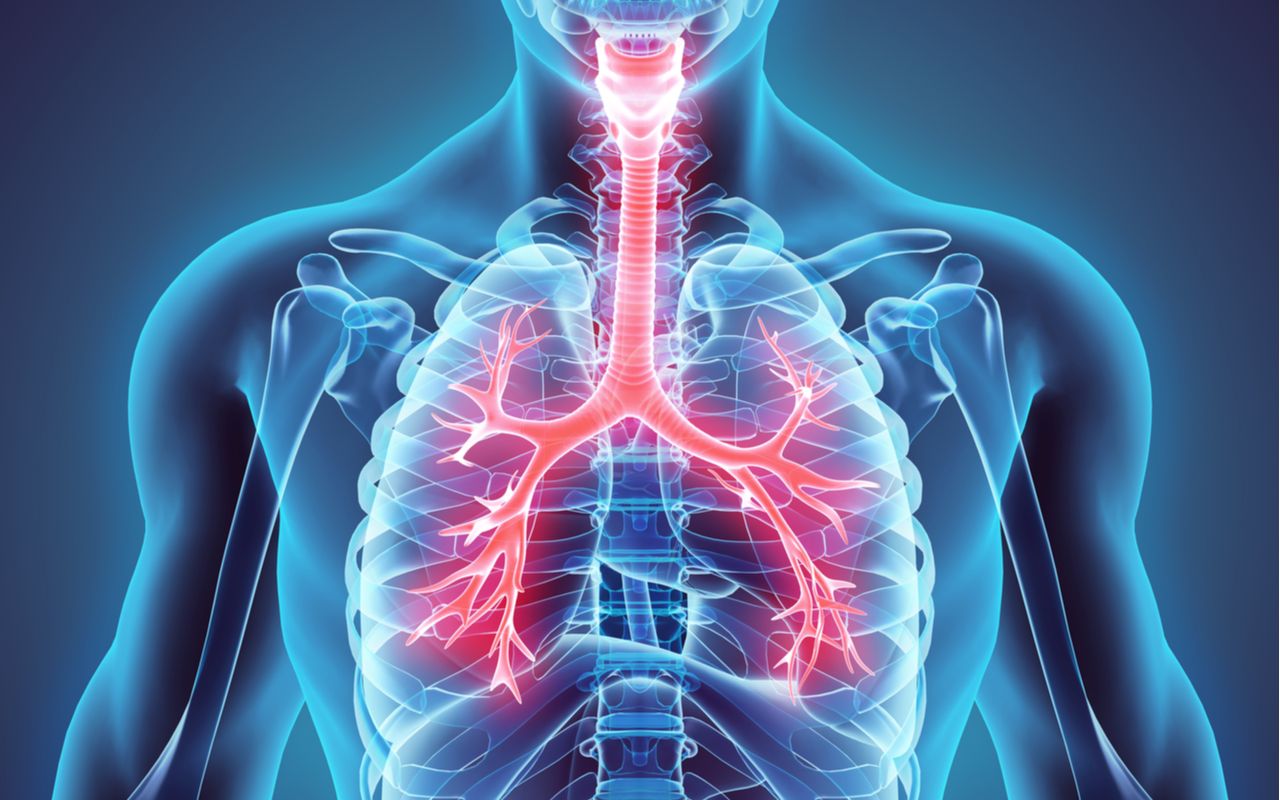
Respirable silica’s dangerous effects arise from the performance of job tasks, such as abrasive blasting, foundry work, stone cutting, rock drilling, quarry work and tunneling. These tasks can emit infinitesimally small particles that enter the respiratory tract and lungs, form scar tissue, and cripple breathing capacity. It takes only a very small amount of respirable silica dust to create a health hazard that, in extreme cases, leads to lung cancer or silicosis, a disabling, incurable condition.
Doubling down in the time of COVID-19
Research indicates that exposure to respirable silica may be more harmful while COVID-19 is active. This creates a more compelling and urgent need for employees exposed to respirable silica to receive baseline and annual medical surveillance exams.
The construction industry has acknowledged that “exposure to respirable silica and asbestos can lead to an interstitial lung disease that causes damage and fibrosis in lung tissue (called silicosis and asbestosis, respectively).” Interstitial lung disease is caused by long-term exposure to hazardous materials or, in some cases, by an autoimmune disease. The industry has also acknowledged that adverse effects of silica exposure are probably vastly underreported largely due to long latency periods.
Research published in the spring of 2021 rings an even louder alarm bell when it states that “respiratory morbidity among construction workers is one of the most neglected occupational diseases in spite of the high risk.” Researchers conducted an analytical, cross-sectional study involving masons (two-thirds) and day laborers (one-third) with age- and gender-matched controls. They found that “pulmonary function and respiratory-related quality of life were considerably poorer among people working in construction” compared to employees in other occupations. With this challenging starting point, what impact does the coronavirus have?
The Centers for Disease Control and Prevention (CDC) has stated that “having chronic lung disease can make an individual more likely to get severely ill from COVID-19.” Due to the long latency period of silicosis, if construction employees exposed to silica dust do not have regular medical surveillance exams from an occupational health provider, they are completely unaware of how weakened their immune system might be.
“The already weakened immune system cannot fight off the infection as well as it does at full capacity—essentially permitting the coronavirus to attack the lungs. Though no current studies specific to silicosis exist to determine the survival rate of those diagnosed with COVID-19, experts agree that those with pre-existing health conditions—especially respiratory illnesses—are at an increased risk of developing severe illness from COVID-19,” as stated in a September 2021 legal blog post.
A few months before the blogger’s announcement, The Lancet, a peer-reviewed medical journal published in the United Kingdom, reported on new research that confirmed a higher rate of COVID-19 hospitalizations for people with respiratory diseases—a link that was most pronounced for lung cancer. Most interstitial lung diseases were associated with a 50% increased risk of death, while the risk of death was 77% higher for people with lung cancer.
Actions to prevent silica’s adverse effects
The best way to prevent employees from developing silicosis is not to use silica at all, but that is impractical given the materials and processes that are mainstays of the construction industry. If respirable silica exposures are unavoidable, then engineering controls (e.g., water sprays, exhaust ventilation, industrial vacuum cleaners, etc.) are useful options. Administrative controls such as job rotation, jobsite education and nearby washing stations should also be considered.
Medical screening and medical surveillance are two fundamental strategies for optimizing employee health. A medical surveillance exam can be key to early diagnosis and management. With medical surveillance, health effects from silica exposure can be detected early, enabling the option to remove an employee(s) from exposure and the ensuing health risks. Also, personal protective equipment (PPE) such as a respirator is another important control measure when combined with engineering and administrative controls. A medical surveillance exam and clearance to wear a respirator can be conducted at the same time for maximum efficiency.
An effective workplace medical surveillance program comprises several elements, including:
- Establishing program goals;
- Recognizing hazards and effects;
- Identifying exposed groups;
- Performing medical evaluations;
- Interpreting results;
- Recordkeeping; and
- Identifying opportunities for exposure reduction.
The physical exam provided by an occupational health clinician is vital, as it assists employers in:
- Assessing an employee’s fitness to work using PPE while exposed to potentially hazardous chemicals or substances;
- Monitoring employees’ sensitivity to exposure to toxic or potentially hazardous chemicals;
- Monitoring employees for health-related effects while working with biological or physical exposures; and
- Assessing whether administrative and engineering controls, including PPE, are keeping employees safe and healthy at work.
Here is a checklist of the required silica baseline surveillance exam services an occupational health provider should provide:
- Medical surveillance evaluation;
- Pulmonary function test (to assess lung function) performed by a technician certified by a NIOSH-approved spirometry training course;
- Chest X-ray with a B-reader interpretation;
- Tuberculosis (TB) skin test; and
- Silica exam medical opinion letter.
The same services, except TB screening, should be included in the annual exam.
Silica exposure control is a must
Construction management will continue to dedicate countless hours to attracting and hiring skilled employees. A qualified workforce is essential to compete successfully for commercial construction bids and complete projects on time and within budget. It’s imperative that construction firms implement measures that mitigate the risks and adverse effects associated with silica exposure. The health of their skilled employees can be preserved with proper medical surveillance and ongoing consultation from an occupational health provider.