COVID-19 Emergency Standard to Exclude Construction
The Occupational Safety and Health Administration has decided to apply an Emergency Temporary Standard on COVID-19 only to the health care industry.
The Construction Industry Safety Coalition, and the industry at-large, supported the action. CISC, of which Associated Builders and Contractors is a member, released a statement saying it was “pleased that the Biden administration and OSHA listened to the concerns and recommendations of the construction industry in formulating a COVID-19 Emergency Temporary Standard. OSHA made the right decision to issue an ETS to cover tasks associated with high-exposure risk levels and not construction operations, which are generally low risk.”
CISC was formed to provide data and information to OSHA on regulatory, interpretive and policy initiatives. As such, workplace safety and health are top priorities for the agency and its 30 trade associations. “We look forward to continuing to provide input on industry safety issues and working with the administration on other workplace safety and health priorities,” the press release says. For more information, visit buildingsafely.org.
ABC Greater Tennessee Requests Academy Funding
Due to the Tennessee General Assembly having passed a $42.6 billion budget for the upcoming fiscal year, the ABC Greater Tennessee Chapter has requested $1 million to fund a new trade skills academy, including the land, building, programming, staff and other costs. Once completed, the building will expand the current program by an additional 250 students.
Clay Crownover, president and CEO of the chapter, says “The demand for persons with trade skills training and certifications in Tennessee is high, with an anticipated need of more than 150,000 workers through December 2022. The Career and Technical Education Training Academy will create new opportunities for students and employees to develop trade skills and grow the regional workforce.”
The academy will open in 2021.
SFAA and NASBP Revise Electronic Surety Bonding Guidelines
The Surety & Fidelity Association of America and the National Association of Surety Bond Producers have jointly issued revised guidelines on electronic surety bonding and digital signature best practices for bond obligees and public officials seeking to improve procurement processes.
The guidelines ensure that stakeholders can reap the benefits of streamlines processes, reduced redundancies and increased productivity.
“Demand for more digitized workflows has accelerated the surety industry’s transition to electronic bonding,” says Lee Covington, SFAA President and CEO in a press release.
In the same release, Mark McCallum, NASBP CEO says: “These jointly drafted electronic bonding guidelines provide needed guidance from the surety industry to decision-makers as they contemplate that transition.”
For more information, visit surety.org and nasbp.org.
Apartment Construction Booms As COVID-19 Looms
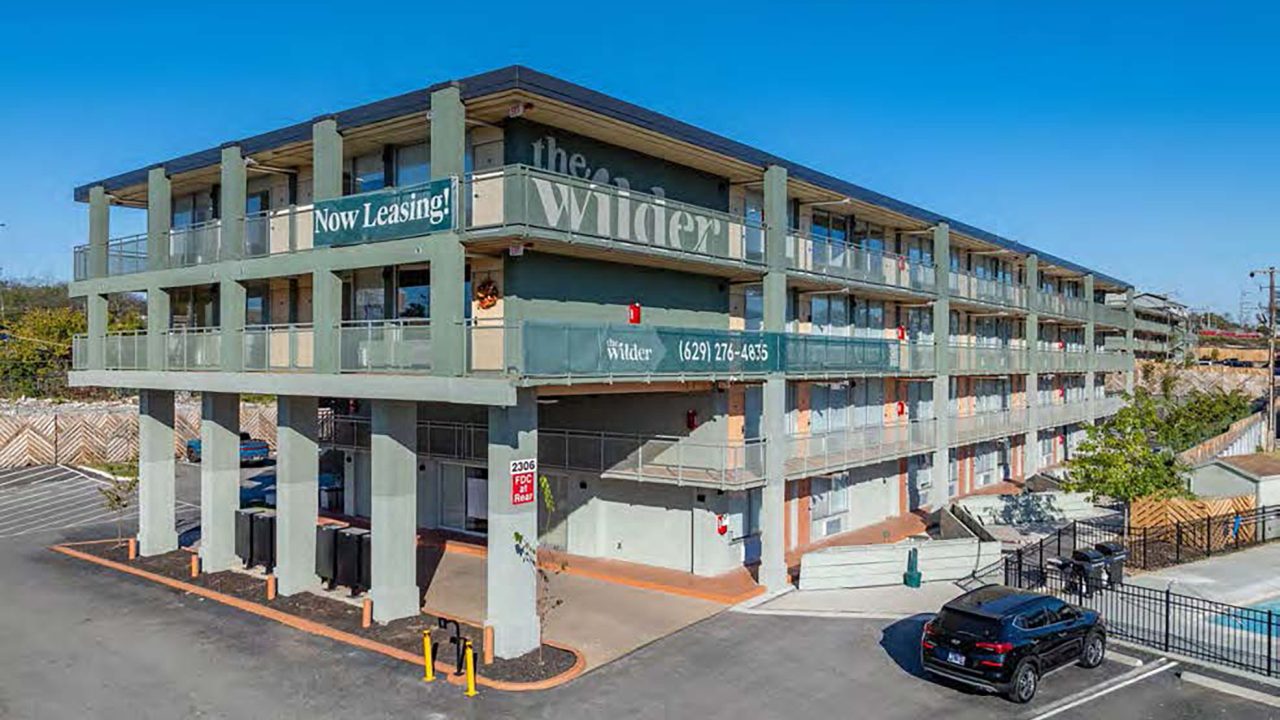
According to RentCafé®, more than one-third of U.S. cities are upgrading apartment spaces (increasing in most cases by approximately 50 square feet), allowing for new trends following the COVID-19 pandemic, including home offices.
In fact, 36% of cities surveyed are building larger apartments, with 51% graduating to house two bedrooms. Of those expanding, Everett, Washington, is the leader with the most apartments in construction. Urban areas are also on the list, with Charlotte, North Carolina, and Chicago making the top-20 as well.
The largest apartments are being built in Everett(1,195 average square feet), Scottsdale, Arizona (1,139 average square feet) and Athens, Georgia (1,132 average square feet). For more information, visit rentcafe.com.
ARA Forecast Shows Equipment Rental Segment Recovering
Equipment rental revenue, comprised of the construction/industrial and general tool segments, is expected to explode past its peak totals in 2022, according to the latest forecast released by the American Rental Association. The updated forecast calls for equipment rental revenue to reach just under $47.7 billion in 2021, up 3.1% after a decline of 9.1% in 2020.
The forecast calls for a robust 12% increase in construction/industrial rental revenue in 2022, taking the combined total for the two segments up to nearly $52.3 billion. The growth rate is expected to be consistent at between 2% to 5% for the next three years, according to the forecast. For more information, visit ararental.org.
International Code Council Releases Energy Efficiency Framework
The International Code Council released a new framework to assist governments and building industry stakeholders in meeting energy efficiency and greenhouse gas reduction goals.
“Leading the Way to Energy Efficiency: A Path Forward on Energy and Sustainability to Confront a Changing Climate” includes using the Code Council’s American National Standards Institute-approved standards process to update the International Energy Conservation Code (IECC). It has been adopted by The Code Council Board of Directors, which consists of 18 government code officials who were elected by their peers.
The IECC will be developed under a revised scope and be part of a portfolio of greenhouse gas reduction solutions that could address electric vehicles, electrification and decarbonization, integration of renewable energy and energy storage, existing buildings performance standards and more. For more information, visit iccsafe.org/energy.