Prefabricated or “modular” construction is not a new concept. Contractors have been using this process for years in hospital and hotel projects, where many of the rooms are identical from floor to floor. But other, less common uses are on the rise—for good reasons.
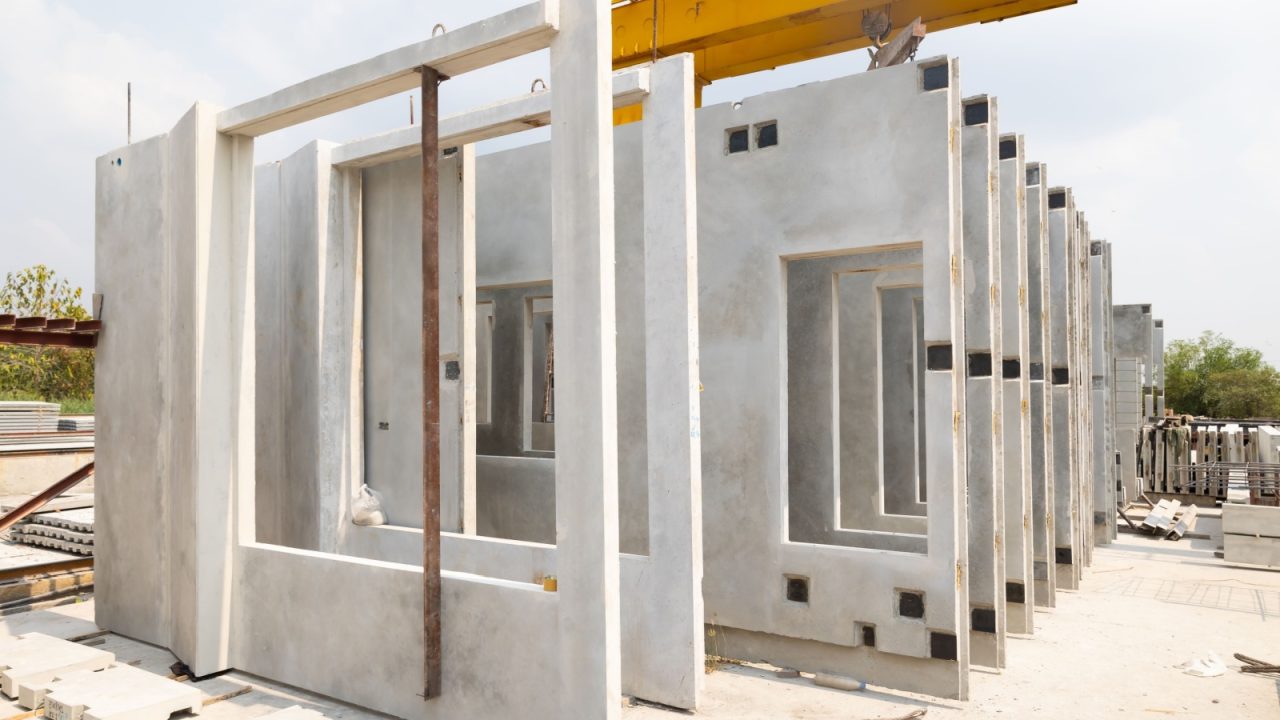
In facilities like large manufacturing plants, the use of prefabricated restrooms offers benefits to both the contractor and owner. Not only is the contractor able to provide workers with a safer working environment, prefabrication also gives contractors more control over the quality of the product. From an owner’s perspective, prefab restrooms can be completed faster, offer significant savings and allow valuable flexibility, which is extremely important when the plant needs to change its production line and relocate the structure.
1. Flexibility and Mobility
Manufacturing plants change their production lines when new products or models are introduced. Traditional restrooms made out of concrete masonry unit (CMU) blocks allow no flexibility as a plant expands or rearranges its production lines. Prefab restrooms, on the other hand, allow for “plug and play” flexibility.
As a plant expands or reorganizes, the prefabricated structures can easily be relocated. It’s as simple as removing the restroom’s utility feeds and disassembling several parts. Then, the structures can be moved to their new location within a plant and reconnected to existing utility feeds.
2. Cost Savings
The flexibility of prefabricated restrooms offers significant savings to manufacturing plants. Often, CMU block structures need to be demolished and reconstructed elsewhere when the plant changes its lines, costing the manufacturer upward of million. Modular, prefabricated restrooms, however, can be reused repeatedly for 20 to 30 years if they are well maintained.
And when the time finally comes to relocate them, the cost is comparatively less—approximately $50,000. That allows the owner to save up to $950,000 when new products or models are introduced and the production lines need to be changed.
3. Better Quality Control
Prefabrication occurs in an offsite facility where contractors are able to streamline the process and make sure the right tools are at hand, which can drastically improve the quality and efficiency of the job. And, because materials are assembled in a controlled environment, they are protected from weather or other obstacles that can interfere with the workflow on construction sites. This also makes the environment safer for workers.
Further, the construction can be carefully planned and executed, so last-minute problems or conflicts are minimized.
4. Faster Build Time
Manufacturing plants typically run 24 hours each day, so any construction that needs to take place within the facility is often limited to big holidays when the plants shut down. With prefabrication, however, construction teams don’t have to work around the client’s hours or schedule, allowing the work to be completed in a timelier manner.
Additionally, there is no risk of weather delays because prefabrication takes place in a separate, controlled facility, making it much easier to preplan activities and manpower.
5. Waste Reduction
Many construction companies have implemented lean principles into their everyday operations—and reducing waste is one of the pillars of lean construction. Some of the most common types of waste on a construction site are overproduction, waiting, rework of errors or too much inventory, movement, effort or processing.
The optimized conditions of a prefabrication shop allow for the implementation of lean practices to better control inventory and reduce errors and accidental damage.
Additionally, performing work offsite makes it easier for workers to recycle or repurpose excess materials. In contrast, on a jobsite those materials can be difficult to gather, store and transport—and are therefore often discarded.