As companies return to the workplace in the wake of COVID-19, it’s becoming clear that most workspaces will require at least minor renovations to make employees feel safe, as well as to meet new standards for social distancing and cleanliness. That likely means workspaces will see less people working in the same space. Open areas will become more open. Common areas will be reduced. And larger private spaces will allow employees to maintain a safe distance from each other.
As with so many changes designed to drive worker collaboration and productivity, such changes in the workplace are likely to be led by technology. Beyond the obvious increase in AV and collaboration technologies, many businesses are also employing sensor technology to collect real-time data regarding how and how often spaces are being used. This approach lets organizations monitor, quantify, and optimize ongoing workplace performance.
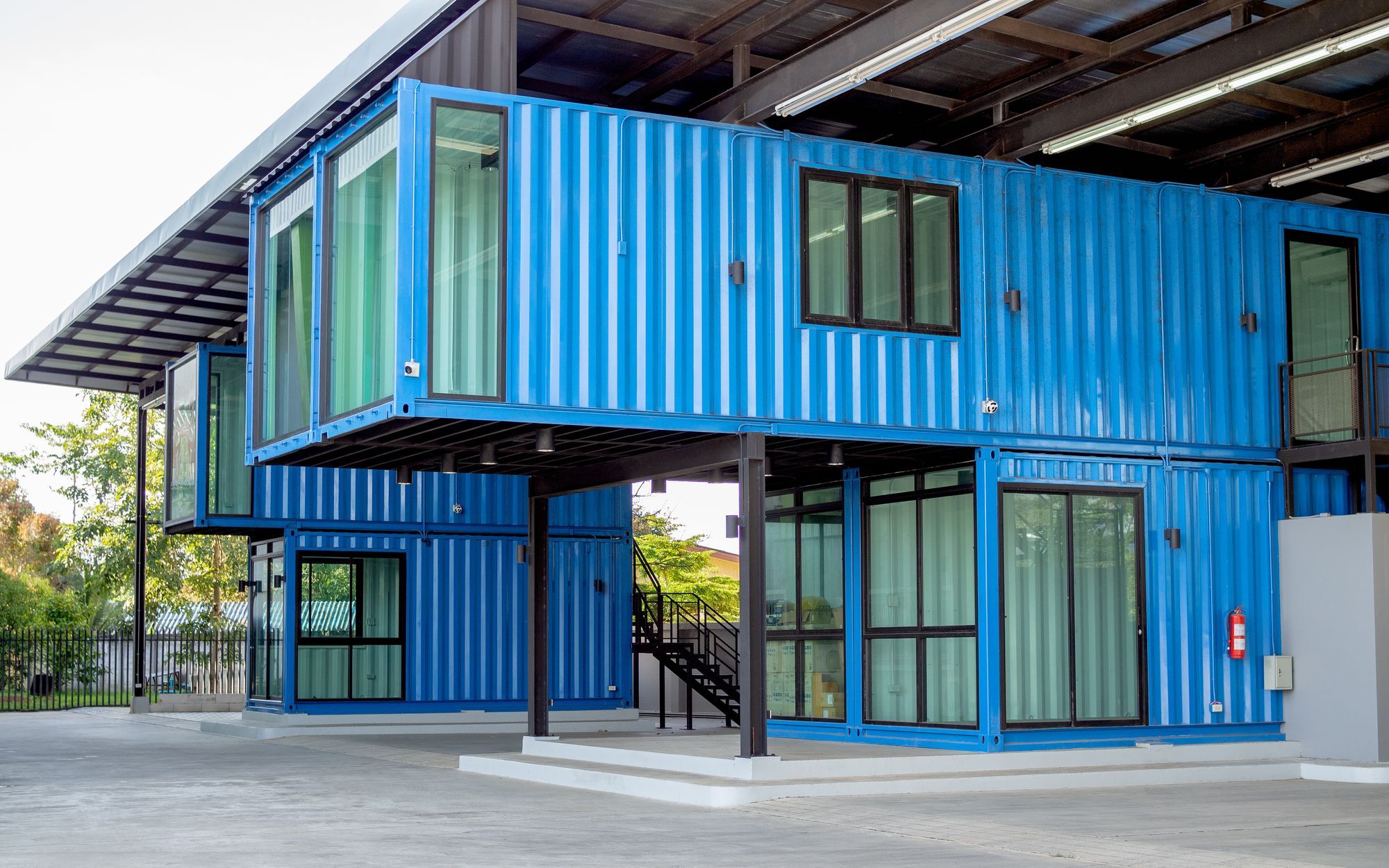
Once organizations have identified a need to make changes to their physical spaces, a modular construction approach offers many benefits over conventional construction. As tech-driven solution, a modular approach provides an offsite construction method in which components such as walls, doors and embedded technology are prefabricated in a factory and then shipped and assembled on location. It is also a cleaner and faster construction method, ideal for changes required in occupied spaces.
The speed, flexibility, adaptability and quality provided by modular construction were already contributing to its increased use before the pandemic hit. Since March 2020, though, businesses have been forced to change how and where they work. What if workspaces could easily be transformed over a weekend with minimal disruption to help them react almost instantaneously to such emergencies? As companies have faced investing more of their internal budgets in physical adaptations that enable them to bring employees safely back to the workspace, modular construction has provided the solution for minimizing the short-term risks inherent in all construction projects and maximizing long-term agility.
First and foremost, modular’s built-in adaptability makes it a viable option as companies rapidly shift their strategies for reducing density, limiting capacity and rotating staff. Beyond current and future health concerns, modular systems can easily be repurposed so changing business needs can be met quickly and effectively. This is in large part because power, data and technology are integrated into modular systems from the start, allowing them to easily adapt and move walls and furnishings in the future. This, in turn, allows employees to connect and collaborate seamlessly even if the physical workplace changes. Such tech integration are also becoming critical as businesses grapple with the need to accommodate continued employee demands to work remotely going forward.
Because components are custom fit to a facility’s interior before arriving onsite and then prefabricated in a tightly controlled environment, modular construction also significantly shifts where construction dollars are spent. On average, 70% of modular construction costs go to a product that can be repurposed as necessary to fit future needs. This compares favorably to the conventional construction model, in which onsite labor accounts for the majority of expenses.
A head-to-head cost comparison of traditional construction methods versus modular typically shows the latter approach costing slightly more in first cost to build. Because modular construction can be done offsite at the same time that onsite construction activity is taking place, though, there is significantly less downtime and greater schedule certainty for the contractor and the customer. That routinely shaves several weeks off the construction schedule. Saving just 5% on that construction schedule allows the workspace to be occupied sooner, enabling the occupant to move in and begin generating revenue faster.
Finally, a modular approach has the added advantage of being more sustainable than traditional construction methods, with significantly less environmental impact. Because modular construction takes place offsite in a controlled factory environment, there is less material waste. In addition, some finishes feature antibacterial properties, are more durable and can be easily disinfected, unlike traditional construction materials.
Modular installations are also relatively cleaner and safer and take less time than traditional construction because much of the work has already been done offsite. This translates to less noise and disruption during installation. It also means fewer construction workers are needed, which again saves money while creating a safer worksite since social distancing is relatively easy to accommodate.
One thing is certain. Given increased business demand to bring workers safely back to the workplace and make those workplaces as flexible as possible now and into the future, everything from small retrofits to major renovations will abound in the coming months.