Perhaps everyone remembers taking that aptitude test in the second grade. Did you end up where it said you should? Maybe second grade is too early to gauge the right career path. But what if there was a way to gauge the right path once you’ve already chosen a career?
Maybe you want to find a specialty within your profession, ensure fair compensation or outline a plan to upskill. Or perhaps you are questioning whether you’ve chosen the right career at all, and you want to assess your skills and knowledge in order to find a new path.
This is what the new Construction Academy at Burns and McDonnell was designed to do.
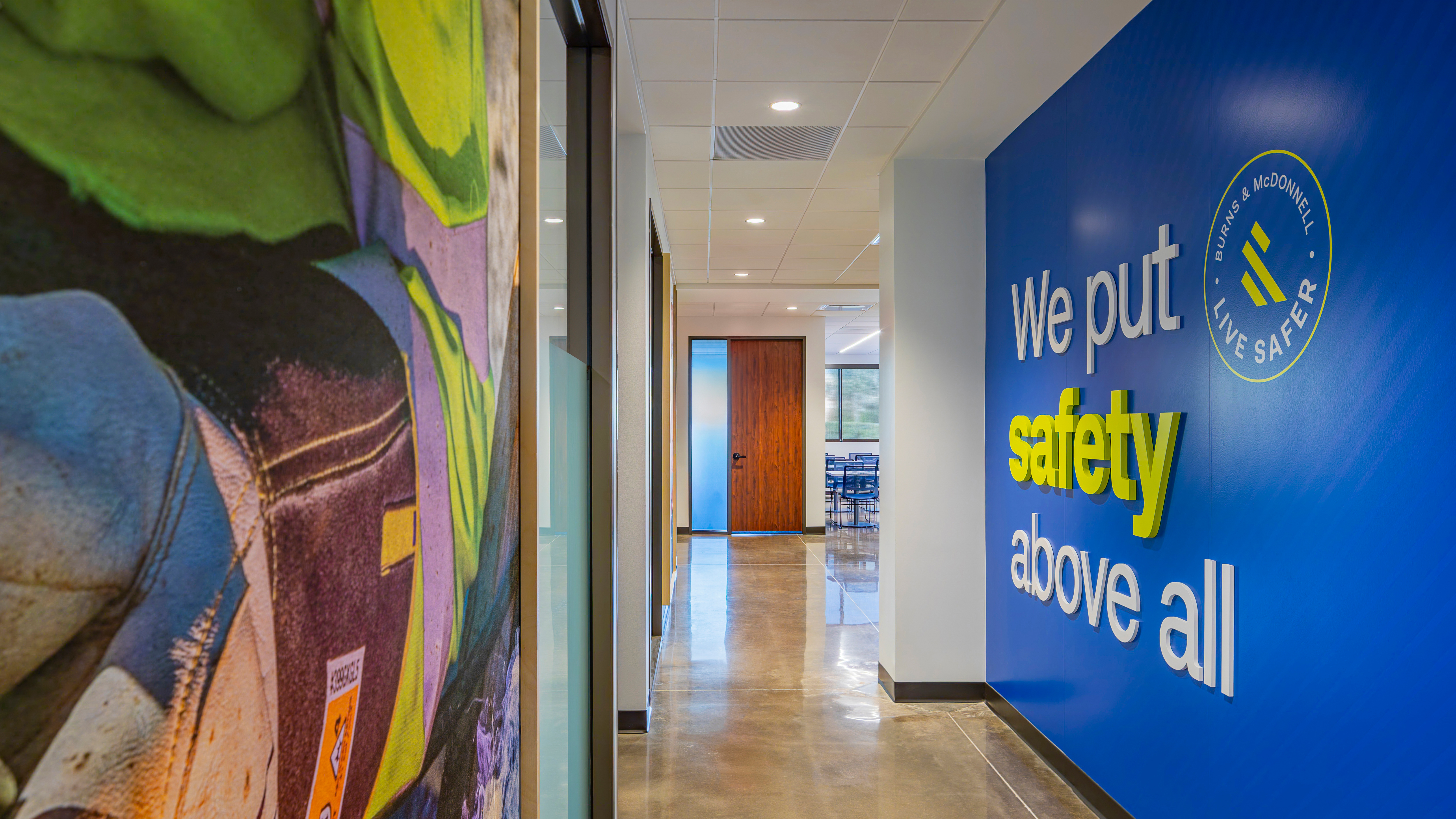
“It’s an organization we put together to help educate and train our construction craft resources,” says Rashall. In February, Burns & McDonnell unveiled the new 14,000-square-foot hub in Houston, with classroom space for knowledge assessments, skills training, jobsite simulations and more. That space is supplemented by a fleet of mobile training units, to be deployed at the company’s jobsites nationwide to further the accessibility and efficacy of this initiative.
Rashall even hosted a breakout session at ABC Convention on the development and implementation of this workforce assessment process—and companies across the country are beginning to buy in.
So,what’s all the buzz about? Who is this academy for? Where does one even begin?
First and foremost, one must apply for or already have a job at Burns & McDonnell. Whether helper, laborer or journeyman, supervisor foreman, general foreman or craft superintendent, the goal is for all Burns & McDonnell employees—incoming and established—to assess their skills.
For the new hires with little to no construction industry experience, they start in the laborer training program, and then they complete the assessment and move up to a helper. From there, they pick a craft to specialize in and continue moving their way up. “At that point,” says Rashall, “they really start figuring out whether they actually want to be a carpenter or a welder, an iron worker or electrician. That’s really where they have the freedom to move around and try to figure out what they like and what their skillset is.” Not only does the Construction Academy provide freedom to explore different trades, but with that freedom also comes a sense of direction—a perfect example of the merit-shop philosophy at work.
For the veteran employees, they were more apprehensive upon first hearing about this program. They already had a job. Would it negatively impact their salary? Their title? But the opportunity to upskill their knowledge—and their paycheck—piqued their interest.
Whether new hire or seasoned professional, everyone in the Construction Academy takes an initial online knowledge assessment. Rashall describes it as kind of like taking the SATs. The test covers a spectrum of topics from entry- to mid- and top-level craft disciplines. The score from that test determines which level to place each employee. The knowledge assessment is computer-based so it can be completed from either the Construction Academy facility or mobile unit, or the comfort of one’s own home.
Next comes the hands-on assessment, where employees demonstrate the proficiency determined by their knowledge assessment. Based on those two assessments, what comes next is most important, according to Rashall: “We give them a very clear pathway to advance their skillset. We know where they missed questions on the test, we know where they missed hands-on skills, and we’re able to document that very clearly for them and give them feedback so that they know what they need to work on to advance to the next level within their craft.”
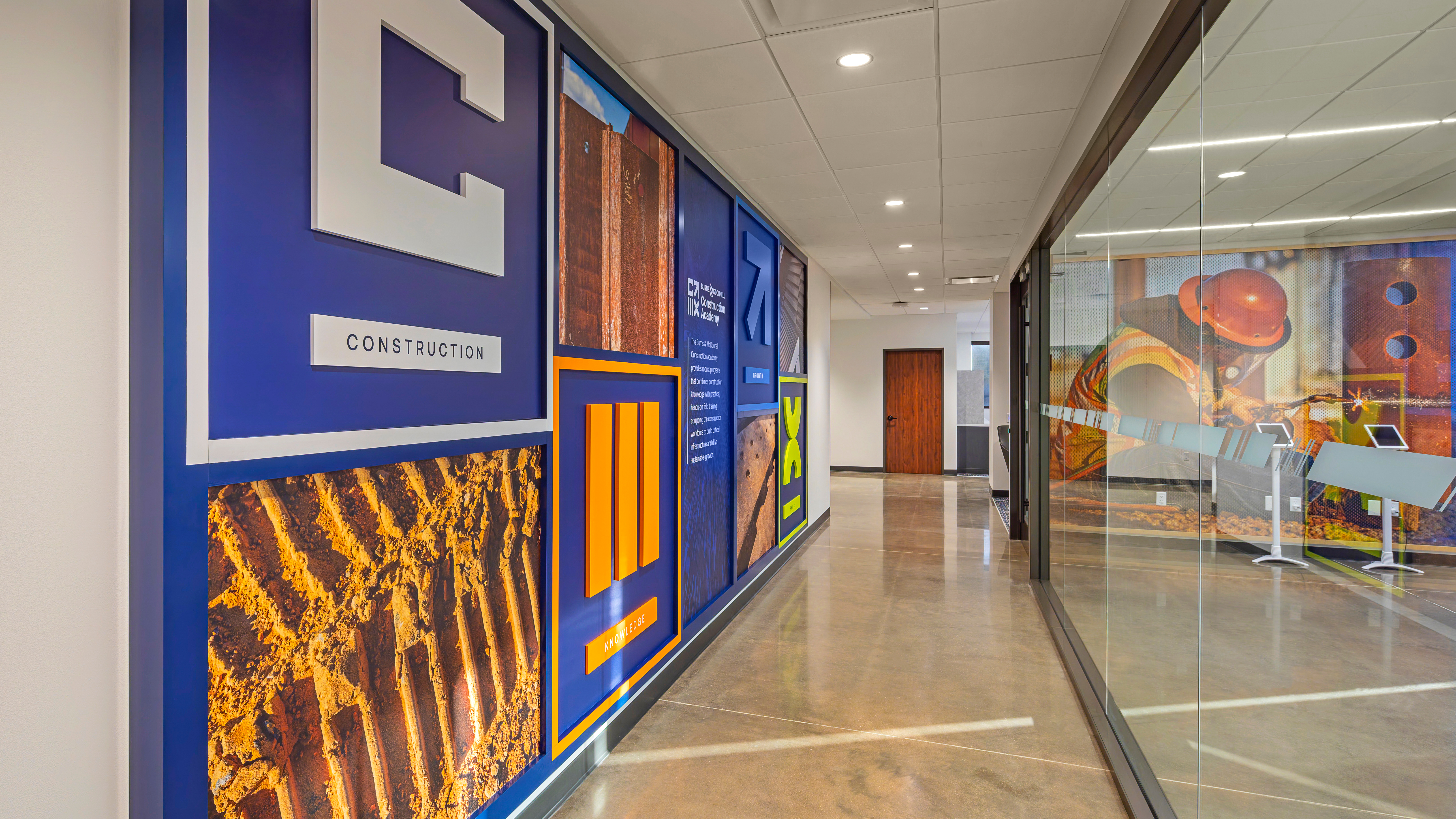
That pathway includes classes to attend—led by Burns & McDonnell volunteer instructors—deadlines to hit and, ultimately, goals to achieve. While this might sound daunting, like going back to school, no one is left without help. Rashall says, “Don’t forget, they always have their mentor or their supervisor in the field to help them work through these modules. They can move at their own pace, because what we’re really trying to offer here is a way for workers to come into the construction discipline and develop a very successful and sustainable career in this industry.”
Burns & McDonnell is in the process of assessing all new and current employees. Those who have already completed the process said it was very challenging. “You really have to know your stuff to get through,” says Rashall. And it is clear that Burns & McDonnell employees know their stuff, because several people have already moved up from mid-level positions to top-level journeymen. They can even reassess their skillsets later on, so there is continuous learning, which ripples from the office to the field, maximizing efficiency and improving culture on jobsites.
“As people have started seeing the value in [the assessment process], you just get a better environment out in the field,” says Rashall. “So, there has been a really good response as our employees get more into the program.”
The program is garnering support not only amongst Burns & McDonnell employees, but also throughout the local Houston community and the larger ABC community.
“Both communities have been very supportive and very positive about this effort,” says Rashall, “because we’re creating jobs and we’re creating career paths that are not just the traditional college education path. Tons of people need that opportunity, and we’re providing that.”

Not only is this program providing jobs and opportunity, but it is setting a precedent for the larger construction workforce. As the workforce assessment concept continues to gain momentum, Burns & McDonnell will continue to further its own program and thus workforce, but “we know we can’t do it ourselves,” says Rashall. The company will be looking to partner with high schools, trade schools and similar local facilities to generate that pipeline of new employees coming in. “We do have several schools that are planning to come in this year for a tour of our facility and to see what the assessment process is all about.”
So, what is it all about? “That’s up to them,” says Rashall. “They have to put in the work. We will provide the content. We will provide the instructors. We will provide the training, but they have to take their own career into their own hands.”
SEE ALSO: ABC ANNOUNCES ITS 2025 CRAFT AND CONSTRUCTION MANAGEMENT NATIONAL CHAMPIONS