Women’s participation in the skilled trades has steadily increased in recent years, rising from 8.9% in 2010 to 11% today. However, this progress has not come without challenges—one being access to functional, durable and comfortable workwear. Historically, jobsite apparel has been designed with only male workers in mind, leaving tradeswomen with clothing that compromises fit, mobility and overall functionality.
With more women entering the trades, their voices have amplified the demand for workwear that truly supports productivity, movement and protection. This shift has prompted some manufacturers to rethink traditional designs, ensuring that workwear keeps pace with the evolving workforce rather than forcing tradeswomen to adapt to outdated standards.
IDENTIFYING KEY CHALLENGES
Field research plays a crucial role in understanding the realities of the jobsite and ensuring workwear meets the demands of tradeswomen. By engaging directly with workers in the field, research teams have gathered firsthand insights, allowing product development to be driven by real-world needs rather than assumptions.
Through this research, a clear pattern emerged, highlighting the most significant challenges tradeswomen face with existing workwear:
Fit and mobility issues: Work pants were often too stiff, low-waisted or restrictive, limiting movement.Lack of durability: Many women’s options sacrificed durability for comfort, leading to premature wear and tear on the jobsite.Limited protection features: Key elements like reinforced knees, tool storage and breathable yet durable fabrics were either missing or poorly designed for tradeswomen.
A HUMAN STUDY CASE STUDY
Understanding these frustrations, brands are taking a research-driven, jobsite-tested approach to designing women’s workwear. Rather than simply scaling down men’s clothing, the design process prioritizes ergonomics, fit and durability. Direct feedback from tradeswomen played a crucial role in shaping practical solutions tailored to real jobsite demands.
“We took the time to be in the field and truly understand what was needed to create a full breadth of line that dressed women from head to toe—not just release a single item,” said Nadia Sinner, product manager at Milwaukee Tool. “Every cut, stitch and loop were meticulously intentional, ensuring that each piece addressed the real challenges tradeswomen face on the job.”
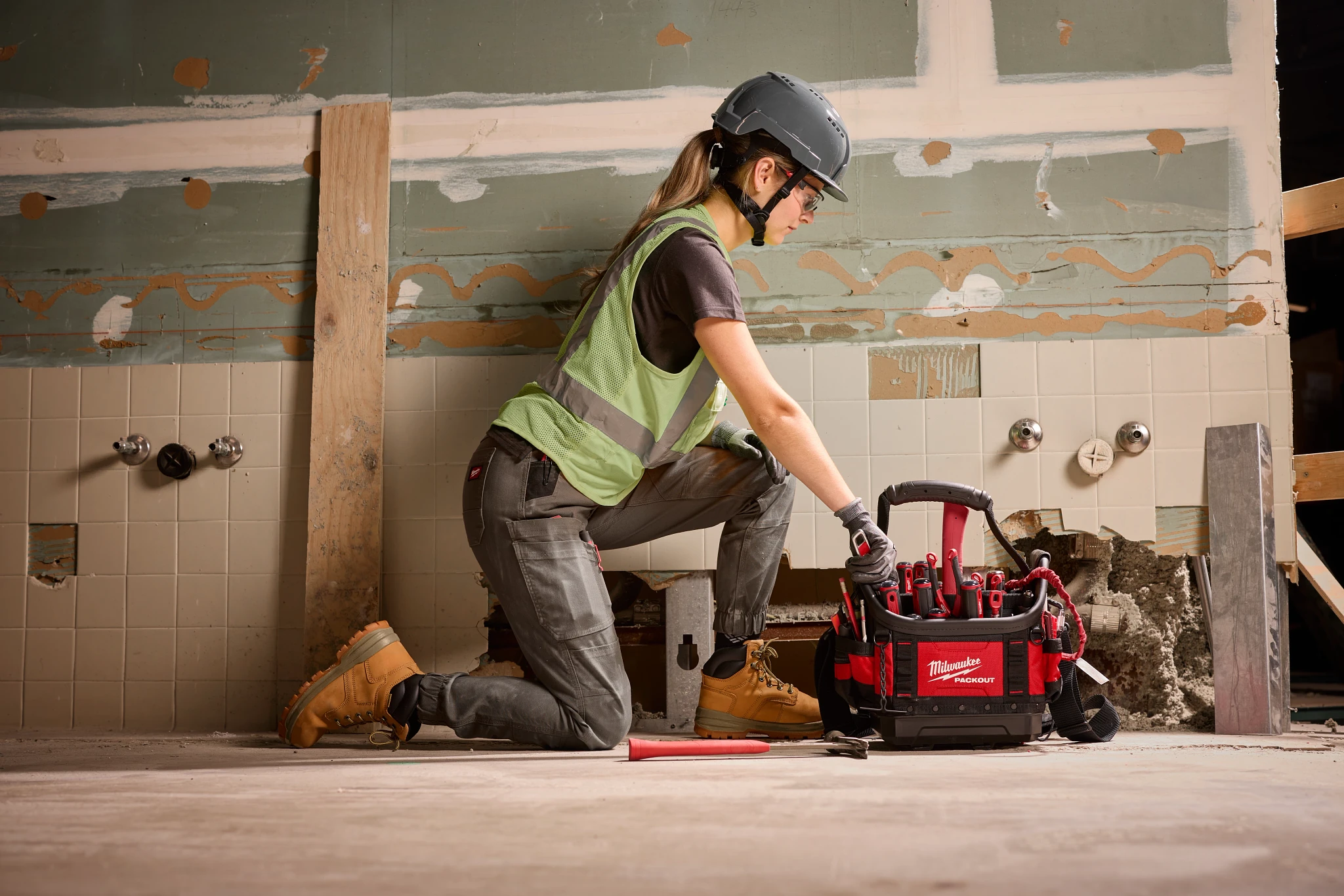
This approach led to key adjustments that improve functionality and performance in demanding work environments. For example, a high-rise, straight-fit jogger with built-in stretch and an elastic-integrated waistband provides greater mobility while staying secure throughout the workday. Wide waistbands enhance support, while deep, durable pockets offer convenient storage for tools and essentials. Additionally, reinforced belt loops can prevent sagging when wearing tool belts, ensuring both stability and sturdiness on the job.
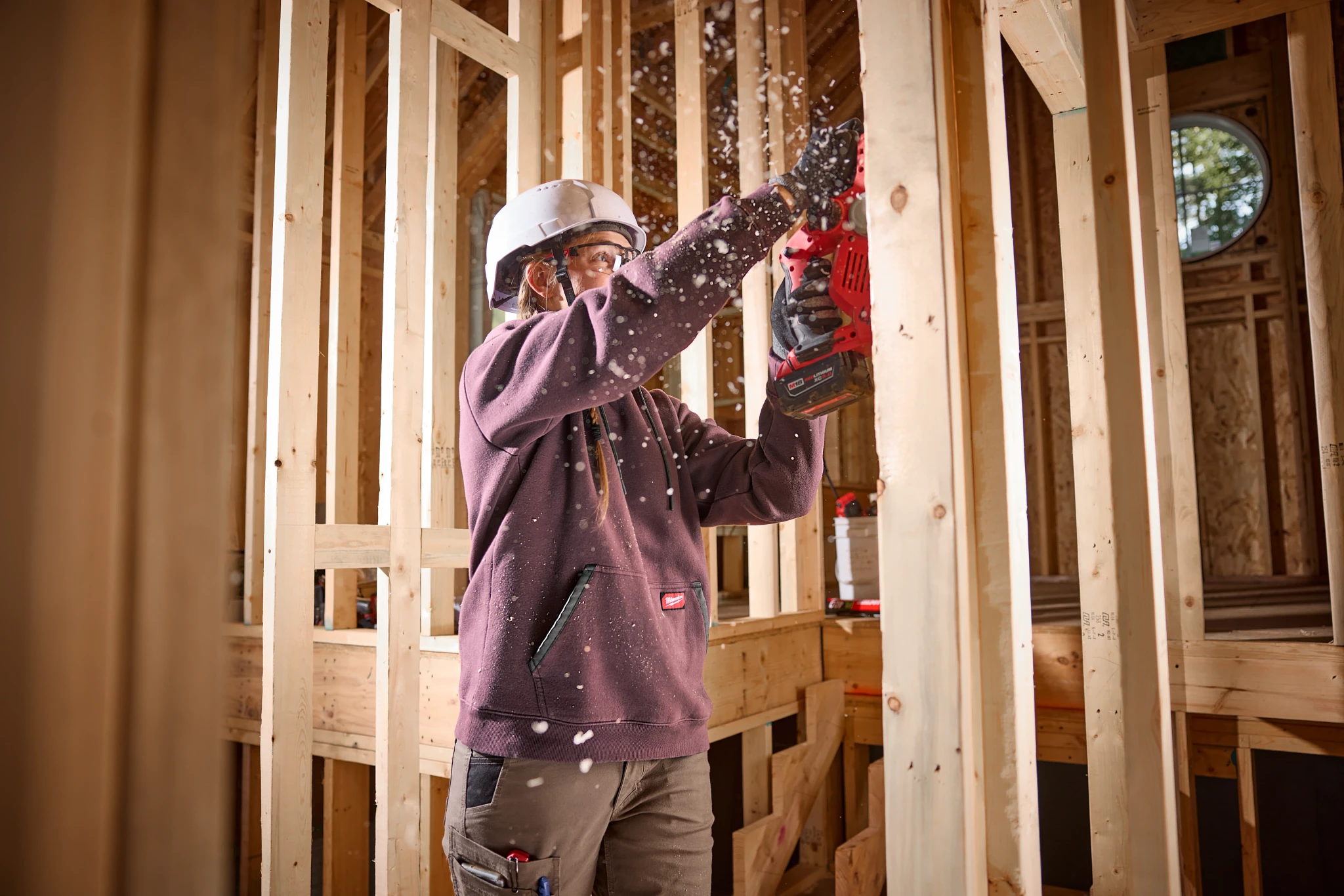
To further address comfort and wearability, hoodies can be designed with extra room to accommodate ponytails and longer hairstyles. As well, shirts can be tailored with drop-tail hems to provide better coverage when bending or reaching overhead, preventing exposure and ensuring a more secure fit and peace of mind. These redesigns required rethinking traditional designs to better support tradeswomen working in dynamic environments without sacrificing comfort.
Products like these are undergoing continuous field testing to balance comfort and performance, ensuring that every stitch of workwear is built for the realities of women working in the trades.
MADE BY TRADESWOMEN, FOR TRADESWOMEN
Authenticity is an essential element in developing workwear that truly meets the needs of tradeswomen, delivering solutions that will meet the demands of a professional. Creating a women’s workwear line requires more than just research—it demands the voices and expertise of women at every stage. A female-led team played a crucial role in shaping Milwaukee’s decisions, ensuring that fit and functionality addressed real-world jobsite challenges. Women across sourcing, purchasing, legal and marketing influenced every phase of development, ensuring that both product design and brand messaging aligned with tradeswomen’s needs. Their insights resulted in workwear that is not only functional and durable, but also genuinely representative of those it serves.
By maintaining authenticity throughout the research and design process, manufacturers can reinforce the importance of listening to those who know how women work on the jobsite best.
SETTING A NEW STANDARD
The revolution of high-performance, female-specific workwear is more than just a few product launches—it marks a shift in how the industry supports tradeswomen. As their representation in skilled trades grows, so does the demand for apparel and resources designed to meet their needs.
Ongoing field research, product testing and innovation are driving the evolution of workwear, ensuring it keeps pace with the workforce. Looking ahead, the focus remains on expanding solutions and enhancing materials to provide gear that offers both functionality and longevity in demanding jobsite conditions.
Women’s presence in the trades is no longer emerging—it is firmly established. Advancing functional, long-lasting and thoughtfully designed workwear is a critical step in reinforcing their role in shaping the future of construction and skilled trades.
SEE ALSO: THIS WOMEN-LED BUSINESS IS REDEFINING WORKWEAR