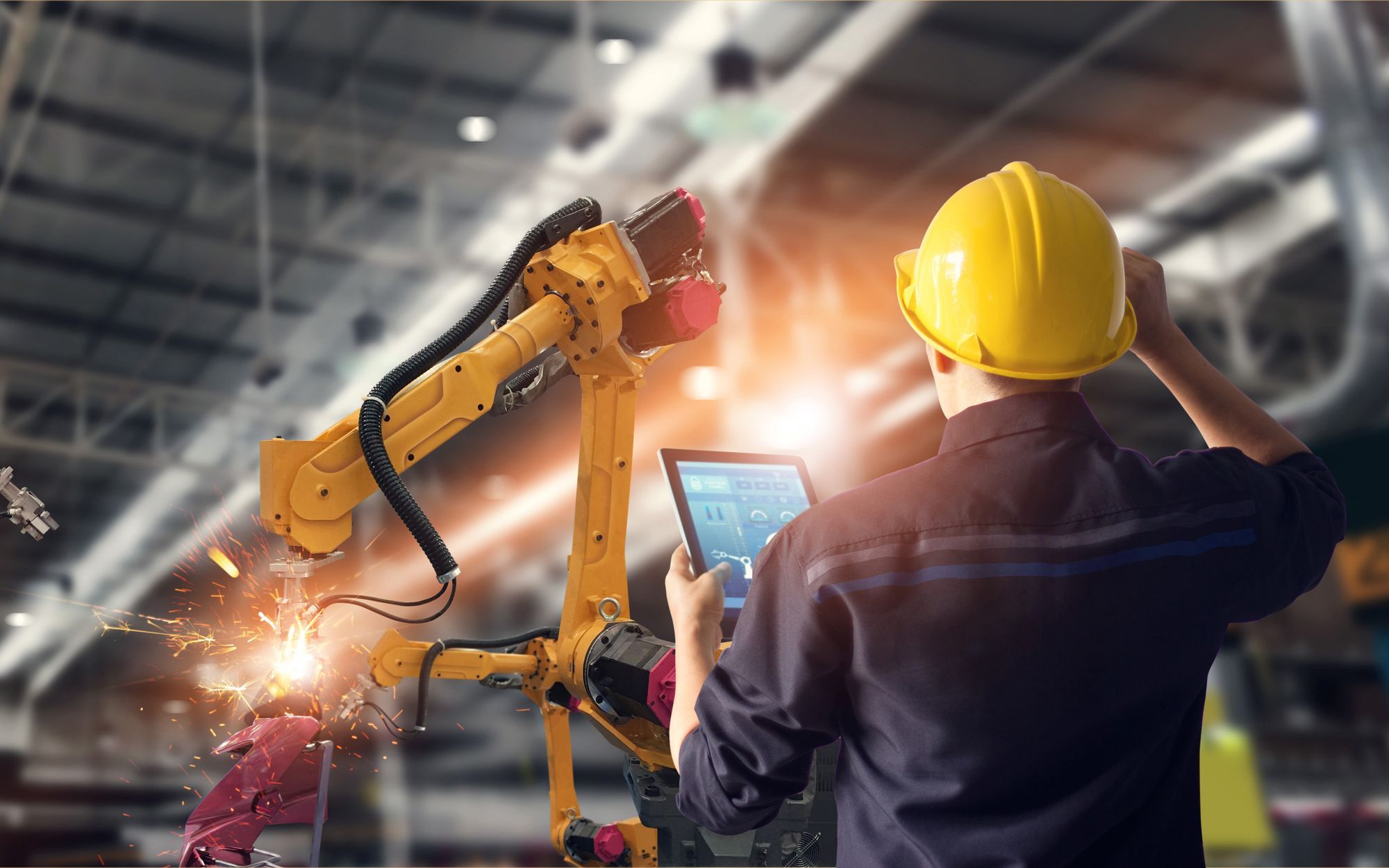
Hollywood does not look kindly on automation. It seems that every futuristic film involving robots ends with an uprising of machine versus man.
But in the real world, automation has huge benefits, especially for construction managers who are struggling to run profitable projects while facing a severe shortage of skilled labor.
The industrial automation market is expected to reach $149 billion by 2022. But what kind of automation makes sense for a construction business? After all, contractors probably don’t envision their jobsite looking like a scene from “I, Robot.”
Here are a few simple, practical ways automation can help any construction business right now.
1. Drones perform vital jobs from above
Once a futuristic concept, drones have entered the mainstream in the construction industry. According to one report, drone usage in the construction industry has gone up 239% year over year.
They’re more than just toys. Today’s drones—or unmanned aerial vehicles—are capable of conducting important and sometimes dangerous jobs on a construction site. They’re excellent for doing surveys. From the air, they have a superior vantage point for surveying a property, and they do it far more efficiently (and safely) than a human can. Drones can also act as automated security guards, patrolling construction sites and making sure valuable materials and the site itself are secure.
They are capable of freeing up a tremendous amount of labor for other tasks, reducing the burden a construction workforce needs to shoulder—and, therefore, making it easier for a business to handle a labor shortage.
2. Demolition robots can access dangerous areas
Demolition robots have grown in popularity in recent years as the technology has matured and prices have become less prohibitive for businesses of all sizes.
Demolishing concrete is dangerous work and these robots can handle it, so contractors don’t have to worry about the safety of their workers. Robots can also access small spaces that are hard to reach.
One major player in the automated equipment market launched its first remote-controlled demolition robot in 2009, to give an idea of how new this technology is. Now, there is a range of designs and tools for construction managers looking to automate demolition on their jobsites.
Demolition is hard work that involves a lot of employees and a lot of oversight to prevent safety mishaps, so any way business leaders can outsource this work to robots will save them in terms of labor.
3. AI automates data analysis to improve efficiency
It’s not just about automating equipment; business leaders also need to automate their data analysis. Artificial intelligence offers exciting advancements in data analysis that allow businesses to spot inefficiencies in their operation and tweak them to maximize profits, or identify safety lapses so they can fix them before disaster strikes.
For example, one general contractor in Boston is developing an algorithm that analyzes jobsite photos for safety hazards such as workers who aren’t wearing proper protective equipment.
Many different types of construction software offer data analysis and custom reporting tools powered by some type of AI, allowing businesses to capitalize on all that data they’re collecting.
4. Chatbots provide answers for construction employees
Here’s one that business leaders probably haven’t thought of: chatbots. Gartner predicts that more bots and chatbots will be built and deployed across the globe by 2020 than new mobile apps, a pretty mind-boggling prediction.
So, what are chatbots? They’re computer programs that can engage in conversation with humans, which makes them ideal for automating information sharing.
The jobs they do are many and varied. Some construction firms use simple scripted chatbots, while more advanced chatbots have natural language understanding capabilities.
Scripted chatbots can be used to help employees find answers to questions they have on workplace safety or project schedules, for example. Contextual chatbots can analyze records from databases, allowing a construction manager to ask if a certain type of equipment is available.
Chatbots can save a tremendous amount of man hours if employees are currently doing this work manually.
Automation is a must-have capability
There’s no reason construction business leaders should hesitate to begin automating processes. It has never been more affordable or easier to implement automation in a construction business, and it will result in more efficient employees and reduced man hours—which means less strain on a construction workforce.