In May 2023, Nathan Burton, a magician performing in one of Las Vegas’ historic Strip addresses, approached Sightline Commercial Solutions about renovating the interior for his new residency. As a fabricator and global supplier of architectural railing, metal, glazing and portable platform solutions, Sightline knew exactly how to execute this project with Vegas flair.
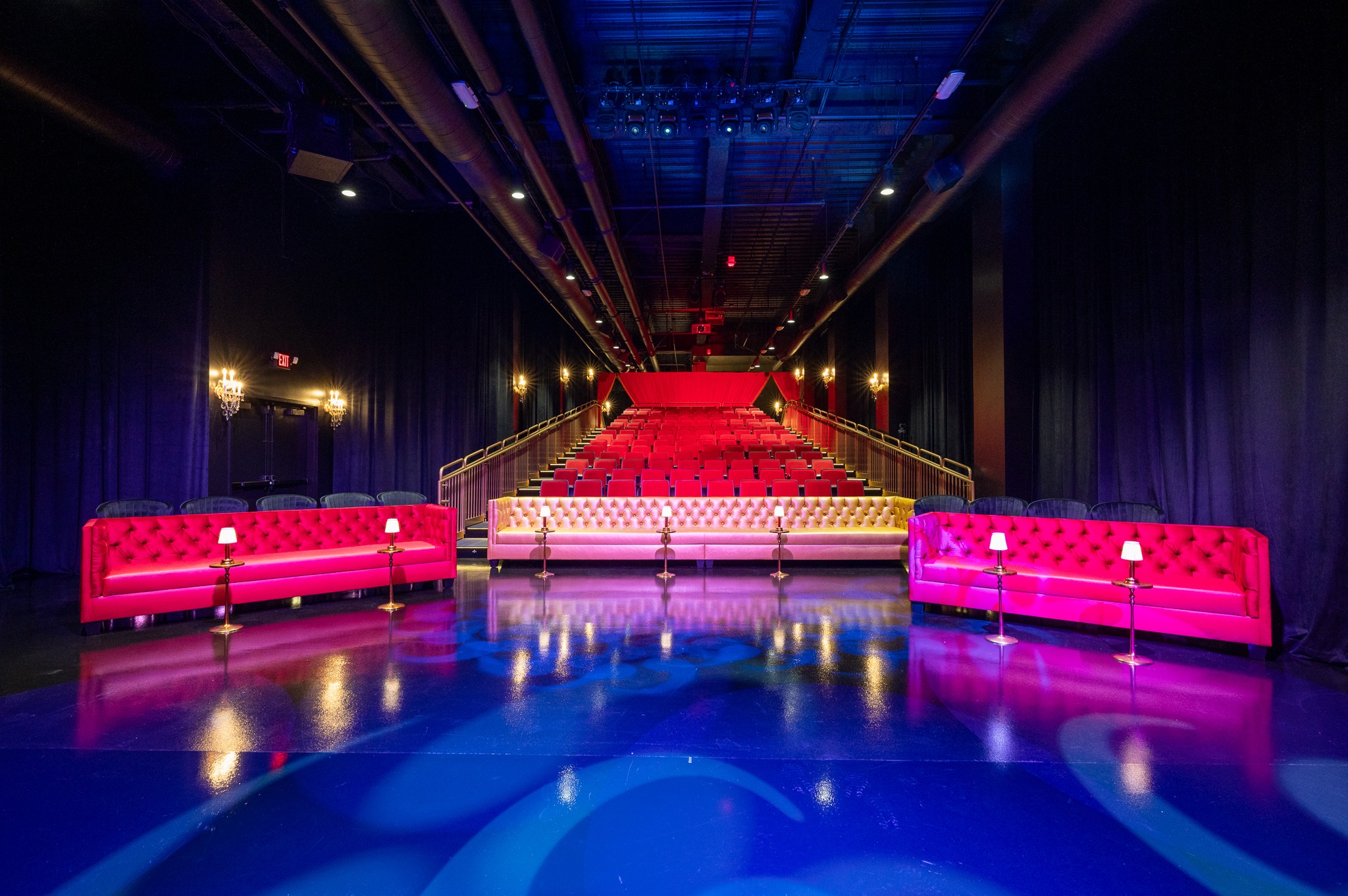
“Something a little more glitzy, a little more glam,” says Sightline’s director of project management, Tony Wayne. “And,” considering how much change Vegas sees in a year, “something simple, that’s easy to put together and take apart.”
While the Nathan Burton Magic Show is not Sightline’s typical client—as would be a general contractor—the company has done previous platforming work in other notable Vegas venues.
“This work is very familiar to us,” says Wayne, who helped lead an installation located at the new Fontainebleau casino.
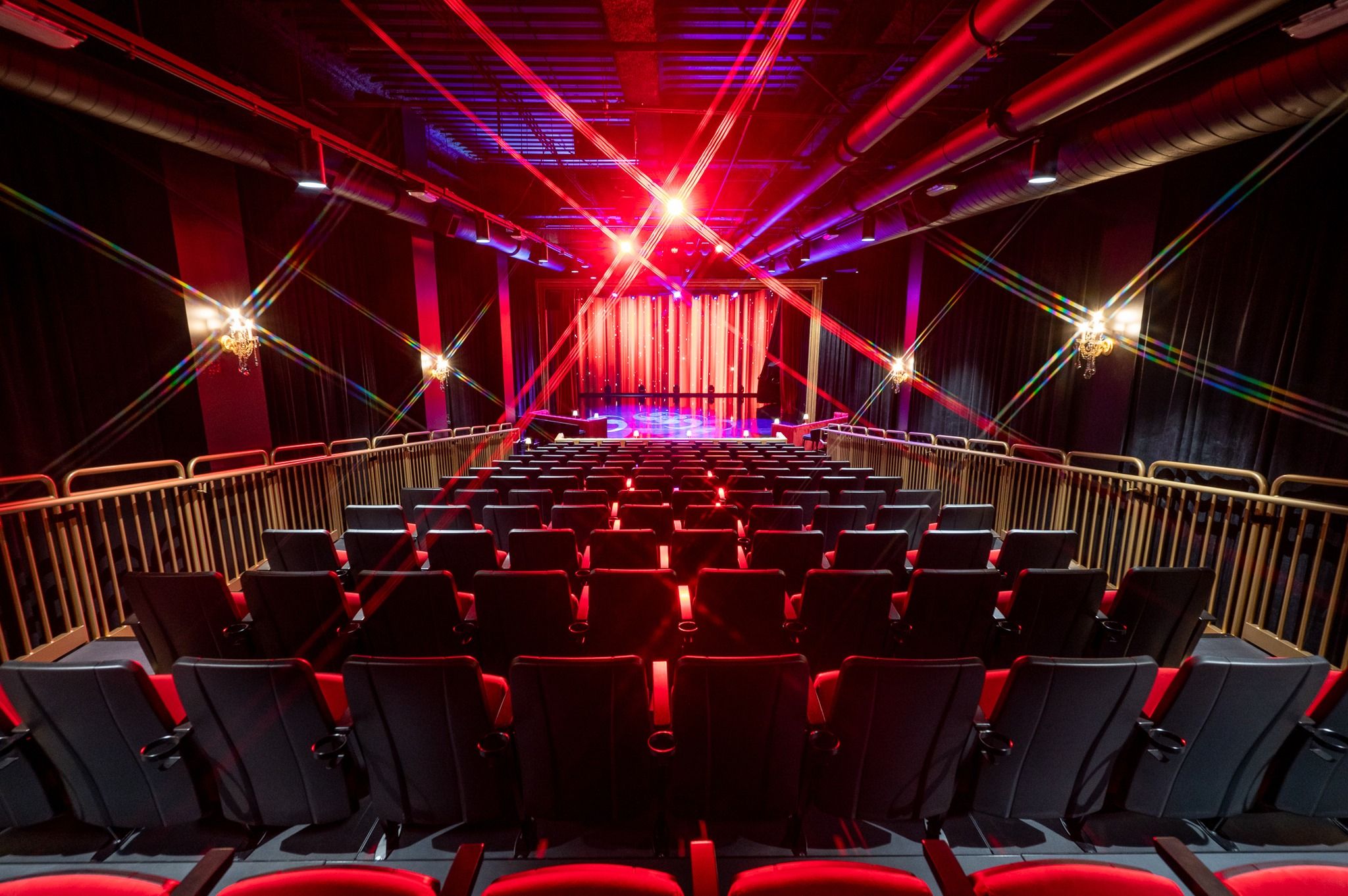
Taking up residence at 3771 S. Las Vegas Blvd., Burton was seeking a configuration with a 160-seat capacity that could be built and installed quickly and disassembled cleanly at the end of his run of show. With a magical combo of natural wood and light-weight aluminum, Sightline’s platforming product would be amenable to the requisite simplicity and glamour. Its flexible nature allowed it to be designed to Burton’s exact specifications—and he was involved throughout the entire design-build process.
“[Burton] came to us with the idea and then we drew it up, priced it and gave him a proposal,” says Wayne. “He made tweaks here and there as to what he needs. It’s definitely different than the normal construction process of things going out to bid to multiple GCs and then subs getting awarded. This is a niche market of ours where customers don’t have to have so many cooks in the kitchen.”
Despite it being niche, the permitting process is—thankfully—rather pedestrian. In this case, because it is a temporary structure designed under a certain height, a temporary permit would suffice without Burton or the building owner having to go through the full building permit process.
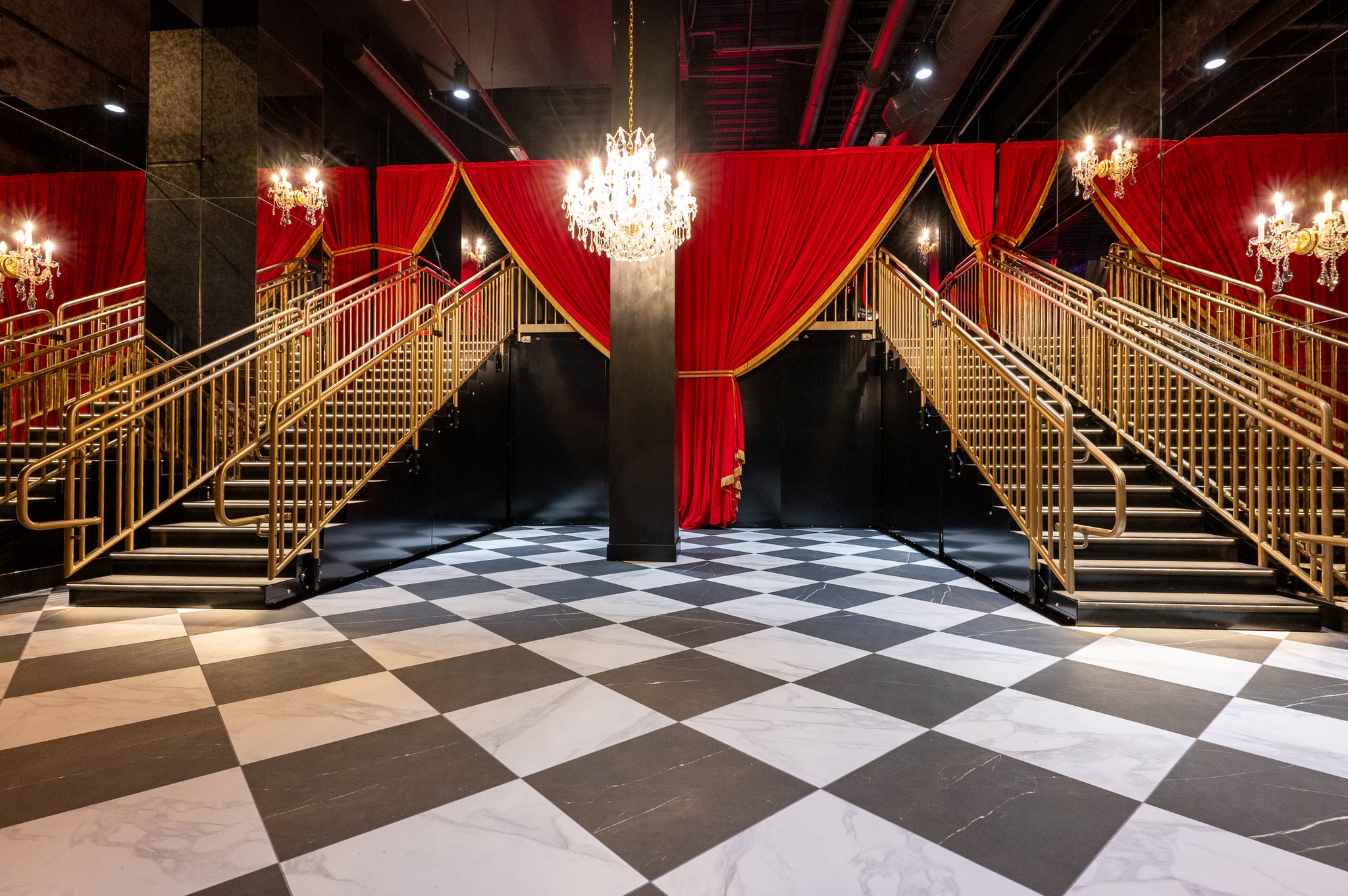
While the 160-seat riser product and process itself was nothing new to the company, the glitz and glamour Wayne referenced earlier certainly made the Nathan Burton Magic Show a standout installation, especially with its powder-coated gold railing.
“A lot of our rails are powder-coated or anodized,” says Wayne, “so we can do a variety of colors, like the bright, bold colors of Vegas. When you look at this project, it looks totally Vegas.”
Once the design neared its completion, the project team headed to the site to conduct a field measure and ensure numbers before final approval and installation. “From there it goes into production,” says Wayne. The fabrication process for Burton’s theater seating took eight weeks, which may seem swift, but Wayne spotlights the beauty of simplicity: “This is essentially furniture. It’s the last thing to go in, so we can measure easily while the rest of the construction process is still happening—If they’re doing the flooring or remaining build-outs, we’re producing our material. It’s a coordinated effort.”
That effort also required coordination with electricians who were setting up an intricate light display, but like any construction project, “as long as you do a lot of planning in the front end and make sure that everyone’s on the same page,” says Wayne, it comes together like magic.
In October 2023, the theater at the Nathan Burton Magic Show was fully outfitted and ready to seat an audience. At the end of the day, the materials totaled $160,000, and at the end of his residency, Burton—who now owns the platform product he co-designed—can decide to do what he will with the materials. “He had a vision of what he wanted to be,” says Wayne. “We worked with him hand in hand to make sure that we gave him the end results he’s looking for.”
In addition to Burton owning the product, it is also fully removable, as it was designed to be. Wayne says: “It doesn’t need to be anchored down into the interior environment. The platforming system interlocks together and is set on top of adjustable legs so it can fit spaces easily and adjust for on the floors. It requires limited tools, limited construction. It’s more a piece of living furniture that becomes a part of the building.”
SEE ALSO: MODULAR CONSTRUCTION CONTINUES TO GAIN MAINSTREAM ATTENTION