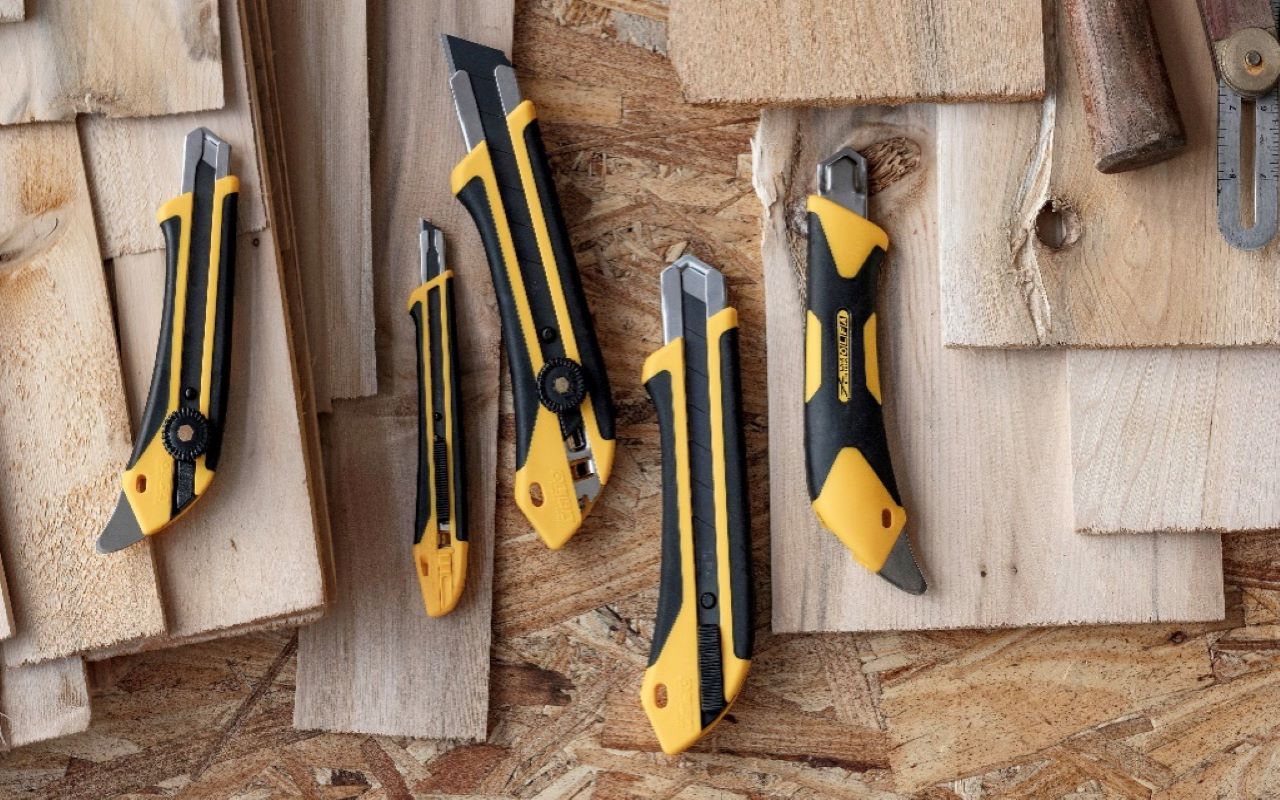
When starting a project, it is important to first ask what type of cut needs to be made to narrow down the type of utility knife and the best blade to use. There are many considerations, but it is always best to start with the blade.
Contrary to what many may think, not all blades are created equal. For a sharp and effortless cut, the blade needs to be made from a superior steel. Sub-standard materials are not only prone to breaking, chipping and becoming dull quickly, they are also dangerous. Maintaining blade sharpness is also important. For example, a retractable, snap-off blade gives users confidence and peace of mind knowing they will never have to worry about a dull blade ever again. A sharp blade also brings consistency and efficiency with faster cuts. Time is saved from reduced blade changes or stopping to sharpen the blade.
It is also important to look at the style of the blade. Each blade style is designed for different materials and will provide a different type of cut. It’s valuable to have a variety of blades within reach as it can add new levels of accuracy and efficiency throughout a project.
Silver Snap-Off Blades
Use for clean cuts on most materials including paper, cardboard, vinyl and more—or when working with gritty materials like drywall and asphalt shingles.
Black Snap-Off Blades
Made of double-honed carbon tool steel, these heavy-duty, durable and exceptionally sharp blades are perfect for gaining the upper hand against tough materials like rubber, rope, carpeting, vinyl, expansion board, laminates and so on.
Stainless Steel Blades
Use when fine details and precision cuts are called for, such as car wrap, wallpaper, and other vinyl. Also used when working with wet or corrosive materials.
Hook Blades
This blade’s hooked shape cuts material such as linoleum, roofing shingles, or boxes with a pulling action, as opposed to downward force, protecting surfaces underneath the cut.
Saw Blades
When contractors need the extra, more aggressive cutting power of a saw, this solid blade made from carbon tool steel delivers long-lasting sharpness with teeth that will stand up to plastics and wood.
Blades also come in different sizes, which provide varying degrees of strength and are suitable for different projects. Many come in widths of 9mm, 18mm or 25mm. Options for the full utility knives must be considered, as well as the blade size, type and other features—all important components of every knife. Assess the size of the blade needed for the project at hand, and then identify the correct category of utility knives to choose from. The three main categories include:
- Precision or Light-Weight (9mm): Applications include cardboard, flexible plastics, foam board, paper, wallpaper and vinyl;
- Heavy-Duty (18mm): Applications include cardboard, carpet, drywall, gasket materials, landscape fabrics, linoleum, plastic sheeting and shingles; and
- Extra Heavy-Duty (25mm): Applications include cement board, drywall, expansion board, house wrap, high-pressure laminates, nylon, rope and turf.
Next, consider the ergonomics and comfort of the knife. A knife should feel good in the hand which means that the shape of the tool, design and balance are key elements to consider. For example, an ergonomic shape and a larger handle can deliver more leverage and in turn provide an easier cutting experience on tough or thick materials. Another handle feature to consider is one with rubber grips built into the design, as this can assist in providing the ultimate comfort grip even after hours of work.
The last element to consider is the preferred locking mechanism when using a retractable blade utility knife. Many come in the form of an auto-lock or ratchet-lock. They are typically chosen by preference, but in certain projects like drywall or ceiling work, the ratchet-style may be preferred to adjust the blade to an exact depth and crank it tight to avoid the blade slipping.