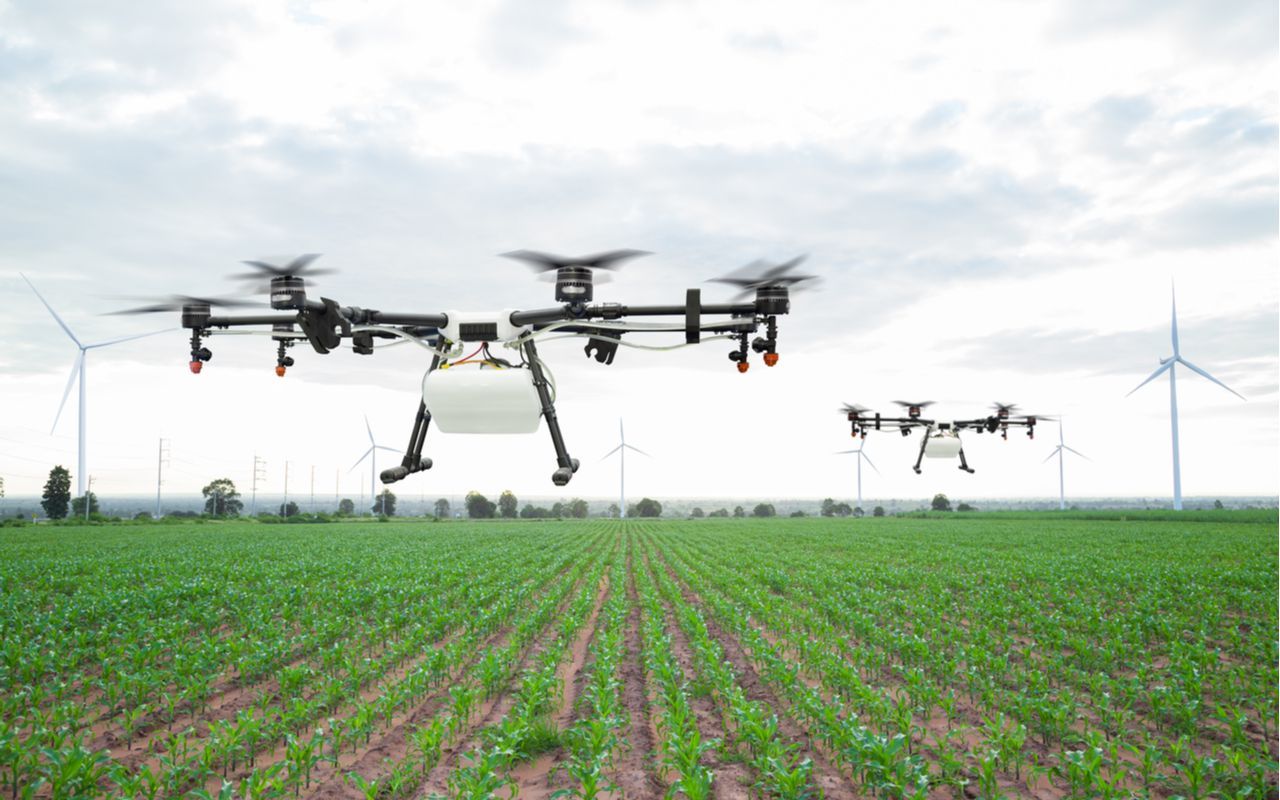
Between 2019 and 2024, renewable energy capacity is expected to grow by 50%. An incredible number of new wind and solar farms are being produced, and that means that there’s an ever-increasing need for better, more efficient development processes. Companies interested in developing wind and solar farm installations should consider the advantages that UAV technology can bring.
PreConstruction: Building the Best Installation through Careful Planning
UAVs can survey a site in advance, helping developers identify the best sites for their solar farm installation. These are sites that won’t need to be significantly leveled, a costly process, and that hold the most potential for solar energy or wind generation.
A site makes a tremendous amount of difference regarding the productivity and efficiency of a green power facility. The difference between an optimal location and a less-optimal one can be enormous.
By using topological information captured through UAVs, developers can simulate different layouts for their installations, letting them maximize energy generation while minimizing externalities such as harmful effects on the environment.
Developers are not only able to see how these installations will affect the surrounding environment, but also how the environment will impact the installation—thereby reducing the potential for damage to solar panels, turbines or other forms of green energy production.
Finally, comprehensive surveys can help developers avoid lawsuits. Particularly when it comes to rural areas, surveys may be needed to identify legal boundaries, as boundaries can become overgrown or shift over time thanks to erosion and weathering. Drones are the fastest, safest way to acquire this kind of land survey.
During Construction: Meeting Projected Deadlines and Avoiding Risk
During a construction project, drones can be used to inspect active worksites. Simulations of construction can be compared to existing construction, to ensure the project is on schedule. If the project falls out of schedule, accurate data can mitigate the delays by identifying pain points, and thereby improve the project’s bottom line.
Being able to identify divergences between planned and current construction can also reduce mistakes and avoid costly reworks. Reworks can be a significant portion of construction cost, and can also delay a project significantly.
As drones scan work sites, they can produce data through technology such as LiDAR point clouds that are used to identify any hazards or risk factors on the worksites. The knowledge that the worksite is being regularly inspected ultimately reduces the risk on the jobsite, and thus the potential for jobsite injuries.
Post-Construction: Inspecting Green Power Installations
Once construction is completed, the drone’s work isn’t done. Drones can still be used onsite for fast, efficient and timely inspections. Green power installations are often expansive, and it’s quite difficult to send inspectors out on foot to inspect, say, a couple dozen mammoth wind turbines.
Drones can fly over solar farm installations and wind turbine fields to identify potential issues with the equipment. For solar panels, drones can use sensors to detect minute cracks in the panels before they become a major issue. For turbines, drones can be used to inspect their enormous blades, without any humans needing to climb hundreds of feet into the sky. A coordinated fleet of drones can inspect a turbine field in an afternoon; humans would take weeks.
Having regular drone inspections leads to more reliable technology onsite, while also reducing the chances that in-person inspectors could get injured. When paired with sensors, UAVs can deliver developers a comprehensive overview of even extremely large installations. Drones can report back the exact area of damage on a site, and then technicians can be dispatched with the tools they need to perform repairs and replacements.
Drone Technology Throughout Construction
Contractors interested in the green power industry should be aware of the advantages that drone technology can bring. With drone technology, green installations can be improved at every level of the construction process, from preconstruction onwards.
Drones provide “eyes in the sky,” as well as highly accurate, fast and cost-effective 3D surveying technology. With drones, developers are able to plan better, simulate their jobsite, look for risks and hazards, and generally manage their timelines and budget better.
Through properly applied drone technology, developers and contractors can avoid costly reworks of their construction project, ensure the project is developed to the best of their ability, and even maintain the project once it’s been completed.