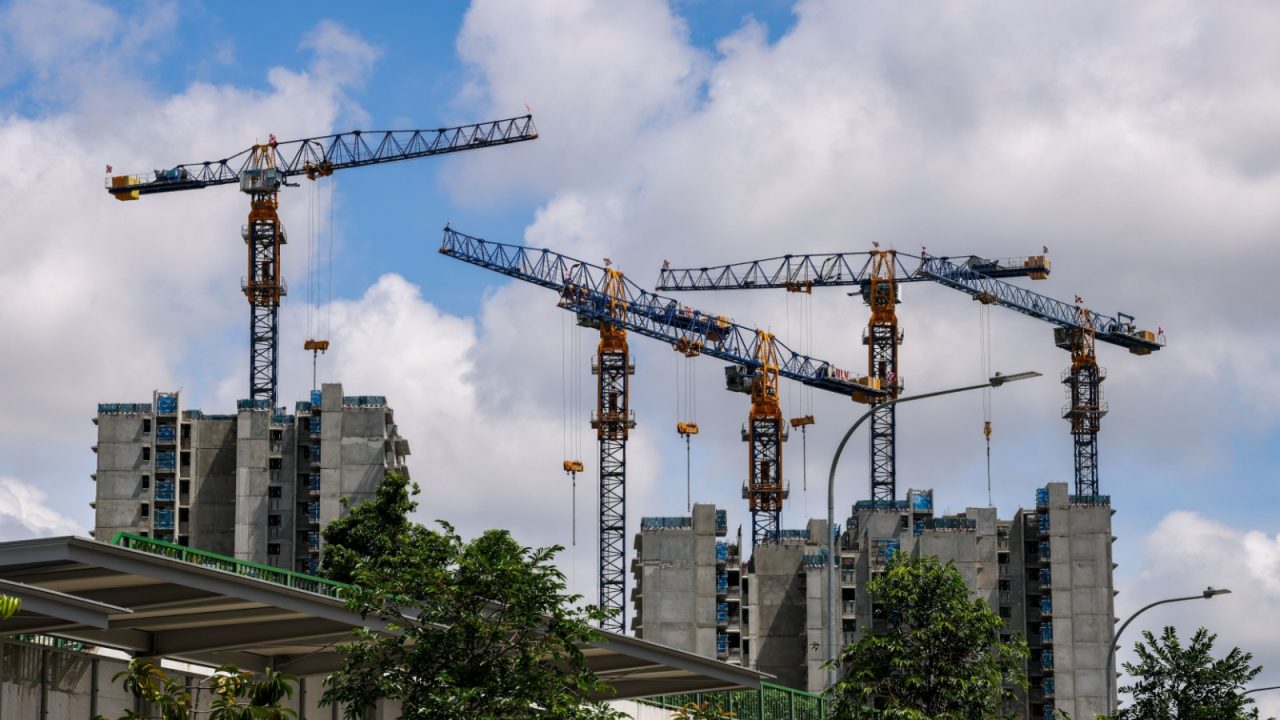
The global spread of the novel coronavirus (COVID-19) is generating unprecedented delays, disruptions and uncertainty on construction projects. Travel restrictions, social distancing and quarantines are increasingly disrupting supply chains, contractor workforces and the availability of governmental personnel for project inspections, with resulting delays and increased costs. Project leaders dealing with projects affected by COVID-19 should consider several actions to mitigate project impacts.
COVID-19’s impact on construction projects is mixed and varies by state. Many states consider construction an “essential” service, following guidance from the federal Department of Homeland Security, which issued a non-binding list of 16 “critical infrastructure sectors.” Other states and some local municipalities take a narrower view, requiring virtually all construction to cease.
New York, for example, initially exempted most construction from state-mandated restrictions but, as of March 27, narrowed the definition of “essential” to shutdown all projects other than the construction of roads, bridges, transit facilities, utilities, hospitals or health care facilities, affordable housing and homeless shelters, as well as allowing necessary work to safely secure and shutdown construction sites.
While California has issued no orders specifically limiting construction activities, adopting the federal guidelines, many counties and cities within California have adopted much more restrictive guidelines limiting ongoing construction to housing (especially affordable housing), projects immediately necessary to the maintenance, operation, or repair of essential infrastructure, health care facilities, etc. and requiring all worksites observe strict construction site COVID-19 protocols.
Stay-at-home orders in Ohio, Illinois, Indiana, Minnesota and Wisconsin also generally exempted construction.
New Jersey initially exempted construction without specific limits, but on April 8, prohibited all “non-essential” construction, allowing only projects at hospitals and schools, in transportation and utility sectors, affordable housing, emergency repairs and other limited instances.
Pennsylvania’s mandate to close all “non-life sustaining businesses” effectively stopped all construction, with exemptions available to construction supporting health care providers and for emergency repairs.
Boston, Cambridge and other Massachusetts cities halted all construction, but the governor overrode the local orders and deemed all construction “essential,” allowing all projects to continue provided workers follow social distancing, washing hands and other protocols. Later, the governor modified that stance, designating construction of office buildings, retail and hotels as non-essential.
Whether totally shutdown or only delayed and disrupted, many construction projects are being impacted by the pandemic. The project team should consider the following actions to address and mitigate the project impacts.
Action #1: Identify and Assess Relevant Local and State Restrictions on Construction Activities
Initially, consult appropriate legal counsel and carefully examine the state and local government shutdown orders to identify restrictions on construction activities and only proceed accordingly.
Action #2: Identify and Assess Relevant Contractual Provisions
Carefully examine the construction contract to identify key provisions implicated by the pandemic. Although this article discusses the commonly-used American Institute of Architects (AIA) form contract (A201-2017 edition), a critical caveat is that each situation is fact-specific and contract-specific. While standard contract forms are widely used, the forms often are modified and standard terms and conditions frequently are changed based upon negotiations.
Crucial provisions such as those addressing force majeure, notice time limits, compensable costs resulting from delays, risk allocation and damages limitations may be significantly different from the AIA standard forms and therefore each contract should be carefully reviewed and analyzed.
Action #3: Identify, Assess and Mitigate Project Impacts
Critical contractors, designers and suppliers should assess the actual and potential impacts on contract performance and discuss how to potentially mitigate project disruptions, in an effort to achieve the overriding objective—complete the project as soon as possible within or as close as possible to the budgeted costs. COVID-19 may impact design and construction contracts in a variety of ways, including impacts to supply chains, contractor workforces, designer personnel and the availability of government inspectors.
Confirm that all contractors are taking appropriate site health and safety measures, including adhering to federal, state and local guidelines as to distancing, cleansing, disinfecting, etc. and that sites are being properly manned and managed considering current circumstances. Update schedules frequently and discuss setting flexible contract completion dates.
Consider prioritizing and/or accelerating certain work areas and delaying others, as well as planning to recover delays once the COVID-19-based restrictions are lifted.
Action #4: Consider Contract Notice Requirements
The standard contract requires the contractor to provide notice of delay claims “…within 21 days after occurrence of the event giving rise to such Claim or within 21 days after the claimant first recognizes the condition giving rise to the Claim, whichever is later.”
In responding to delay notices, the owner should consider whether the notice qualifies as a “claim” or merely as an advance warning of potential delays, to which no formal response may be necessary and perhaps should not be given. The owner should not respond unnecessarily in a manner that portrays it as unsympathetic or which could be misconstrued as directing activity that puts anyone at risk or acknowledging a delay claim that has been neither properly submitted nor supported.
The contractor bears the burden to establish how a delay has impacted the work and should be regularly informing the owner of project impacts as information becomes available. Where concurrent delays exist, the contractor may be put on notice of such delays.
A timely response by the owner to schedule updates that identify delays may avoid the appearance that the owner accepts the delay or has engaged in a “course of dealing” that modifies the express contract.
The contractor could be put on notice of observed safety violations, including deviations from governmental or trade association guidelines for maintaining a safe construction site during the pandemic. Under the standard contract, the contractor is responsible for site safety, compliance with all applicable laws and dealing with emergencies on the site “to prevent threatened damage, injury, or loss.”
However, the owner also may be liable for dangerous conditions, at times under statutory or common law or possibly where it exerts control over the construction site, directs the contractor’s means and methods or otherwise contributes to an injury. In those instances, the owner may be liable for failing to maintain a safe site, irrespective of contract terms placing primary responsibility on the contractor.
Action #5: Consider Project Suspension and Termination Options
Depending upon a construction project’s specific circumstances, the owner may wish to consider suspending and/or terminating the project due to the impact of COVID-19. Each situation is different and must be considered individually.
The standard contract allows the owner to suspend the contract “for convenience…for such period of time as the owner may determine.” In a convenience suspension, the owner may be responsible for the “cost and time” caused by the suspension, delay or interruption including the contractor’s profit unless the contractor’s performance “…is, was, or would have been, so suspended, delayed, or interrupted, by another cause for which the contractor is responsible… .” The standard contract also allows the owner to terminate the contract for convenience.
A convenience suspension or termination may require the owner to pay the contractor’s resulting costs, which typically include demobilization costs and may include payment for goods and materials ordered or in fabrication, as well as lost deposits and termination fees, so the contract terms must be carefully considered. Further, the owner may need to consider the potential ability to quickly restart if the project is suspended or terminated with the intention of restarting later. It also will be critical to consider impacts on performed work, as a convenience termination may invalidate warranties and the owner’s ability to pursue the contractor for defective work.
Alternatively, under standard AIA contract forms, the contractor may terminate the contract if the work is stopped for 30 consecutive days by government order or national emergency. In such circumstances, the contractor is entitled to recover “…payment for Work executed, as well as reasonable overhead and profit on Work not executed, and costs incurred by reason of such termination.” These provisions may incentivize the contractor to terminate the contract after a government-ordered 30-day shutdown by allowing recovery from the owner not just for work performed and termination costs, but also anticipated profit on work not performed, particularly where the contractor otherwise would be entitled only to a time extension due to COVID-19-based delays.
Action #6: Consider Claims for Time Extensions and Delay Damages
The pandemic likely will unleash floods of contractor claims for time extensions, delay damages, project disruptions and labor inefficiencies. The delays directly caused by COVID-19 may be “excusable” under the contract because the pandemic is a “cause beyond the contractor’s control,” A201 Art. 8.3, or under common law theories of frustration of purpose or impossibility/impracticability.
“No damages for delay” (NDFD) clauses are designed to protect the owner from a contractor’s delay damage claim by allowing a time extension, but no additional compensation, in the event of project delays. Courts generally enforce unambiguous NDFD clauses, but there are exceptions, one of which is for “delays not contemplated” by the parties.
Whether a NDFD clause protects the owner from pandemic-based delay damage claims will depend upon the clause’s exact language and is fact-dependent. In some instances, the delays may be deemed uncontemplated, rendering the NDFD clause entirely ineffective. However, a limited NDFD clause (e.g., allowing delay damages after the first 30 or 60 days of delay) might be enforced. Also, where the contract specifically allocates the risk of delays caused by a pandemic, those clauses may be upheld, although such provisions are uncommon.
To address contractor delay and disruption claims, the owner will assemble key project documents, including daily reports, meeting minutes, RFI and change order logs, progress reports, etc., and consider whether concurrent delays affect the contractor’s claims for project impacts. Under standard contract forms, where a contractor suffers a compensable delay such as that caused by the pandemic, but the contractor is responsible for a concurrent delay, the net effect may be that the delay is excusable but non-compensable, entitling the contractor only to a time extension.
Under standard contract forms, the contractor bears the burden to prove how the delay impacted its work and the steps it took to mitigate damages. Also, the contract may limit the contractor’s delay damages, such as by allowing payment for extended general conditions costs but not increased labor and material costs, or by waiving all “consequential damages” such as office, financing or personnel expenses or claims for lost profit.
These recommendations are offered as general guidance. The facts and circumstances of each project, including considerations such as financing documents, leasing, joint venture partnerships, market conditions and contract terms, may warrant deviations from the general guidance offered herein. This article is issued for informational purposes only and is not intended to be construed or used as general legal advice nor as a solicitation of any type.