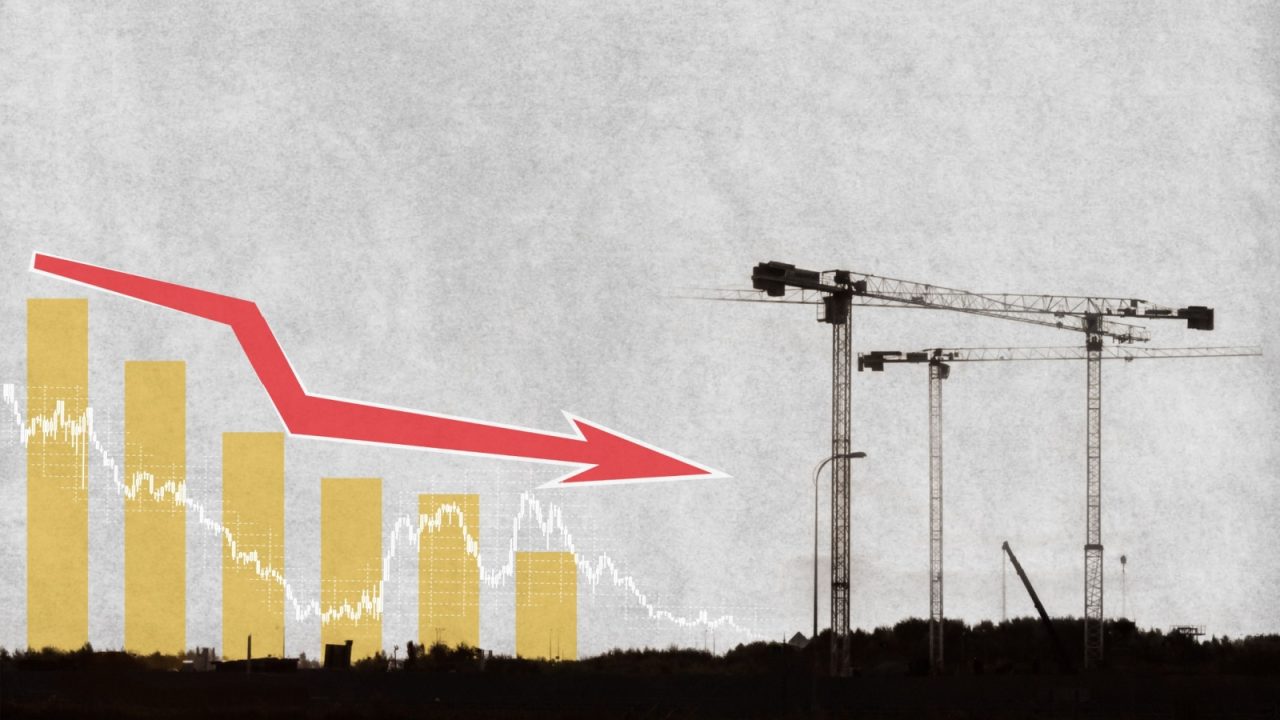
Total construction starts are expected to remain flat at $808.3 billion in 2019, with nonresidential building square footage dropping 4 percent to 1,133 million square feet, according to the 2019 Construction Outlook presented by Dodge Data & Analytics Chief Economist Robert Murray in late October. Construction starts and spending data demonstrate a continued economic expansion, but there’s evidence of some deceleration and “rounding off the peak.”
In short, the amount of construction work occurring in 2019 should stay close to the advanced levels achieved during the last few years, and there are no signs of a collapse in building activity.
Institutional and Public Works
The institutional and public works markets show the most potential for growth, especially given the construction bond measures that continue to be approved at the state and local level.
Educational buildings are poised to increase 6 percent to $68.3 billion following decent gains in 2018 tied to high schools, laboratories and community colleges. The top states for K-12 construction include Texas, California, New York, Washington, Ohio, Oregon, Illinois, Pennsylvania, Florida and Virginia.
While health care is a tough category to forecast, Murray pegs it at 7 percent growth to .6 billion in 2019. Some large projects are still happening, but the main focus continues to be on smaller renovations and storefront clinics. Activity is prominent in the nation’s largest and most populous states, as well as Massachusetts and Georgia.
The volatile manufacturing building sector is no longer exerting a downward pull on top-line construction amounts. It should increase 4 percent to 68 msf in 2019, with petrochemical work continuing to be quite strong.
Public building construction is stabilizing with modest upward movement, while highways and bridges should experience a 3 percent gain to $79.3 billion after increasing 7 percent in 2018. The top states for roadwork are a near match of those for K-12 construction, with the addition of North Carolina and Colorado.
The environmental public works sector also rose 7 percent in 2018 and is expected to jump another 6 percent to $41.7 billion in 2019 due to more projects related to the U.S. Army Corps of Engineers. Though more of this work is really needed, Murray reports the funding emphasis remains on highways. He also pointed out that the Congressional Budget Office estimates a fiscal year 2019 budget deficit of $973 billion (compared to $779 billion in fiscal year 2018), which could be a problem in terms of funding public works in the next decade.
Meanwhile, electric utilities and gas plant construction will continue a four-year decline following exceptional performance in 2015. This sector will recede 3 percent to $23 billion after dropping 25 percent in 2018, 32 percent in 2017 and 19 percent in 2016.
Commercial
On the commercial side, data centers are keeping the office recovery going, with a 1 percent gain to $44.9 billion forecast for 2019. Office alterations have strengthened considerably, and much of the ground-up work is tied to high rises. The top 10 metro areas for office construction are no surprise: New York City; Chicago; Washington, D.C.; Boston; Atlanta; Austin, Texas; Dallas; Sacramento, California; Los Angeles; and San Francisco.
Alterations also are strong in the retail sector as the average store size continues to dwindle. As such, retail square footage is predicted to drop 5 percent in 2019.
Hotels, which benefitted from a stronger than expected economy in 2018, will experience a moderate pullback heading into 2019, dropping 8 percent in square footage and 6 percent to $17.5 billion.
Warehouse construction is settling back as well—dipping 8 percent to $21.9 billion—following healthy growth during the past three years partially due to the big impact of Amazon fulfillment centers being built across the country. Murray is keeping an eye on the fact that so much construction is going on, yet vacancy rates continue to decline.
Transportation terminals, which were the star of 2018, will maintain healthy activity despite a projected 2 percent decline to 27 msf in 2019. Murray noted public-private partnerships are a strong component of this market.
Likewise, the amusement and recreational category will decline 2 percent to 19.7 billion in 2019, heading back to the levels seen in 2016 and 2017. Sports arenas and convention centers are leading the way as casino projects begin to tail off.
Housing
Murray’s residential report includes an 8 percent drop in multifamily housing starts to 465,000 units (compared to 508,000 in 2018). The heaviest activity is occurring in New York City, Washington, D.C., Miami, Boston, Seattle, San Francisco, Los Angeles, Dallas, Chicago and Atlanta.
Affordability issues are dampening single-family housing demand. Mortgage rates are rising and the inventory of new homes for sale is edging upward, leading Murray to predict a 3 percent drop in single-family housing starts.