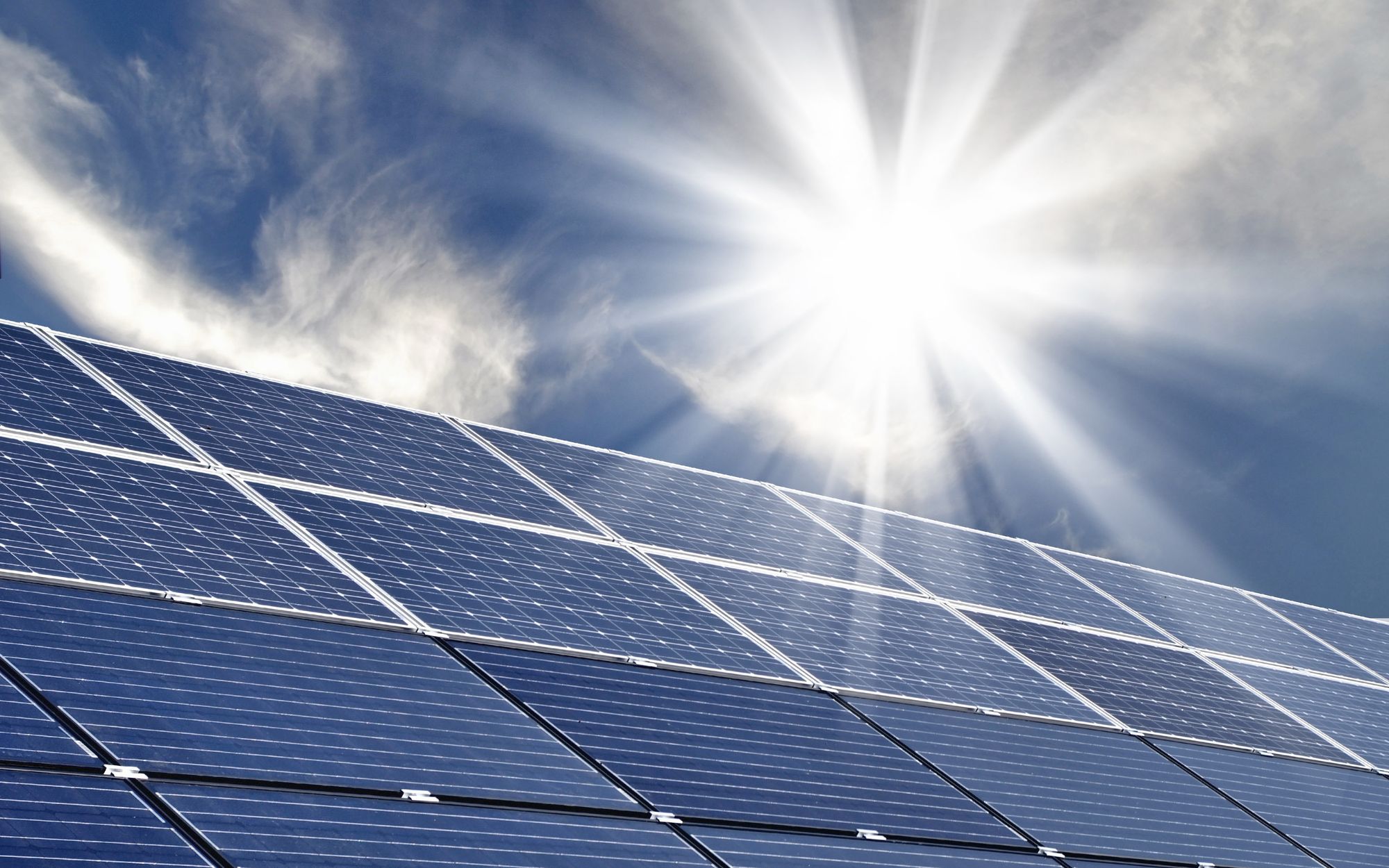
There are several different solar install types to consider before making a solar purchase. The functionality of the space will determine the best one for the business. Each install type has solar installers that care about the aesthetic, but also want to make sure the solar panels function as well as possible.
1. Ground Mount Solar Panels
For some, getting a ground mount is the best option. A ground mount, however, doesn’t make sense for all solar installations. Although ground mount installations generally cost the same amount on a watt-to-watt basis, businesses will need one if the roof does not have a pitch that will optimize the absorption of light, which is determined by the pitch of the roof and other factors, such as azimuth.
If solar can be installed on the roof, it’s the ideal option because rooftop solar is less expensive. Consider a ground mount if the business has shade most of the day and a SolarEdge inverter would not work best according to the solar installation technicians. Ground mounts also may be the best option if the roof doesn’t have enough space for the solar array.
A good amount of non-shaded space will be needed for solar panels whether they are located on the roof or the ground. If there isn’t enough non-shaded property near the business, a solar ground mount will not work, as some of the electrical components and wiring may be difficult to orchestrate.
Why Solar Ground Mounts Work
Ground mounts make it possible for businesses with difficult roofs to still get solar. This allows them to save money no matter their roof size and shading. For those concerned with aesthetic, it also doubles as an option that can be put in the background to avoid distracting from the visual appeal of the business).
How Ground Mounts Work
Because the average ground mount is only 2 to 3 feet above the ground, installation for a solar ground mount is quite different. Ground mounts require cement foundations and ground ditches. It’s important to evaluate the area before installation to avoid hitting a gas line or electric cable while digging supports for their ground mount. However, it is more likely that animals, children or thieves could cause damage to the solar panels because of how close to the ground the panels will be.
2. Pole Mount Solar Panels
Although pole mounts are similar to ground mounts, they are a bit different in their purpose and application. Pole mounts are not typically seen in residential solar installs, but they do have a well-deserved purpose in the renewable energy world.
When Pole Mounts Are Needed
Pole mounts are the easiest to tilt, and they usually support multiple panels on a single pole, lifting the solar panels higher off the ground than is usually the case with a typical ground mount. One of the benefits of a pole mount is that the position of the panel can be adjusted based on the season or shading during the day. They also work the best with varied terrain because they aren’t configured in long rows, so businesses don’t need as large of a space to have them installed.
Most use mono-pole mounts for single or dual tracking solar arrays. These systems track the sun, which could optimize the solar panels’ efficiency. Pole mounts are good options for businesses in a small remote spot, as a single pole mount will only hold a small number of panels. Multi-pole mounts will allow businesses to install more solar panels at a time.
Because these solar panels are not connected to a row of panels, they can only supply power for small areas.
To install a pole mount, more concrete and a longer post will be needed because the hole is larger. The good news is that pole mounts are typically higher off the ground than a ground mount, which means they are harder for animals and burglars to compromise.
3. Rooftop Solar Arrays
Rooftop solar is cheaper to install and businesses don’t need to clear space for it, nor does it take up valuable real estate that could be used for the business.
When Rooftop Solar Is Needed
If the roof’s tilt space shading and orientation are appropriate and the business has costly power bills every month, rooftop solar is a good option. If the building gets a lot of sun and trees don’t shade the roof, the business is most likely a good candidate.
Rooftop solar is the least invasive of these options, making it the cheapest installation option. Since it is cheaper to install, it means businesses get a faster return. If businesses own their solar panels, they won’t have a solar bill or an electric bill other than the small charges to be connected to the grid and to pay the power company.
How Rooftop Solar Works
The basics of how a solar array captures the sun and converts it into usable energy are the same as with other solar panels. The difference is the installation process and where the panels will be positioned in relation to the building.
Unlike ground mounts and pole mounts, no holes or cement are needed. Instead, rooftop solar has mounting gear attached to the roof, which is oftentimes called racking and requires drilling the mounting gear to the roof and sealing those holes.
If a business is going solar, it needs a roof in good condition that can sustain the weight of the panels. The best roof types for solar are asphalt shingle, metal and tile.
4. Ballasted Solar Arrays and Installs
Ballasted solar panel installation solidifies the position of the solar panels in a way that makes for maximum absorption of sunlight and stability of the structure. They are usually placed on a roof, which makes them somewhere in between a ground mount and a traditional install. Ballast arrays are panels held in place by concrete blocks instead of penetrating the roof of a home.
If a business has a flat roof, drilling extra holes may not be the best idea. Getting a ballast installation is not an option for roofs that have a pitch that already achieves what solar panels will need on a roof. Ballasted arrays are also installed on the ground.
Why Ballast Installations Work
A ballast installation functions the same way as a regular rooftop installation. With ballast systems, business owners only need to worry about the cement deteriorating.
Without high-quality cement blocks, they will deteriorate faster. Concrete on the roof could harm the roof membrane. If the concrete breaks, it also means that your panels don’t have anything holding them down, which could result in the need for a warranty claim.