Since his inauguration and the formation of the 117th Congress, President Joe Biden has paired with narrow Democratic majorities, and both chambers of Congress have started an unprecedented campaign to expand controversial, discriminatory labor requirements and policies on legislative or executive proposal, at the expense of the majority of qualified contractors and workers throughout the country—87% of them, to be exact.
President Biden vowed to be “the most pro-union president” during his campaign and has gone beyond any president in modern history to support the labor movement and endorse legislation that favors union organizations. Unfortunately, while these policies are championed by union lobbyists, they often come at the expense of the our nation’s small businesses in many cases, increase the costs to taxpayers, and take away the rights and freedoms of America’s workers.
Only minutes after taking the oath of office, Biden made the unprecedented move of firing the general counsel of the National Labor Relations Board, ending the service of Peter Robb, who served in the independent agency’s powerful, agenda- setting position. Biden was also openly supported not afraid to undo precedent by staking his support for the now-unsuccessful union organizing efforts at an Amazon fulfilment center in Alabama.
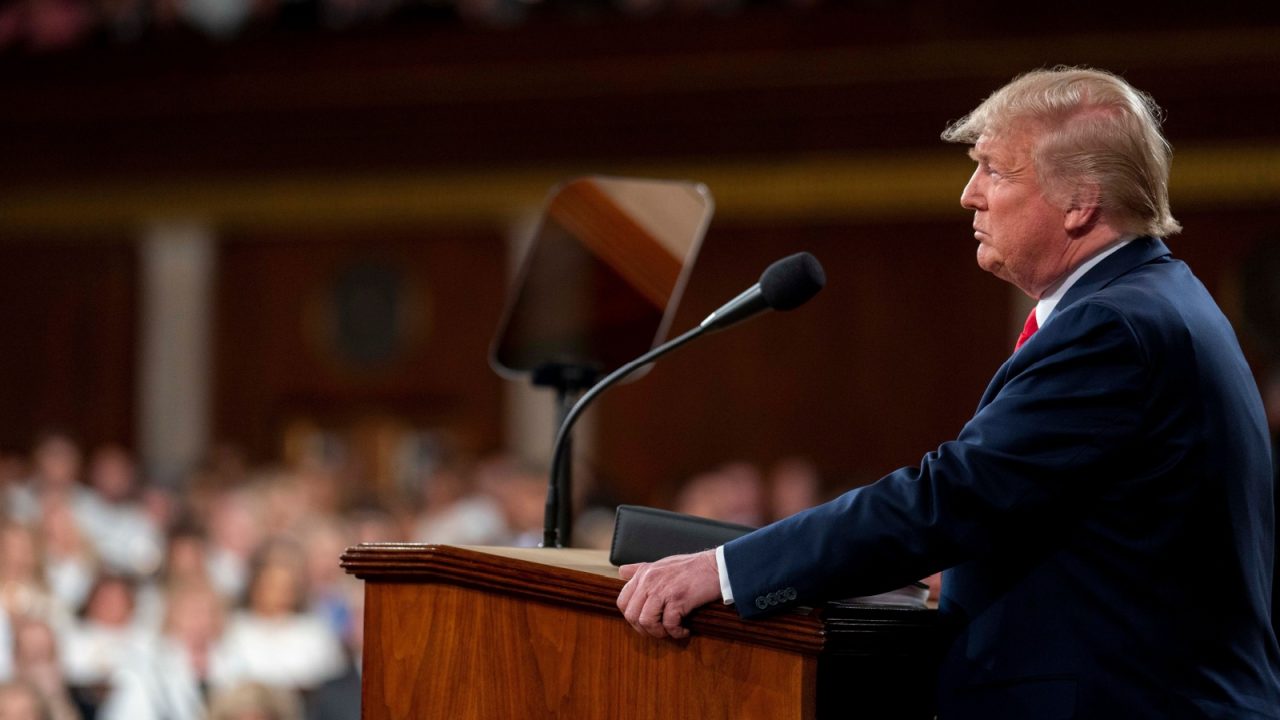
The president has made sure to put the full weight of his office behind harmful new labor policies, endorsing the job-killing Protecting the Right to Organize Act at his address to a joint session of Congress, as well as and asking Congress to mandate project labor agreements and rigid strict apprenticeship requirements in his American Jobs Plan. The Biden-Harris administration has already started the process to impose these harmful labor requirements, instructing federal agencies to promote the use of project labor agreements PLAs in the procurement process for projects funded under the $1.9 trillion American Rescue Plan that was signed into law in March.
The president’s allies in Congress are also following his lead, attempting to implement far-reaching labor policy in every major legislative effort affecting construction. For example, the newly dubbed U.S. Innovation and Competition Act, formerly the Endless Frontier Act, which is an otherwise bipartisan bill to spur domestic technology investment in order to compete with China, now includes an expansion of the federal Davis-Bacon Act prevailing wage requirements to fund the construction of semi-conductor production facilities. This expansion was decried by Sen. John Cornyn (R-Texas), who offered an amendment to strip this prevailing wage language from the bill.
Additionally, Sen. Bernie Sanders (D-Vt.), a top leader on Democrat’s labor agenda, introduced an amendment to the U.S. Innovation and Competition Act that would impose the much-maligned ABC test to independent contractors and PLA mandates for those working to support semiconductor facilities and research. Thankfully, the misguided amendment was not included, however. While the amendment did not end up in the final bill, Sen. Sanders sits as chairman of the Senate Budget Committee, which sets the stage for budget reconciliation, and could attempt to impose similar conditions in a potential budget reconciliation package to address the needs of the nation’s infrastructure.
Senate Democrats have also pushed for strict workforce requirements in their Clean Energy for America Act for employers seeking to benefit from certain energy tax credits, a move that President Biden supported in his recent budget proposal. This would set a new and costly precedent by attempting to expand these restrictive labor policies into the nation’s energy and tax sector. In his opening statement in the Senate Finance Committee hearing on the bill, Ranking Member Sen. Mike Crapo (R-Idaho) states, “linking labor policy to energy-related tax credits is unprecedented, and I have concerns not only about the policy, but also about the dangerous precedent it sets for amending the tax code.”
However, the battle lines are clear, as Congressional Democrats have not held back in their support for the inclusion of these one-size-fits-all labor policies in an infrastructure bill to come. In May, more than 200 U.S. House Democrats signed a letter to the president pushing for the inclusion of these same expansive and job-killing labor provisions to be extended to any form of federal infrastructure investment.
The strict labor requirements under President Biden’s American Jobs Plan would not only be detrimental to the response, the merit shop construction industry has stated these provisions but would also impose severe costs on hardworking taxpayers and result in a much less-effective modernization of the our nation’s infrastructure. Particularly, mandating PLAs on the federal investment in our infrastructure would discriminate against many of America’s small, minority-, women-, and veteran-owned construction businesses, as well as and the 87% percent of the industry whose with workers that choose not to join a union. This means may lead to fewer local jobs, more government red tape, and the delay (or potentially cancellation) of critical infrastructure projects in local our communities.
Ironically, the Biden-Harris administration’s and Congressional Democrat’s support for PLAs purports that subsequent local-hire and mandates are their proposed solution to ensuring that small and minority-owned local businesses have a chance to compete. ABC industry groups, such as Associated Builders and Contractors, believes that this represents a fundamental misunderstanding of the drastic consequences that these undue mandates would have on the construction industry.
These policies would be bad for construction workers, employers, and possibly the economy at any given time—but , and are especially concerning now, as many of the nation’s small businesses have struggled over the past year to make it through the pandemic. Hitting them with these new restrictive measures would certainly result in more businesses closing their doors for good and limit the number of new businesses that would be willing to risk starting up.
Recently, a modest but important breakthrough was made in the U.S. Senate Committee on Environment and Public Works for recognizing the importance of improving our nation’s surface transportation infrastructure through via the bipartisan Surface Transportation Reauthorization Act of 2021.
This legislation would make significant investments in the development and maintenance of the our nation’s surface transportation infrastructure at historic levels through existing funding formulas, while streamlining regulations to remove barriers that prevent projects from being completed in an efficient manner. By reauthorizing the expiring surface transportation legislation, the 2015 FAST Act, this effort will lead to the sustainable support for America’s surface transportation needs well into the future.
ABC is confident that through increasing competition, expanding workforce-development opportunities for America’s workers, the construction industry is well positioned to lead a full economic recovery from the impacts of the COVID-19 pandemic. As ABC and others continues to advocate for these principals, the merit shop construction industry remains committed to building taxpayer-funded projects with the highest standards of safety and quality, and we stands ready for the opportunity to build and maintain America’s infrastructure to the benefit of the communities that it will serve.