According to Teletrac Navman’s 2018 Construction Benchmark Survey, improving driver safety and vehicle safety were two of the top business goals for construction organizations in 2018. This will likely continue into 2019 as the industry seeks to make the working environment safer for every worker.
Increasingly, construction companies are turning to technology solutions such as geofencing capabilities with GPS tracking or dashboard cameras for over-the-road vehicles to improve overall worker safety. But while technology and safety regulations play an integral role in reducing incidents, they’re not enough. To make a meaningful difference, owners and managers must create a holistic safety plan and overall culture of safety that includes construction worker wellness through physiologically and anatomy-related training.
Physical Health
An average person may not give much thought to how they walk, stand or lift heavy objects, but these movements are a fundamental part of a construction worker’s daily work. It may be difficult to believe because these functions are so basic, but performing these movements incorrectly could cause serious injuries and result in time off from a job. Without physiologically informed safety training, safety-based technology or safety policies and procedures won’t effectively protect workers. They must be knowledgeable about protecting themselves by knowing how to correct and efficiently walk and carry heavy objects for long periods of time.
Many construction workers, whether working in the field or operating heavy equipment, have chronic back injuries or pain. A holistic wellness program will include education for employees about the physiology of the job as it relates to their back and spine. Helping workers better understand their own anatomy is key, as having misconceptions about things such as where joints are actually located or how they work could misinform movement, leading to injury. Anatomy training should also include teaching techniques for walking while carrying heavy objects, best practices for standing for long periods to safeguard the spine and injury prevention training to review basics like lifting with legs, not the back.
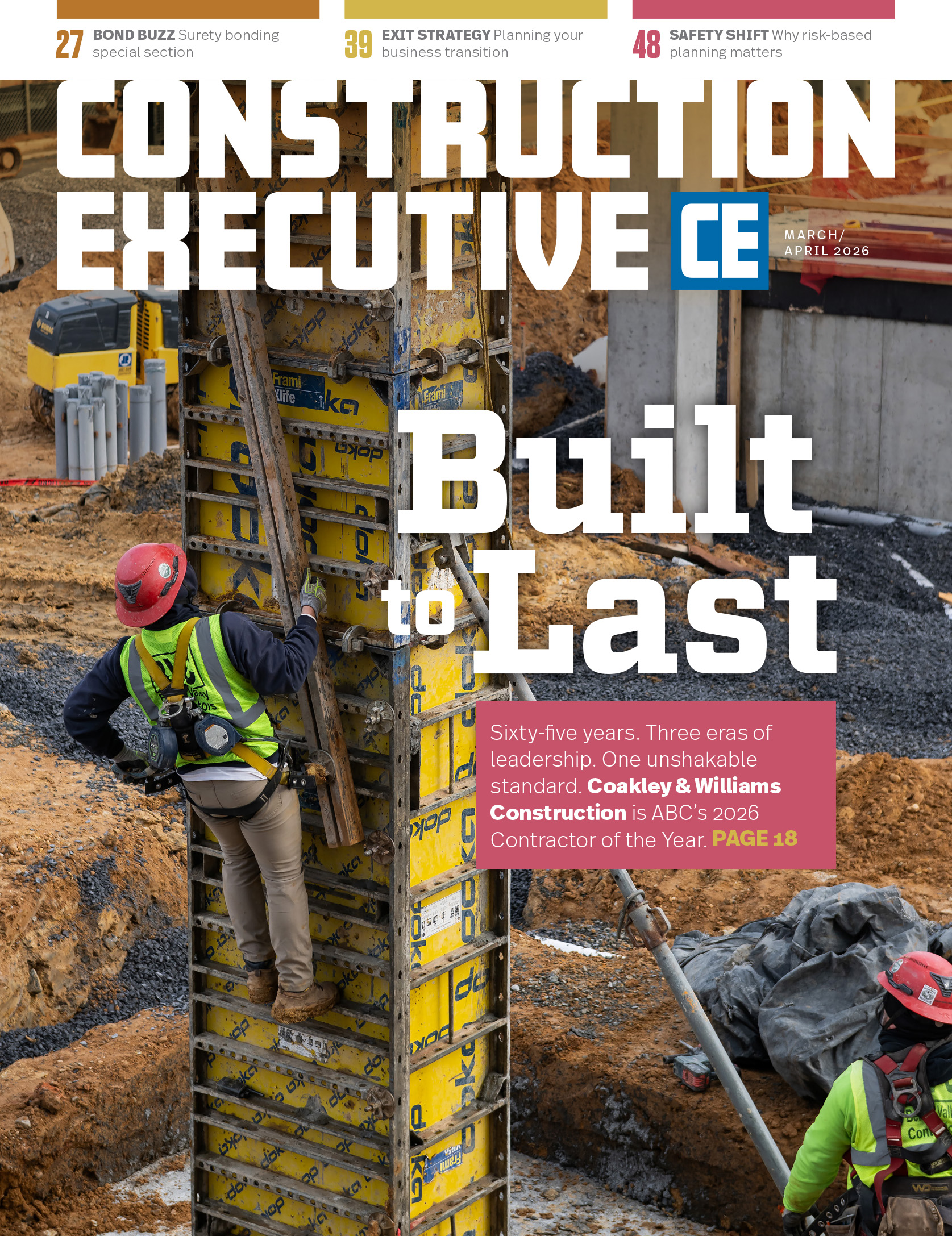
Another aspect includes mindful climbing, which is a basic action, but one that shouldn’t be taken for granted. There is a right way to climb into a piece of equipment, especially large machines like excavators, trenchers, cranes or over-the-road, long-haul trucks. Climbing into or out of a vehicle properly means maintaining three points of contact with it at all times: two feet and a hand, or two hands and a foot. Emphasis should be placed on the dangers of jumping into or out of the cab or off equipment, noting the impact force can cause on the body.
One often neglected piece of anatomy-related training includes teaching equipment operators how to properly grasp equipment. There are “precision” fingers and there are “power” fingers: the middle and index fingers are considered precision while, somewhat surprisingly given their size, the ring and pinky fingers are used for power. Using hand muscles wrong when operating cranes and backhoes for hours at a time can cause damage. This small piece of the wellness puzzle could easily be overlooked, but it’s another area where physiology training could prevent long term physical damage or harm to employees.
Mental Health
Finally, mental clarity is an important piece of the wellness puzzle. Handling heavy equipment for long periods of time is not only physically demanding, but can lead to mental fatigue, increasing the chance or a safety incident. Long haul truck drivers experience mental fatigue from long over-the-road driving and equipment operators managing equipment for several hours at a time face physical and mental fatigue. Sitting down for hours leads to lower body temperature and a reduced heart rate, signaling the brain to sleep, while physical activity can increase the heart rate and body temperate, leading to physical exhaustion. This is why companies should encourage everyone to take regular breaks and make them a priority during the workday. Frequent, short breaks can help fight fatigue and prevent mistakes that could potentially lead to unsafe incidents, so managers in the field should actively promote a culture that encourages employees to take breaks. Taking breaks to unwind mentally and physically will help revert the body to its regular state, so their importance should be communicated to employees frequently.
At a time when there’s never been more laws or safer equipment available to workers, drivers and equipment operators, serious injuries and fatalities are still an industry-wide challenge. Tackling safety from all angles, including physiology- or anatomy-based training, creating a culture where safety informs every decision and prioritizing worker safety above everything else will not only create a better, safer company culture but also work to prevent serious injuries or fatalities.