What We Learned in March: Industry Outlook Darkens in Early 2026
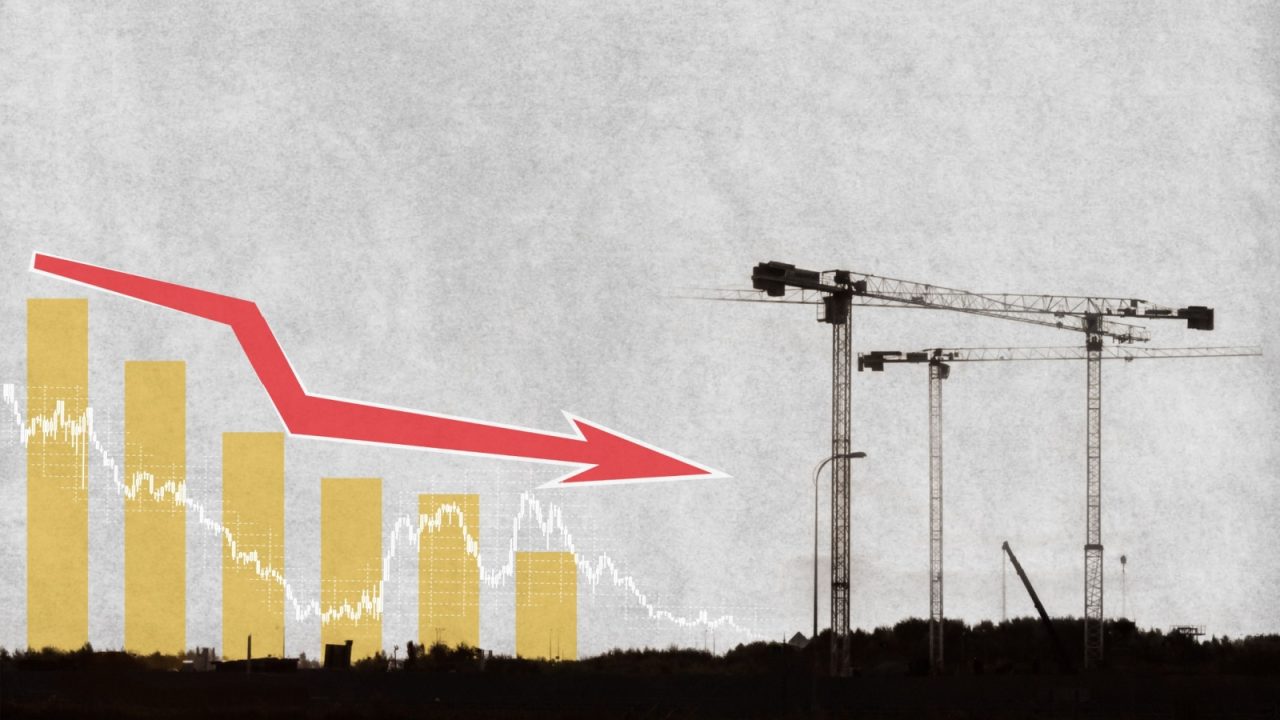
Materials price escalation resurfaced and the industry lost jobs in February, while private nonresidential construction spending continued its slow but steady decline to start the year. The fact that industry momentum was waning before the conflict in Iran sent oil prices and economic uncertainty surging is particularly concerning.
Materials Prices Take Off in February
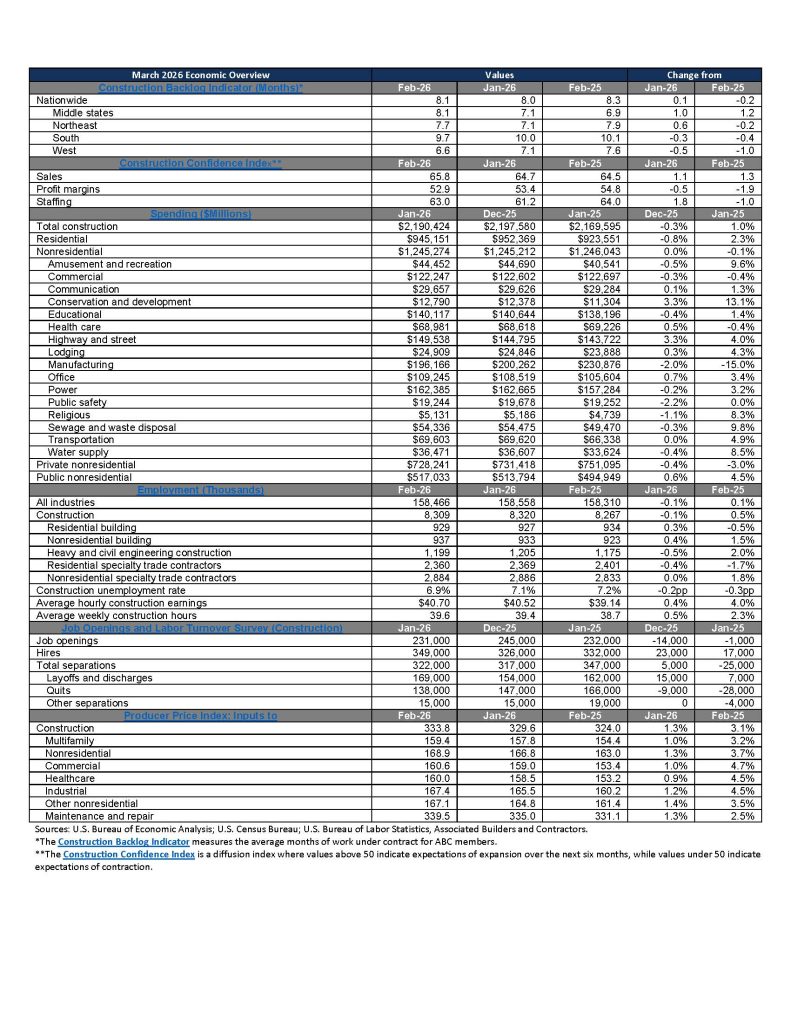
Construction materials prices surged 1.3% higher in February, according to the Producer Price Index, and have risen at a stunning 12.6% annualized rate through the first two months of 2026. This escalation—primarily caused by rising copper, energy, lumber and steel prices—does not reflect the meteoric increase in oil prices that has occurred since the start of the conflict in Iran. As a result, input price escalation will likely continue to accelerate in the coming months.
Construction Job Losses Resume
Construction employment declined by 11,000 positions in February and the industry has now lost jobs in eight of the past 11 months. While both the residential and nonresidential segments lost jobs in February, only the former is down on a year-over-year basis. Residential construction employment has contracted by 46,100 positions over the past 12 months, while nonresidential employment is up by 88,200 jobs over that span.
Backlog Steadies, Contractor Confidence Improves
ABC’s Construction Backlog Indicator rebounded to 8.1 months in February, up 0.1 months from January’s four-year low. Backlog increased sharply in the Middle States (Illinois, Indiana, Iowa, Kansas, Michigan, Minnesota, Montana, Nebraska, North Dakota, Ohio, South Dakota and Wisconsin), which is also the only region with higher backlog than one year ago.
Contractor confidence regarding sales and staffing levels improved in February, although profit margin expectations are down on both a monthly and yearly basis. Despite the dip in profit margin expectations, contractors are generally confident that all three Construction Confidence Index categories will improve over the next six months.
Construction Spending
While nonresidential construction spending was unchanged in January, private nonresidential activity fell for the fourth consecutive month. This decline will persist in the coming months as CHIPS Act-incentivized megaprojects continue to wind down, despite data center projects—spending on which rose 2% in January and is up 31% year over year—being virtually the only source of momentum.
Looking Ahead
The industry was facing several headwinds prior to the conflict in Iran. Substantially higher oil prices will weigh on construction activity in the coming months, especially in the private nonresidential subsegment.
SEE ALSO: CONSTRUCTION BACKLOG INDICATOR REBOUNDS IN FEBRUARY, CONTRACTOR CONFIDENCE GROWS