What We Learned in February: Construction Industry Continues to Search for Momentum
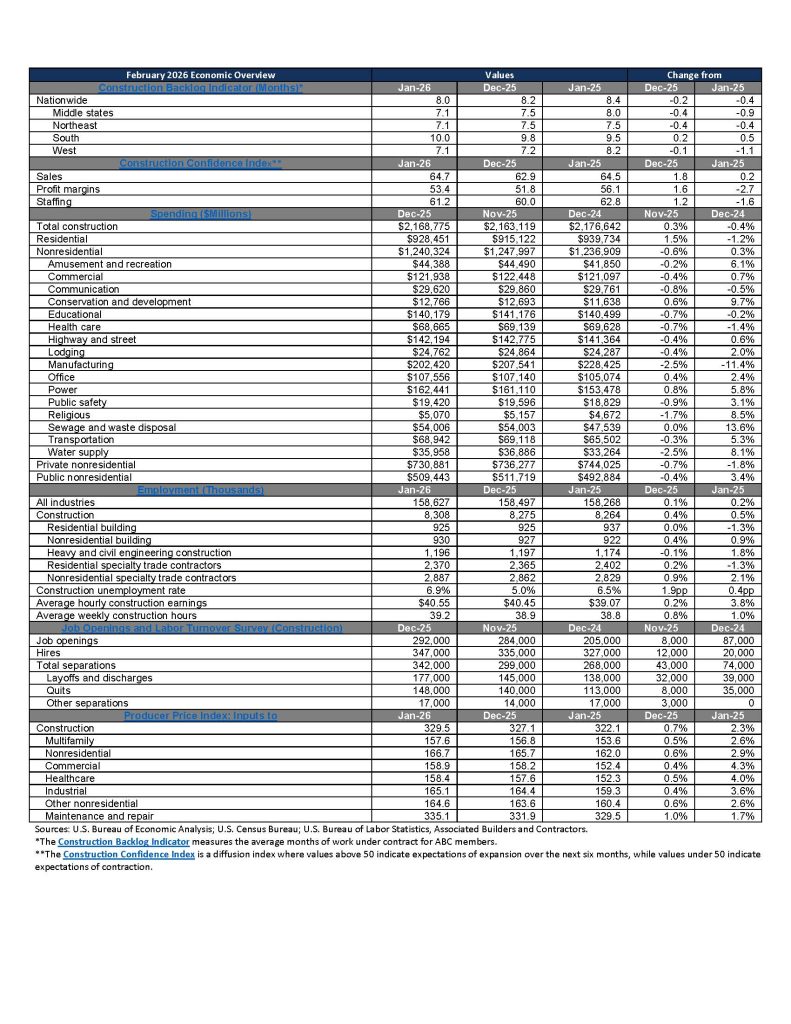
While construction hiring rebounded in January, nonresidential activity remains subdued, especially in the private sector. As a result, backlog fell to a four-year low in January. Thankfully, materials prices have been relatively stable over the past several months, and there are signs that borrowing costs may decline over the next few months.
Construction Employment Rebounds
The construction industry bounced back in January, adding 33,000 net new jobs for the month, but had a dismal 2025. Industrywide employment declined by 1,000 positions in 2025, which represents the first calendar year decline since 2020 and 2010 before that. Recent weakness is largely due to the residential side of the industry, which lost nearly 44,000 jobs over the past year. Nonresidential employment continues to grow at a healthy-enough pace, with total employment in the segment up 1.8% over the past 12 months.
Job opening data from December also paints a slightly more upbeat picture of the industry’s labor dynamics. The hiring rate rose from historic lows in 2025’s final month, while job openings increased to the highest level since July.
Backlog Falls, Contractor Confidence Doesn’t
ABC’s Construction Backlog Indicator fell to 8.0 months in January, the lowest reading in four years. While contractors remain confident about their own operations, with just 13% of respondents to the Construction Confidence Index survey expecting their sales to decline over the next six months, they are altogether less confident about their competition; 46% of contractors expect that other contractors will see their sales decline over the next two quarters.
Materials Prices Surge in January
Construction materials prices surged 0.7% in January, according to the Producer Price Index. While that equates to a 7.1% annualized growth rate, materials prices had declined in December and have been relatively tame over the past several months. Tariffs will continue to put upward pressure on certain input prices, but escalation is unlikely to accelerate too much as long as energy prices and overall demand for construction services remain subdued.
Construction Spending
Nonresidential construction spending plunged 0.6% in December. While the manufacturing category, which continues to shrink due to policy uncertainty and the waning effects of the CHIPS Act, was the most significant driver of the decline, spending fell in the majority of nonresidential subsegments in January. Private nonresidential construction spending is now down 1.8% year over year.
Looking Ahead
Construction employment growth rebounded in January, while January construction spending data is still pending for a few additional weeks. Though a near-term rebound is unlikely given the underlying dynamics in certain segments like manufacturing, lower borrowing costs could provide the industry with a much needed boost by the end of 2026.
SEE ALSO: ABC STATEMENT ON PRESIDENT TRUMP’S 2026 STATE OF THE UNION ADDRESS