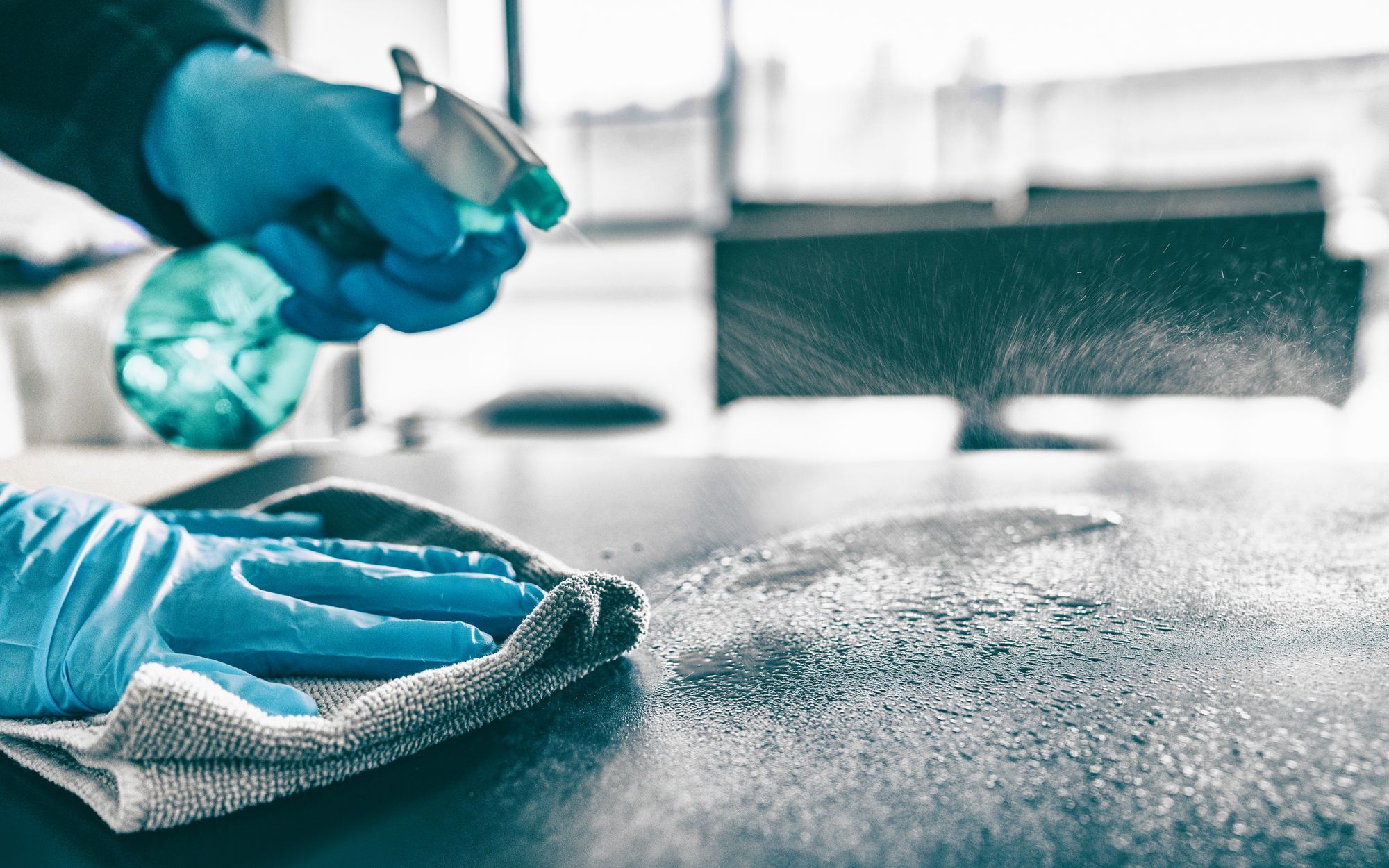
As organizations reopen and encourage employees, customers and visitors to return, creating a safe and healthy environment is a critical concern—and it will be for some time to come. One of the most important aspects of meeting that goal is proper sanitization and disinfection. In fact, this practice has become an essential “given” expected by all concerned.
In addition to the direct health benefits, there are other significant impacts in terms of positive optics and fostering confidence by demonstrating the organization is being proactive.
Just Cleaning Won’t Cut It
A caveat right at the start here: cleaning is not sanitizing. They are complementary but very different activities that are typically conducted by different kinds of professionals.
All too often, many people do not clearly understand the distinction. For example, they may think about disinfectant wipes or cleaning chemicals that can be bought from Home Depot or the grocery store with a label saying they “kill 99.9% of germs and bacteria.”
While those products may help reduce the presence of unwanted substances, they do not kill unless applied properly and with enough dwell time on the surfaces. Dwell times range anywhere between one to 10 minutes, and the chemicals need to remain wet on the surface to actually kill.
Where To Start
The first step is to educate owners, managers and others on different cleaning and sanitizing methodologies. That includes working closely with janitorial companies to explain what they should be doing in between full sanitizations of the space.
For example, a quarterly sanitization program may be set up that involves ATP testing to identify the amount of microbes present, especially on high-contact, high-touch surfaces. Based on that testing, the janitorial service can identify areas in the facility that need focused time and attention during routine cleaning processes.
After 30 to 45 days, the professional ATP testing can be done again to identify areas that still need deeper or different cleaning by the janitorial crew. This approach helps establish an ongoing, well-planned program.The janitorial service should perform their standard cleaning the night before a sanitization is to take place to remove as much debris and dust as possible. This step is important in order for the sanitizing chemicals to work their best. In addition, employees should organize and stow as much of their daily gear as possible.
Level Up for Health
A three-level system has been shown to be an effective method:
Level One
- Electrostatic fogging with hospital-grade oxide (EPA approved)
- Completed between deeper sanitizations (Level Two), perhaps monthly
Level Two
- Adenosine triphosphate (ATP) meter testing
- Performed by EHS-certified biohazard clean-up technicians
- Level one disinfection (fogging)
- Disinfection and deep-clean decontamination
- Damp wipe of high-touch surfaces and reapplication of disinfectant
Level Three
- Level One, Level Two and three-stage decontamination chamber
- Full biohazard personal protective equipment (PPE)
- Required when confirmed a COVID-19 case arises
The teams wear hazmat-type suits when doing a Level Two or Level Three, with respirators for protection in case there’s anything hazardous within the workspace.
Electrostatic foggers help the chemicals stick to surfaces. Then disinfectant wipes apply the same chemical after the fogging, and everything is wiped down. The ATP machines test the surfaces in a matter of seconds more or less, using a cotton swab dipped in a chemical. The machine then reads the amount of microbes on that particular surface. Chemicals should be CDC approved, hypoallergenic and rated hospital-grade.
This is a proven approach that has been used for years and should not cause concern from employees and others.
Beyond the Office
The health care industry, for obvious reasons, has paid more attention to disinfecting and sanitizing over the years. They’re dealing with patients who may have open wounds or serious health issues. So health care has historically done a very good job at disinfecting their facilities. And sometimes these processes are going on 24 hours a day, seven days a week.
In terms of schools, on the other hand, each district is going to be different. In fact, these variations can be quite dramatic. Plus, this is a constituency that often may need a high level of education on the process itself and the need for it.
Look to the Professionals
Another word of caution: There are many companies out there, including janitorial services, that claim they can perform sanitization and disinfection. But they likely are simply doing normal cleaning and maintenance.
In addition, every facility is a little bit different in terms of where people congregate in offices, conference rooms, copier rooms and other areas. Labs and warehouses may require special attention. Also, different people need or prefer to use various kinds of equipment in their work. These unique characteristics should be considered in order to do the job of sanitization effectively.
How About DIY?
Can an organization do this themselves? The answer is a qualified yes.
It’s pretty easy to train people in how to do basic disinfection properly, including how to use the equipment and the processes to follow. But there must be buy-in and support from management as well as a commitment to maintaining a consistent program.
For example, in an office space, a Level One fogging can be done every day if necessary just for peace of mind. Ten minutes later, everything is dry and people can come back into the space, knowing that everything has been disinfected.
Equipment cost is pretty reasonable, with foggers going from $500 to $3,000. And the chemicals are relatively inexpensive, on average about $.05 per square foot.
Bottom Line
The easiest way to summarize the difference between cleaning and sanitizing is that cleaning reduces the amount of microbes on a surface, but it doesn’t kill the microbes on that surface. Only sanitizing kills.