Compared to a few years ago, the construction industry has made significant leaps in adopting processes and technology to operate more efficiently and productively. With digitalization of the traditional construction information value chain comes massive amounts of project data with the potential to take the industry to the next level in working smarter and faster. However, in most cases, that data is rarely analyzed in a disciplined manner before, during or after projects. Without the ability to dive deeper into this data to make better decisions, the industry may be leaving the next phase of advancement on the table.
Business Intelligence (BI) in the simplest form is gathering, sorting and analyzing data to make intelligent business decisions. BI is still new to construction but many are finding it useful for identifying areas where increased project efficiencies and productivity can be achieved, such as more accurately estimating future projects, identifying consistent problems on projects and developing strategies to solve them and streamlining team efforts, to name a few.
Applying BI to Constructible Data
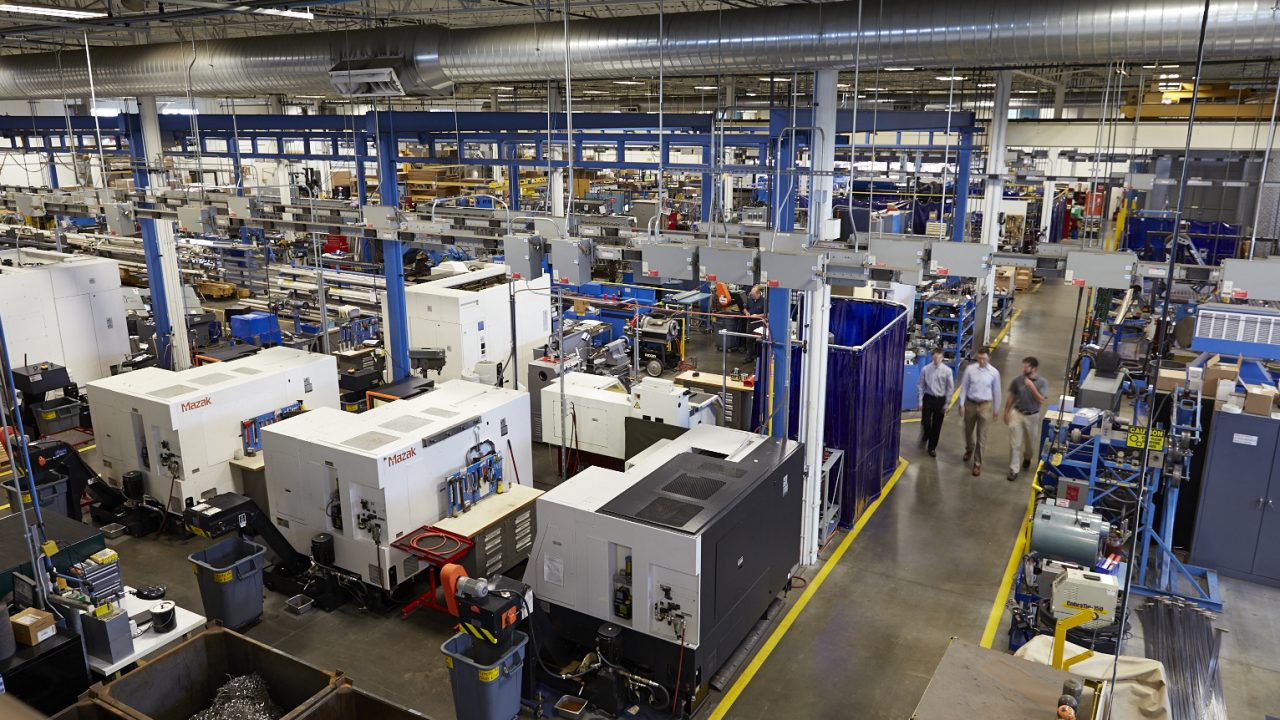
Consider the manufacturing industry. Manufacturing firms measure nearly everything, from the performance and output of machines to the efficiencies of material moving through their systems. With precision, they can determine how long it will take to build something. Engineering and construction firms are often unaware of how long it will truly take to complete the intricate phases of a project. It’s not uncommon for project directors to find out a couple of days before a project’s expected completion date that the team will need a few more weeks to finish the work, but with no additional hours budgeted.
Compared to manufacturing, the construction industry has missed out on the ability to measure and analyze data at a high level of detail. It is common to make critical project determinations based on time sheets and very basic metrics, such as the number of drawings produced or estimated amount of steel that has been detailed. However, those metrics are not enough to accurately report on where a project is on a given day, based the status of work packages targeting various delivery milestones. It is an approach based largely on a person’s project experience and “gut feeling.” By applying constructible data to BI, it is possible to capture time, person, task and status for valuable insights that can reduce project uncertainty, increase productivity and drive profits.
Accurately Forecast
Modern 3D design solutions allow a project to be prototyped before it is built. The clear benefit is that project deliverables and data are driven from a single source of truth where the link to the real-world is not abstract, but direct. A beam can be designed and the data held on that 3D digital beam not only creates drawings and schedules, but also drives robot CNC machinery (Computer Numerical Control). The 3D digital object and associated 3D digital project environment becomes a place where team delivery data, schedule data and status data can also be intelligently processed. With a BI tool, that data can be analyzed at various project phases to identify problems or scheduling issues that will cause delays. Data points extracted from the model can be compared, allowing for a deeper understanding of project delays and the ability to utilize data to uncover a path to resolution.
Understand Productivity
With BIM data, analyzing productivity can help keep projects on track and ensure people are productive and progressing through the various stages to keep a project progressing. For example, if a project team planned to deliver digital information for project milestones, this information forms the basis of work of other teams, so the deadlines are critical. With the ability to actively follow the progress of the team on a certain part of the scheme toward a milestone, and to do this directly from 3D digital project data, a team leader can quickly anticipate, well in advance, if the team is likely to reach the deadline or if they need more capacity.
Also, the team leader may notice that late changes to a project have had a significant impact on project status and can communicate, backed by high quality data, that current deadlines cannot be reasonably met due to the impact external changes to the design have had on the project schedule. With this kind of clear reporting and root cause analysis, a remedial schedule or re-resourcing conversation is much easier to have with key project stakeholders, especially with stakeholders who are unaware of the actual impact of their decisions and/or activities.
This also helps accurately estimate the team effort needed for future projects. Using BIM data with a BI tool, it is possible to determine and compare with precision how long a project phase will take a team to complete. Similarly for engineering companies accustomed to measuring projects based on the number of drawing deliverables, it is possible to measure productivity based on the complexity of individual columns, beams, connections, floors and other elements. While projects are often staffed based on resource availability, analyzing BIM data from past projects allows for the formation of a team based on skill level and allocation of team resources for the best outcome. In addition, projects can be estimated based on the actual time it has taken a team to complete similar work in the past.
Manage Earned Value
A critical element of survival for any company is the credit facilities with their lending partners. This is even more applicable for engineering and construction companies as it funds day-to-day operations as they wait for the projects staged payments after handing over deliverables. A deep understanding of Earned Value (EV), Planned Value (PV) and Actual Costs (AC) is key to an organization’s ability to forecast the financial performance of their business. However, current techniques to measure EV, PV and AC are not accurate enough. Additionally, not all projects use these metrics as the additional paperwork and overhead are not justified on smaller projects and yet, on larger projects the measurement techniques are not detailed enough.
Leveraging constructible models and BI, data from the model can be analyzed to track completion of various project phases, regardless of the project size. This has the potential to provide more accurate EV forecasting, project profitability and potentially a reduction in the cost of credit, if project milestones can be proven to have been achieved ahead of target dates. By providing the ability to forecast and prove earned value from a monetary point of view, BI can have a big impact on margins.
Plan for Future Projects
Engineering and construction companies face an array of external pressures including clients wanting projects to be completed at lower cost, competition from similar companies and competition from other companies that are leveraging new technologies, to name a few. Engineering and construction activities are increasingly becoming a commodity business. However, as costs rise and margins get smaller, BI can extend the value of constructible data even further, allowing for smarter, faster decision making that can lead to profitability.
Just as manufacturing companies can measure the performance of their equipment, raw materials and supply chain, it’s now possible for engineering and construction companies to measure the performance of their teams, their workflows and most importantly, their technology investments. Random investments in upskilling existing teams for learning how to use technology are not going to deliver a competitive advantage. Competitive advantage will only come when an organization can measure what it is doing and make the necessary targeted adjustments.