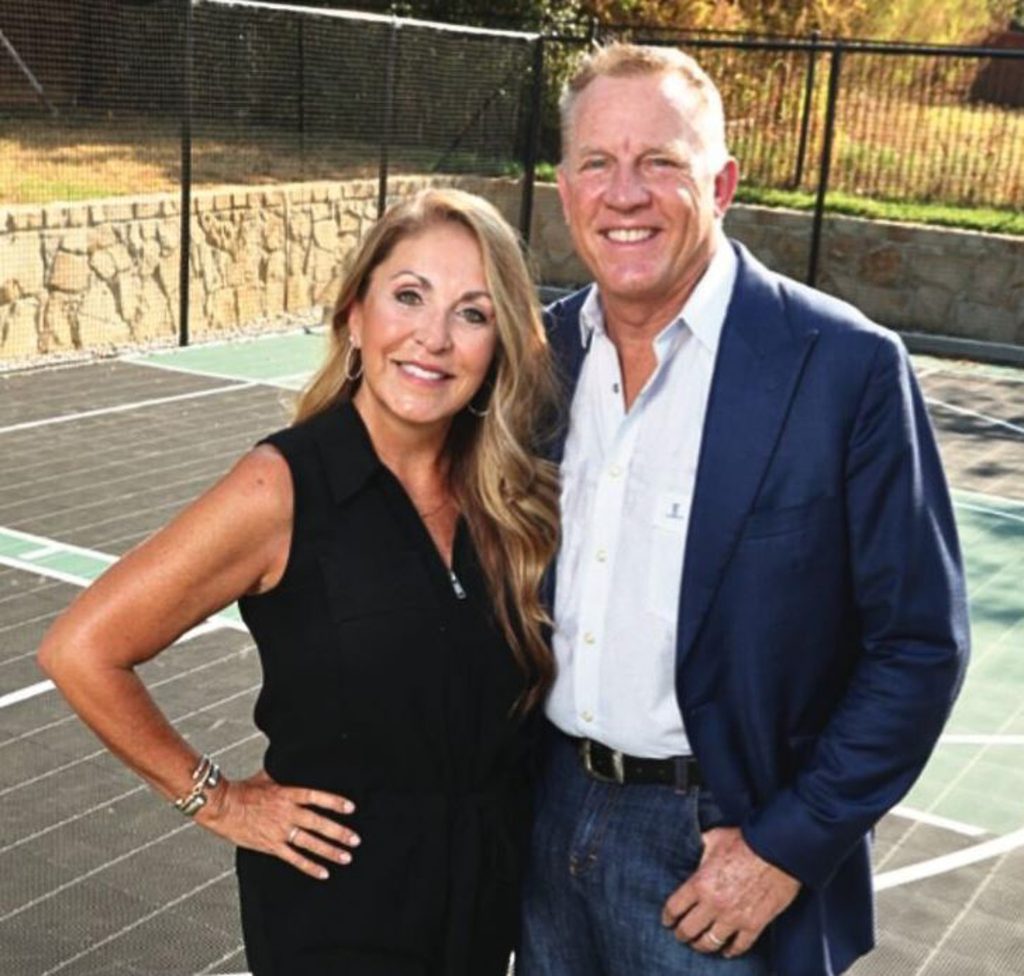
What do you get when you combine Dak Prescott, the World Cup, pickleball and philanthropy? Nexcourt owner Mark Kundysek’s business model. And when that business model results in not only countless happy families and businesses but also the Nonprofit and Corporate Citizenship Award from D CEO magazine and a contract to build seven mini-pitches for the FIFA World Cup location in Dallas, you know you must be doing something right. That is why Kundysek sat down with Construction Executive to discuss his company’s over-the-phone origins, professional partnerships—like the one with FC Dallas, Make-a-Wish, the Dallas Mavericks and more—World Cup involvement and making childhood dreams come true.
What drew you into the entrepreneurial world?
I’ve been in construction my whole life starting at age 14 or 15. I worked in Lubbock framing apartments and learning all the ins and outs of how not to hurt yourself. Ultimately, after I graduated college, I tried all kinds of different jobs.
I ended up at a company in Grand Prairie, Texas, called Read Plastics. I had to wear a suit and tie and work indoors. We supplied colorant to any company throughout the U.S. that would manufacture a plastic product that had color. One of the companies that we supplied material to was called Sport Court out of Salt Lake City. So, I picked up the phone and gave them a call—fortunately it was family owned back then. They said for $250 they’d send me a [sport court starter] kit. So, I scrambled up $250, sent it on in, and that’s how it got started. That was around 1988, 1989—and I’ve just enjoyed the journey so far.
While sport courts themselves are prolific, construction-wise they are down a pretty niche avenue. Elaborate on the actual construction process of building a court.
It starts with a phone call or a referral. We talk to the family or business briefly about what they’re looking for, how many people will be using the court, what sports they are looking to play, etc. And then we work on setting up a time and a date to go out and meet with the client at their home or business, paying close attention to easements, HOA requirements, permitting, etc. If mother nature isn’t an issue, we can get permitted pretty quickly once we start breaking ground—typically about 45 days or less.
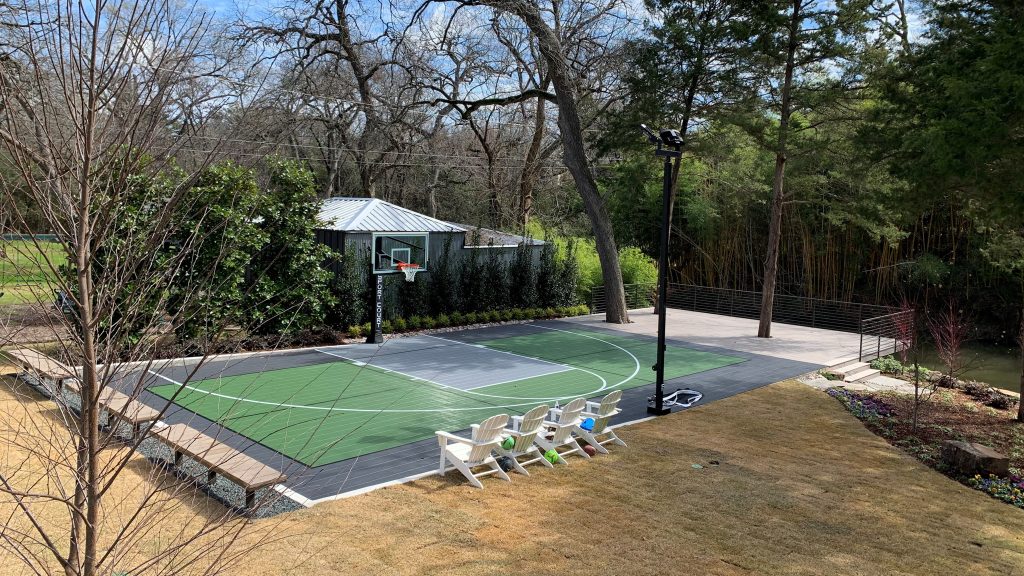
Then we work on design: If it’s outdoors, that means paying attention to the lay of the land, the flow of water, the orientation of the sun at different times of day. Once the design is set, we come in and pour a concrete slab, which sets up for a few days. Then we can start topping it out with the fencing, the lights, the hoops, the surfacing, the tennis net, the shuffleboard lines or other. Then it’s a cleanup, a handshake and years of fun.
All these courts are built custom, in one-foot increments, whether it’s a full-size tennis court or a compact sport court—which allows you to play up to 15 games from roller hockey to basketball to volleyball to pickleball to paddle tennis to badminton and more.
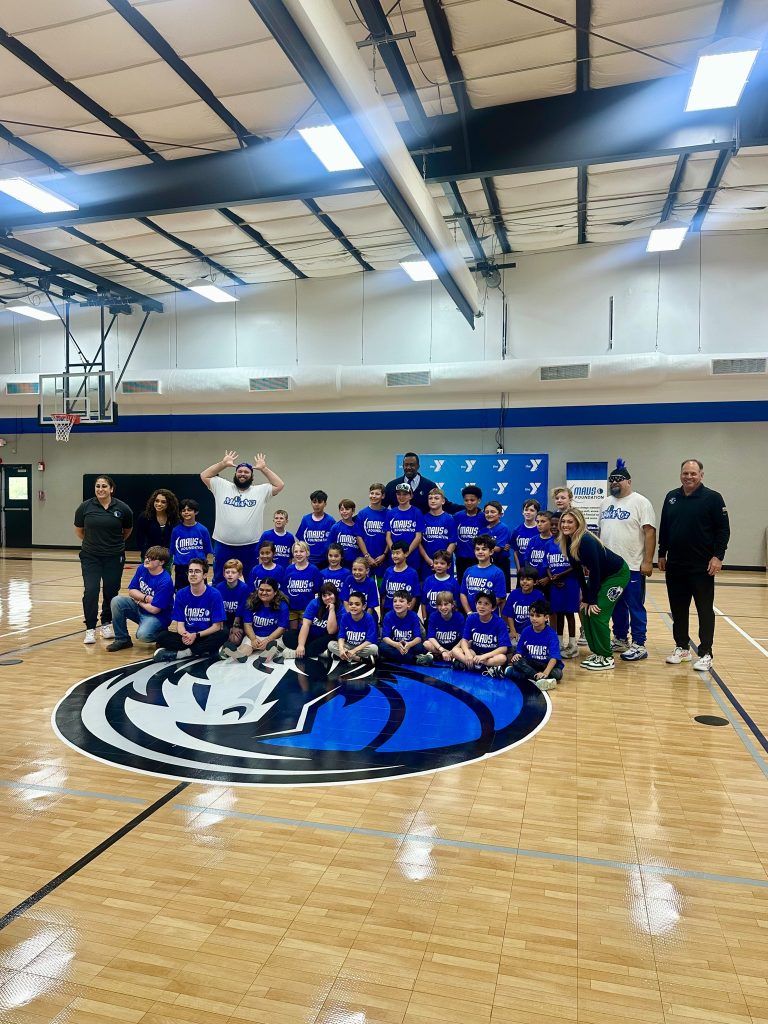
We do a lot of indoor courts, as well. We are seeing a trend of more and more families doing indoor courts, especially in homes up in Minnesota where they have frigid temperatures, or in incredibly hot climates. We actually have a ribbon cutting tomorrow with the Mavs Foundation—we supplied the floor and the sports equipment for the YMCA in Flower Mound.
Do you do work with any multifamily complexes or retail places?
We have an individual in our office who specializes in that area. There’s a huge amount of development going on in North Texas right now with homes, community homes, apartments, etc. We are staying busy every week building commercial pickleball courts, basketball courts, tennis courts.
How has your company grown since you first started?
Early on, it was just me and my dad. Eventually, I met my wife and she came on board and took care of all the stuff that I wasn’t doing properly—I had shoe boxes in our bedroom where I kept all my receipts. She got me organized and started handling the phones, entering in leads and more, and that enabled me to go out and continue to sell and build and so forth. Over the years we went from three people to now 12 employees, so it’s grown a lot. And of course our business seems to keep growing as well.
We want to continue to grow. We are always looking at potential new products and partnerships. Ten years ago, we teamed up with Donnie Nelson of the Dallas Mavericks. He created the PFL, the Professional Futsal League, and we helped promote that league for him and it just slowly keeps growing and growing and growing. And we’ve partnered with FC Dallas, building eight mini-pitch soccer courts for them. We are always looking for ways to grow our business, and a lot of that’s going to have to do with making sure that we know what’s coming down the pike as far as new sports and new equipment and things of that nature.
Talk about your philanthropy efforts—namely the Nonprofit and Corporate Citizenship Award from D CEO magazine—but also where did these efforts originate? Was this always something you wanted to make part of your business plan?
It started probably 25 years ago with the Mavs Foundation. I learned that they would go out once a year and renovate an old basketball court. And I actually saw them doing that in South Dallas 25 years ago. What they were doing back then is taking an old basketball court and then putting a layer of paint on it. But in six months to a year, that paint would either peel or crack or the logos would fade. So, I introduced them to the modular-tile sport court product, and they thankfully said, ‘You know what, let’s try one.’ 25 years later, we’ve completed probably close to 40 courts now with the Mavs Foundation.
Then I became a sponsor of the Texas Legends in Frisco, the NBA G-League team. I did a court for Pat Summerall, the former pro-football player and sports announcer. Then I met Nancy Lieberman, the former pro-basketball player and coach, and she put together a program called Dream Courts, and we built her very first one 17 years ago in Frisco. And now she’s done 150 nationwide, and we’ve done about 50 of those locally.
It just kept blossoming: We did five or six ball-hockey courts for the Dallas Stars Foundation, and we’ve done about eight futsal courts for FC Dallas.
By partnering with these organizations and groups, we’re able to provide that same upper echelon product and design to the lower income communities that normally might just be playing on a painted slab or an asphalt court.
When you go look at an old basketball court that’s been there for 25 years, the rims are faded, they’re broken, the court’s cracked. For an organization to come in and use a high-end product, the before and after pictures are unbelievable. When the local kids who are used to the dilapidated court walk in and see this color—because it comes in 20 different colors—they are just so excited to see what someone’s given back to them.
From there, we got into donating courts to some of these nonprofit groups for their live auctions. The very first one I did was with the Children’s Cancer Fund of Dallas. It just so happened at that first event, Dak Prescott was the highest bidder. So, we built him a pickleball court. Then Dak Prescott’s foundation—Faith. Fight. Finish.—called and said, ‘Hey, will you do that for us?’ So, we have stayed active in that realm.
How do you instill that sense of philanthropy in the people you hire?
When a court’s donated, obviously we have to fund it. And I’m not as young as I used to be, so I tend to ask one of my sales reps. It’s worth their while because every time you build a court, you build a relationship with a family or business and that family or business has relationships with other families or business associates.
Right now, we just finished a court for someone who was the highest bidder at the Cattle Baron’s Ball in Dallas. It turns out we’re actually doing a big basketball court and a little football field in his neighbor’s home, whose best friend and wife are this year’s chair of Make-A-Wish. So, to give the employees and give the sales reps stories to tell is a big part of selling.
Of course, the benefits of getting involved in a lot of these groups and organizations is you often get invited to events, and we make sure that our employees and their family can come to these events, which is always a lot of fun as well.
Let’s talk about the award.
This is the benefit of having a PR firm like The Power Group. One of the things they started doing that I never would’ve thought of doing is to nominate the company for various awards like this one. So, I have to give 100% of the credit to The Power Group in Dallas.
When you received word that you got the award, how did you feel about that?
Well, I felt excited. Finally, I found an avenue where people can educate families and educate the public about what we do. Hopefully there’ll be a family that sees it, and we can help them build something for their kids to grow up with in their own backyard.
We were also just awarded a contract to build seven mini-pitch soccer courts for the North Texas World Cup Committee. So, we’re very excited about that. It’s probably going to be over 40,000 square feet of court surfacing, fencing, soccer goals. I grew up in Arlington, Texas, playing soccer, and one of the courts is going to be right in downtown Arlington, real close to where the games are going to be starting in June. The World Cup coming to DFW is a once-in-a-lifetime thing, but then being awarded that contract is just something else.
SEE ALSO: TRUSTING THE PIPELINE: SUPPORTING EARLY-CAREER CONSTRUCTION TALENT